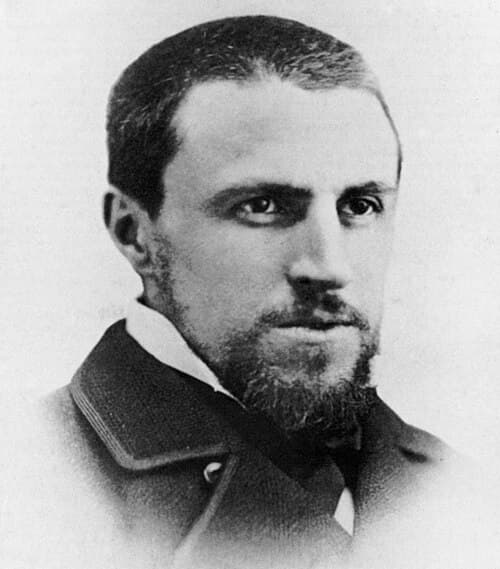
John La Farge
American·1835–1910
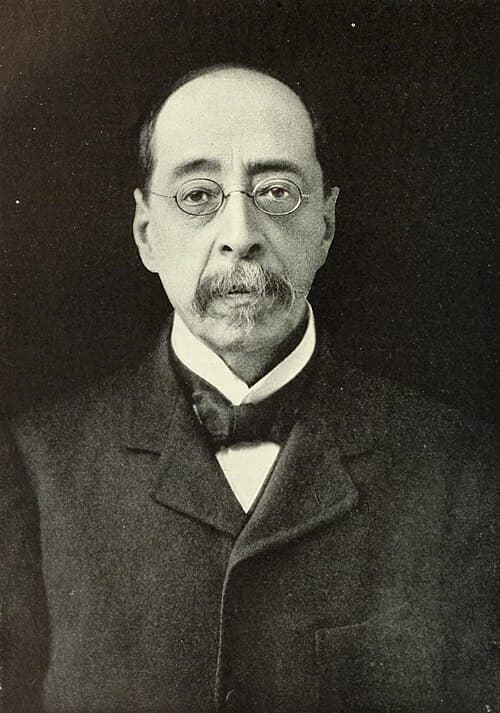
American painter and innovator John La Farge (1835-1910) transformed the art of stained glass while producing murals, easel paintings, and watercolors that bridged European traditions and American subjects. Born in New York City to French émigré parents, he studied law before traveling to Paris in 1856, where he trained briefly with Thomas Couture. Returning to America, he studied with William Morris Hunt in Newport, Rhode Island, befriending the young Henry and William James. La Farge's 1876 mural decorations for H.H. Richardson's Trinity Church in Boston launched the American Renaissance movement and established him as the nation's leading muralist.
In the mid-1870s, La Farge began experimenting with stained glass, developing techniques for using opalescent glass that earned him patents in 1880 and 1883. His methods faced challenges from rival Louis Comfort Tiffany, but La Farge's artistic approach treating windows as paintings in light distinguished his work. He produced approximately 400 stained glass windows for churches along the American east coast, plus some 250 oil paintings, a dozen mural projects, and 1,200 watercolors. Travels to Japan in 1886 and the South Seas in 1890-91 with friend Henry Adams resulted in published accounts and luminous tropical watercolors. La Farge received the Cross of the Legion of Honor from France and served as president of the National Society of Mural Painters. His work is held at the Metropolitan Museum of Art, the National Gallery of Art, and the Museum of Fine Arts, Boston.
Notable Works by John La Farge
1 painting catalogued with museum locations
Museums with John La Farge's Work
1 museum displays Farge's works. Click any museum to see visiting info and the specific works they hold.
Related Artists
Other Impressionism artists you might like
About John La Farge
La Farge revolutionized American art in multiple media. He's called the father of the American mural movement for his 1876 Trinity Church decorations in Boston. He also pioneered American stained glass, inventing opalescent glass and winning a patent in 1880 that established a new art form.
His Ascension mural (1887) fills the Church of the Ascension in New York City. Stained glass windows appear at Trinity Church Boston, the Biltmore Estate, and Columbia University's St. Paul's Chapel. Paintings hang at the Metropolitan Museum, Museum of Fine Arts Boston, and Smithsonian American Art Museum.
He invented opalescent glass, which incorporated color within the glass itself rather than relying on painted details. This created richer color effects and greater luminosity. His 1880 patent and 1889 Paris Exposition gold medal established American leadership in decorative glass, influencing Louis Comfort Tiffany.
Yes, his 1886 trip to Japan with writer Henry Adams profoundly influenced his art, introducing him to Japanese aesthetics. He later traveled to the South Pacific (1890-91), where he painted Tahitian and Samoan subjects that anticipated Gauguin's work. His travel writings and watercolors documented vanishing cultures.
Over his lifetime he produced approximately 250 oil paintings, a dozen major mural cycles, 400 stained glass windows, 4,000 drawings, and 1,200 watercolors. He co-founded the Society of American Artists and served as president of the National Society of Mural Painters. France awarded him the Legion of Honor.
Love John La Farge's Style?
Explore art inspired by Impressionism.
Browse Collection