Kazimir Malevich
Russian·1879–1935
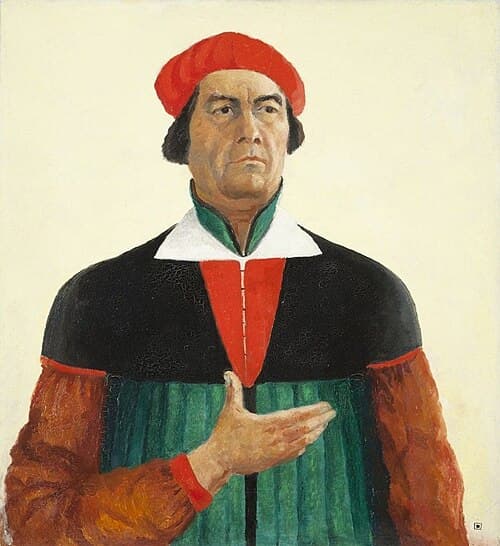
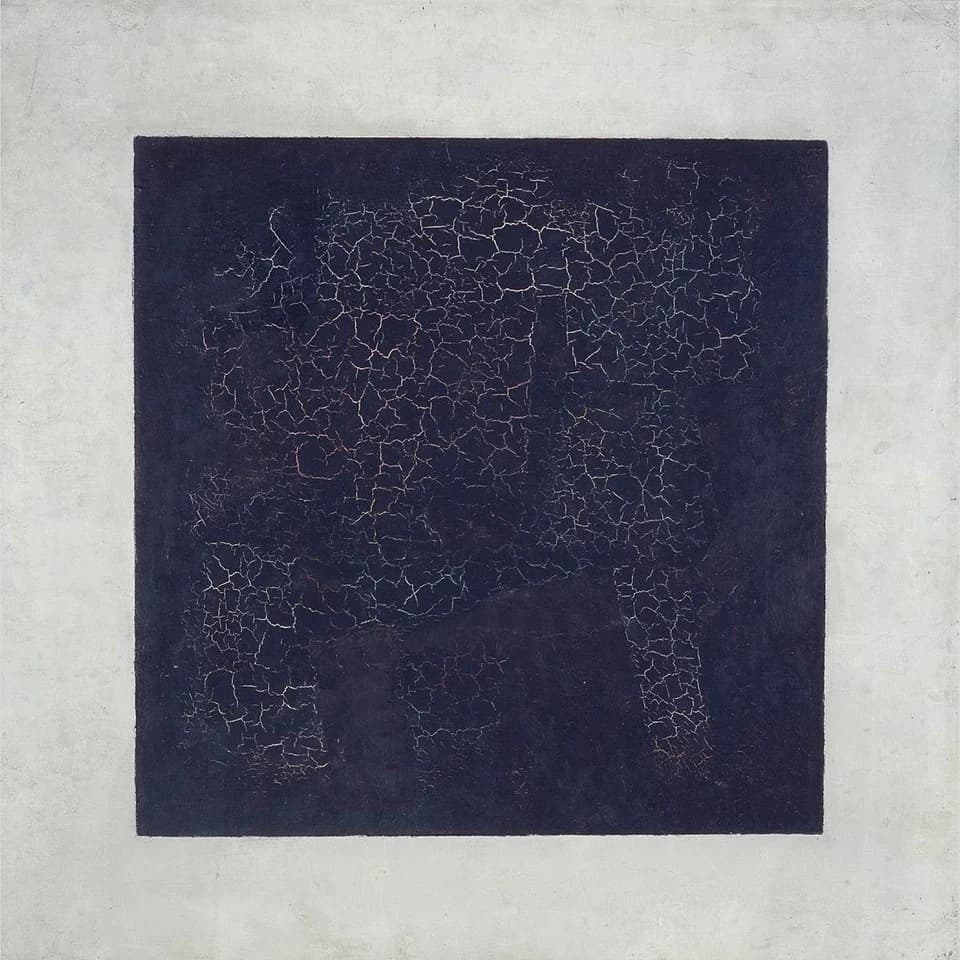
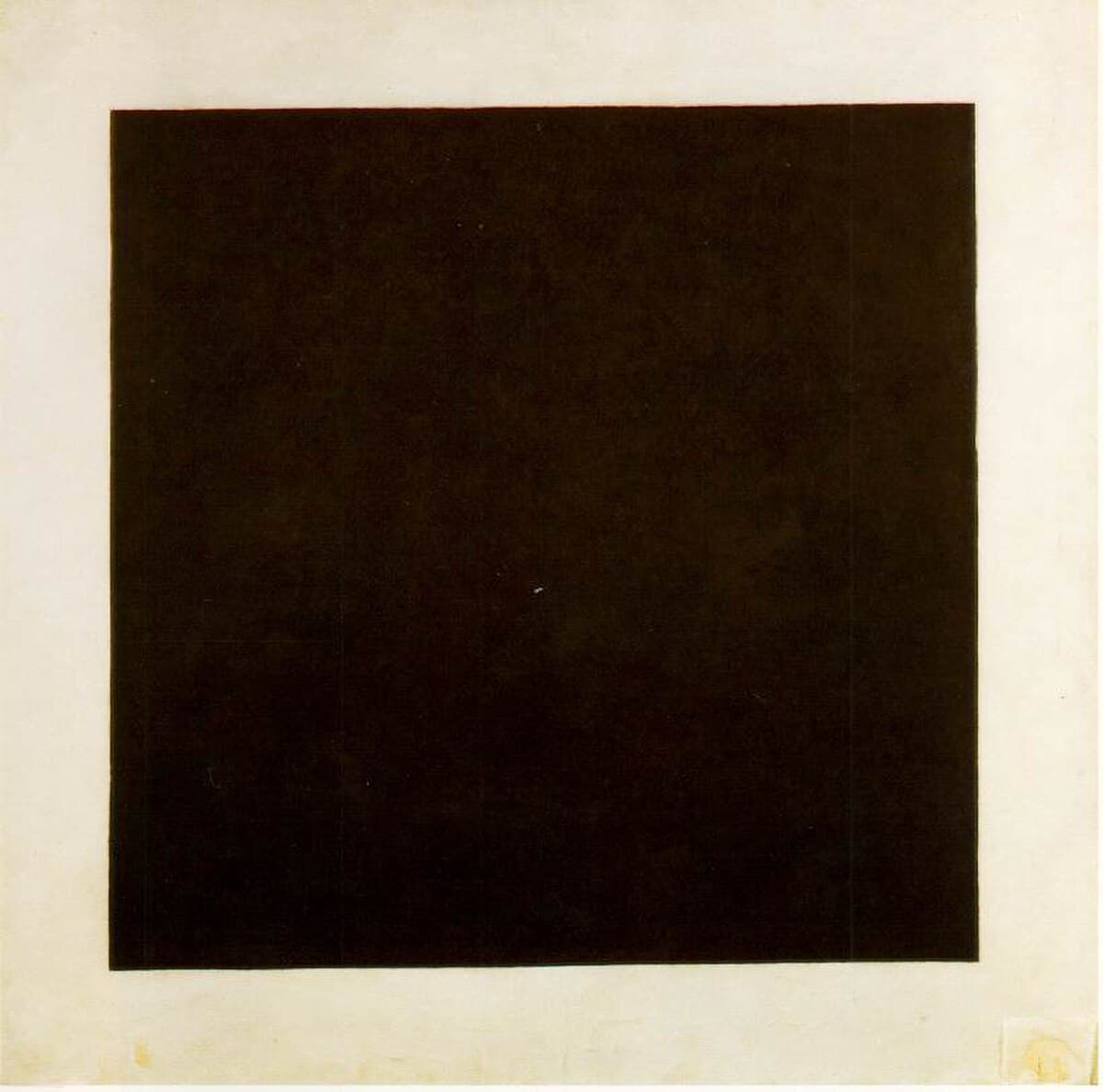
Kazimir Malevich (1879–1935) painted the end of representation. Born in Kiev to ethnic Polish parents, he worked through Impressionism, Symbolism, Fauvism, and Cubism before arriving at something unprecedented. In December 1915, at the "Last Futurist Exhibition 0.10" in Petrograd, he unveiled Black Square: a black square on a white ground, hung high in the corner where Russian Orthodox icons traditionally sat.
Malevich called his new movement Suprematism, seeking "the supremacy of pure feeling" through geometric abstraction free from any reference to the visible world. White on White (1918) took this to its logical conclusion: a white square tilted on a white background. These weren't just paintings; they were philosophical statements about the nature of art itself.
After the Revolution, Malevich taught in Vitebsk alongside Marc Chagall, founded the UNOVIS collective, and gained international recognition with shows in Warsaw and Berlin in 1927. But Stalin's regime rejected modernism. By the 1930s, Malevich lost his teaching position, saw his work confiscated, and was banned from making art. He returned to figurative peasant scenes in his final years. He died of cancer in Leningrad in 1935. At his funeral, mourners carried flags with black squares, and a black square marked his coffin and grave. His influence extends to Minimalism and beyond. Works are held at the State Hermitage, MoMA, and Tate Modern.
Notable Works by Kazimir Malevich
2 paintings catalogued with museum locations
Museums with Kazimir Malevich's Work
2 museums display Malevich's works. Click any museum to see visiting info and the specific works they hold.
Related Artists
Other Suprematism artists you might like
About Kazimir Malevich
Malevich founded Suprematism in 1915, a form of geometric abstract art seeking 'the supremacy of pure feeling' through basic shapes freed from representation. The name comes from 'supremus,' meaning superior or perfected. He wanted to liberate painting entirely from depicting objects in the visible world.
Major works are at the State Hermitage Museum in St. Petersburg, MoMA in New York, and Tate Modern in London. The Stedelijk Museum in Amsterdam holds an important collection. Many works remained hidden in Russia until the 1980s due to Soviet censorship.
Black Square (1915) shows a black square on a white ground. At its debut, Malevich hung it in the icon corner where Russian Orthodox families traditionally placed sacred images, declaring a new kind of spiritual art. He called it 'the zero point of painting' and the beginning of a new artistic era.
Stalin's regime banned his art as 'degenerate' and 'bourgeois,' confiscated his works and manuscripts, and stripped him of his teaching position at the Leningrad Academy. He was arrested and interrogated in 1930. Fellow artists burned his papers to protect him. He was forbidden to make abstract art.
When he died in 1935, mourners carried flags with black squares, and a black square was painted on his coffin lid. A black square originally marked his grave near Nemchinovka. The funeral became a final statement of Suprematist principles, though Soviet authorities later removed the marker and built over the site.
Love Kazimir Malevich's Style?
Explore art inspired by Suprematism.
Browse Collection