Follow the revolutionary artist from Malaga to Paris
Pablo Picasso lived 91 years and created over 13,500 paintings, plus thousands of sculptures, ceramics, and drawings. Born in Malaga, trained in Barcelona, he conquered Paris and reinvented art multiple times over seven decades. From the Blue Period to Cubism to his late expressionist works, Picasso's journey spans the entire history of modern art.
Pablo Ruiz Picasso was born on October 25, 1881, in a house on Plaza de la Merced. His father was an art teacher and painter. Young Pablo's talent emerged early; his first word was reportedly 'piz' (short for lápiz, Spanish for pencil). At age 8, he completed his first painting after watching his father paint pigeons.
Why it matters: Picasso's artistic DNA. The Mediterranean light, bullfighting traditions, and Spanish culture of Malaga influenced him throughout his life.
Over 200 works spanning Picasso's entire career, donated by his family
Palacio de Buenavista, Calle San Agustín, 8
Get ticketsThe house where Picasso was born, now a museum with family memorabilia and early works
Plaza de la Merced, 15
Get ticketsThe square where Picasso played as a child. A statue of him sits on a bench.
Where Picasso was baptized in 1881
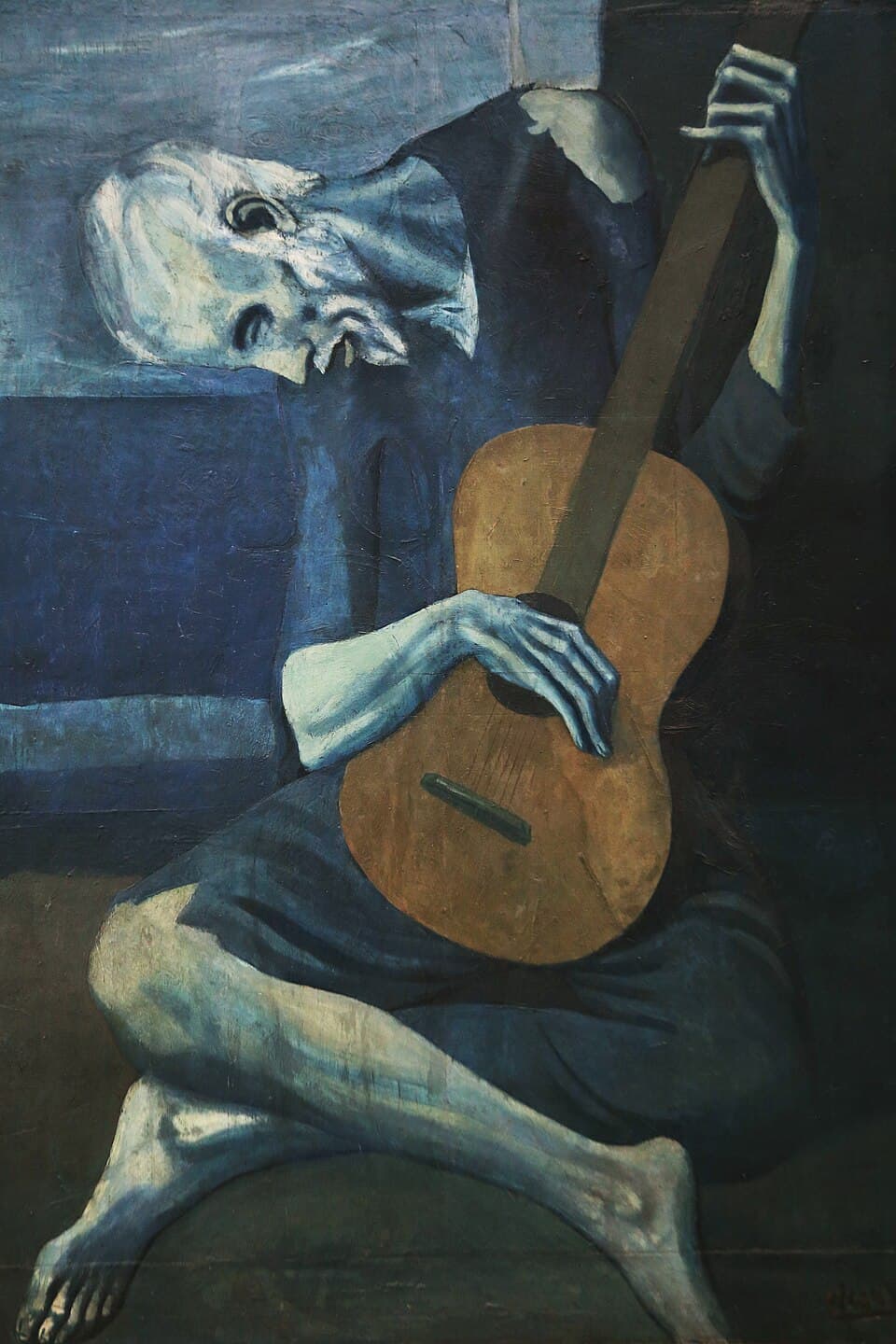
Picasso's family moved to Barcelona when he was 14. He enrolled at the prestigious La Llotja art school, where his father taught. Within months, he was outpainting his teachers. In the bohemian tavern Els Quatre Gats, he met fellow artists, held his first exhibition, and developed the melancholic style that became his Blue Period.
Why it matters: Barcelona made Picasso an artist. The Blue Period began here after the suicide of his friend Casagemas. The city's avant-garde scene prepared him for Paris.
Over 4,000 works including the complete Las Meninas series. The best collection of his early work.
Carrer Montcada, 15-23
Get ticketsThe bohemian café where Picasso had his first exhibition in 1900. Still operating as a restaurant.
Carrer de Montsió, 3
The art school where teenage Picasso studied and amazed his professors
The street that inspired Les Demoiselles d'Avignon, named after a Barcelona brothel
At 23, Picasso moved permanently to Paris, settling in the Bateau-Lavoir, a ramshackle building on Montmartre. In this freezing, cramped studio, surrounded by poets and artists, he created Les Demoiselles d'Avignon (1907), the painting that shattered Western art. With Georges Braque, he invented Cubism, fragmenting reality into geometric planes.
Why it matters: The most revolutionary studio in art history. Cubism emerged here, changing everything. Picasso's Rose and early Cubist periods unfolded in Montmartre.
The studio building where Picasso lived 1904-1909 and painted Les Demoiselles d'Avignon. Destroyed by fire in 1970, rebuilt; a plaque marks the site.
13 Place Émile Goudeau
Dedicated to the neighborhood's artistic history, with Renoir's former studio and gardens
12 Rue Cortot
Get ticketsThe square where Picasso and his friends gathered. Still filled with artists today.
The cabaret Picasso frequented, which he paid for a meal with a painting (Au Lapin Agile). Still operating.
22 Rue des Saules
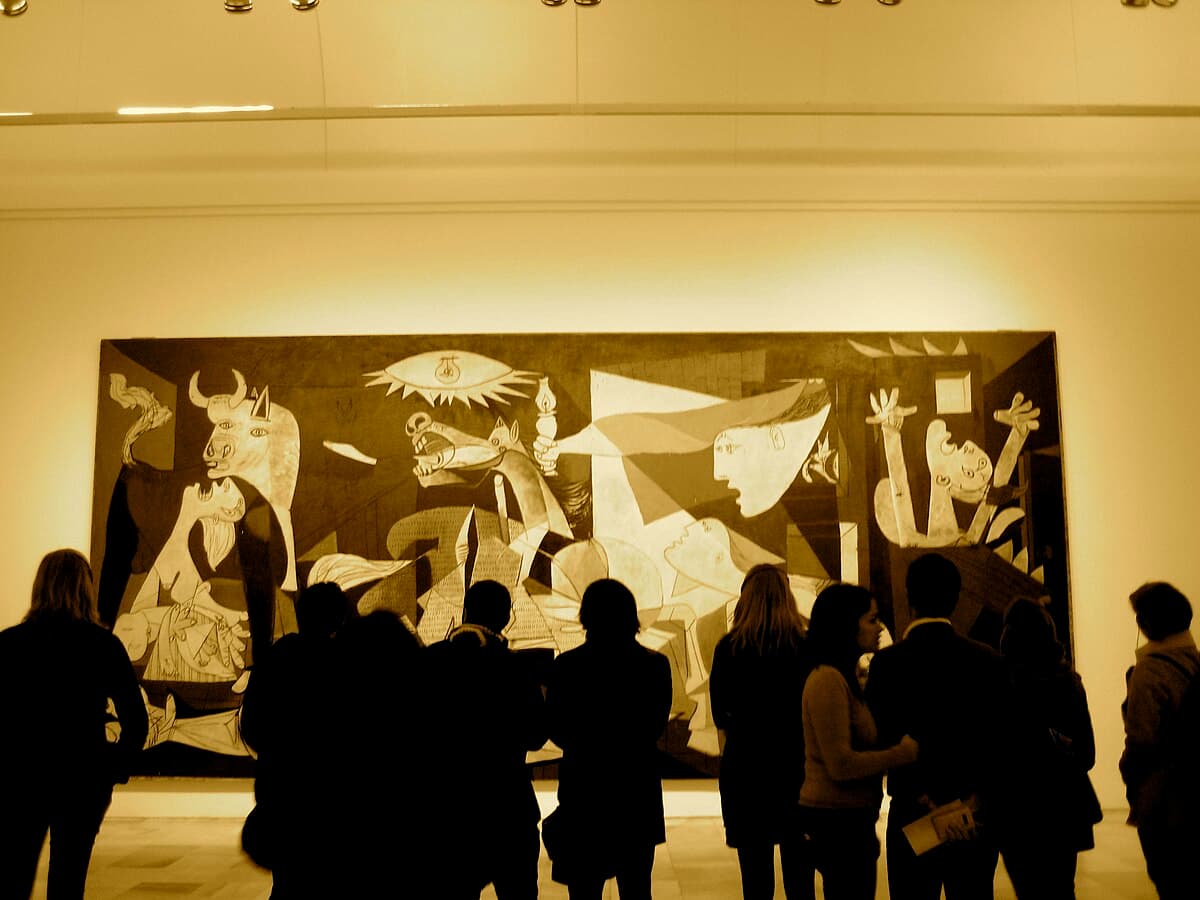
During the Nazi occupation, Picasso refused to flee Paris. He remained in his studio on Rue des Grands-Augustins, where he had painted Guernica in 1937. When German soldiers visited and saw a photo of Guernica, one asked 'Did you do that?' Picasso replied, 'No, you did.' He continued painting defiantly throughout the occupation.
Why it matters: Guernica, Picasso's response to the bombing of a Basque town, became the century's most powerful anti-war statement. His wartime resilience made him a symbol of resistance.
Picasso's studio where he painted Guernica and lived during WWII. Private building; plaque on exterior.
The world's largest Picasso collection with over 5,000 works across all periods
5 Rue de Thorigny, Le Marais
Get ticketsThe legendary café where Picasso, Sartre, and Simone de Beauvoir held court
172 Boulevard Saint-Germain
After WWII, Picasso discovered the pottery town of Vallauris and revolutionized ceramics. He created over 4,500 ceramic pieces, from plates to vases to sculptures. His presence revived the local pottery industry. The town made him an honorary citizen, and he created a monumental mural, War and Peace, for a medieval chapel.
Why it matters: Picasso proved there was no artistic medium he couldn't master and transform. Vallauris shows his playful late period and his continued ability to reinvent himself.
A 12th-century chapel housing Picasso's War and Peace murals
Place de la Libération
Get ticketsPicasso's bronze sculpture gifted to the town, in the central square
Place Paul Isnard
The pottery workshop where Picasso created ceramics. Many pieces still produced from his original designs.
Most of Picasso's Vallauris ceramics are in private collections or the Musée Picasso Paris.
Picasso spent his last 12 years at Notre-Dame-de-Vie, a farmhouse estate in Mougins overlooking the Mediterranean. Despite his age, he worked furiously, producing over 1,000 paintings and 2,000 drawings. His late works, once dismissed, are now recognized as a final burst of expressive genius.
Why it matters: Picasso worked until two days before his death at 91. The late period shows an artist confronting mortality with undiminished creative fire.
Picasso's final home where he died on April 8, 1973. Private property; visible from the road.
Contains a significant collection of Picasso ceramics and works by his contemporaries
Get ticketsThe medieval hilltop village Picasso loved, with galleries and restaurants
Explore his formative years at the Museu Picasso, Els Quatre Gats, and the Gothic Quarter
Visit Montmartre's Bateau-Lavoir, the Musée Picasso, and Left Bank haunts
A comprehensive journey through all major Picasso locations
With 13,500+ paintings, Picasso's work fills museums worldwide. These collections are essential:
Madrid, Spain
Home of Guernica, displayed in its own gallery
Barcelona, Spain
The world's best collection of early Picasso
Paris, France
5,000+ works spanning all periods
New York, USA
Houses Les Demoiselles d'Avignon and Three Musicians
Málaga, Spain
In his birthplace, donated by his family
Born in Málaga, Spain on October 25
Family moves to Barcelona; enrolls at La Llotja art school
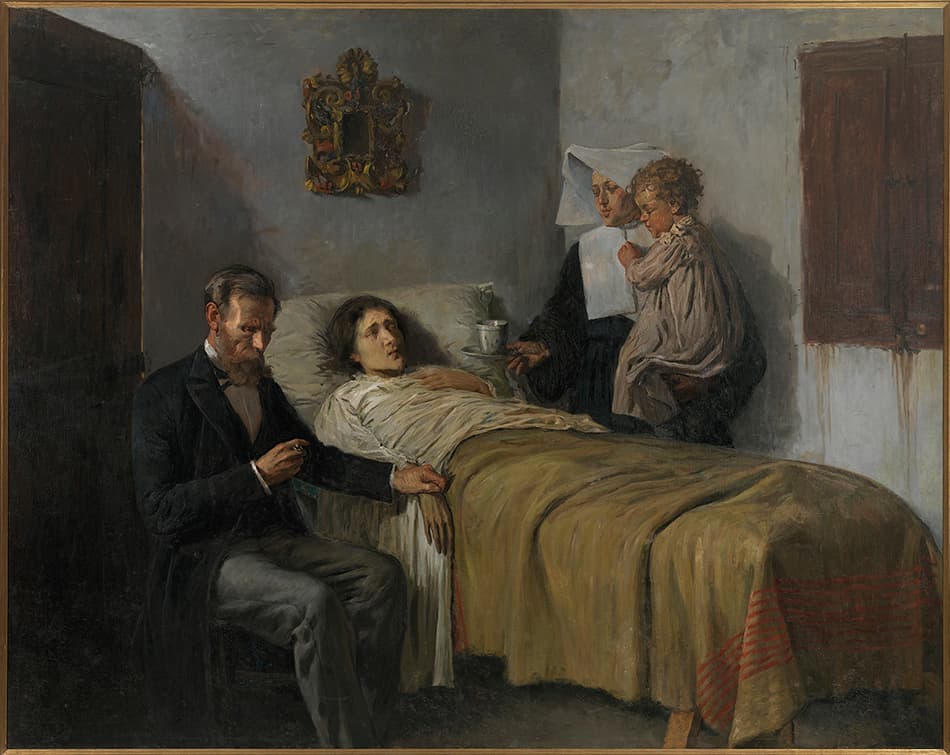
Paints Science and Charity at age 15
Blue Period begins after friend's suicide
Moves to Paris permanently; settles in Bateau-Lavoir
Paints Les Demoiselles d'Avignon; Cubism begins
Paints Guernica in response to Spanish Civil War bombing
Joins Communist Party after Paris liberation
Moves to Vallauris; begins ceramics
Settles in Mougins for final years
Dies at Mougins on April 8, aged 91
Browse our database of Pablo Picasso's paintings and discover where each masterpiece is displayed today.

1902