Wikimedia Commons • Public Domain
Pansies
Artwork Details
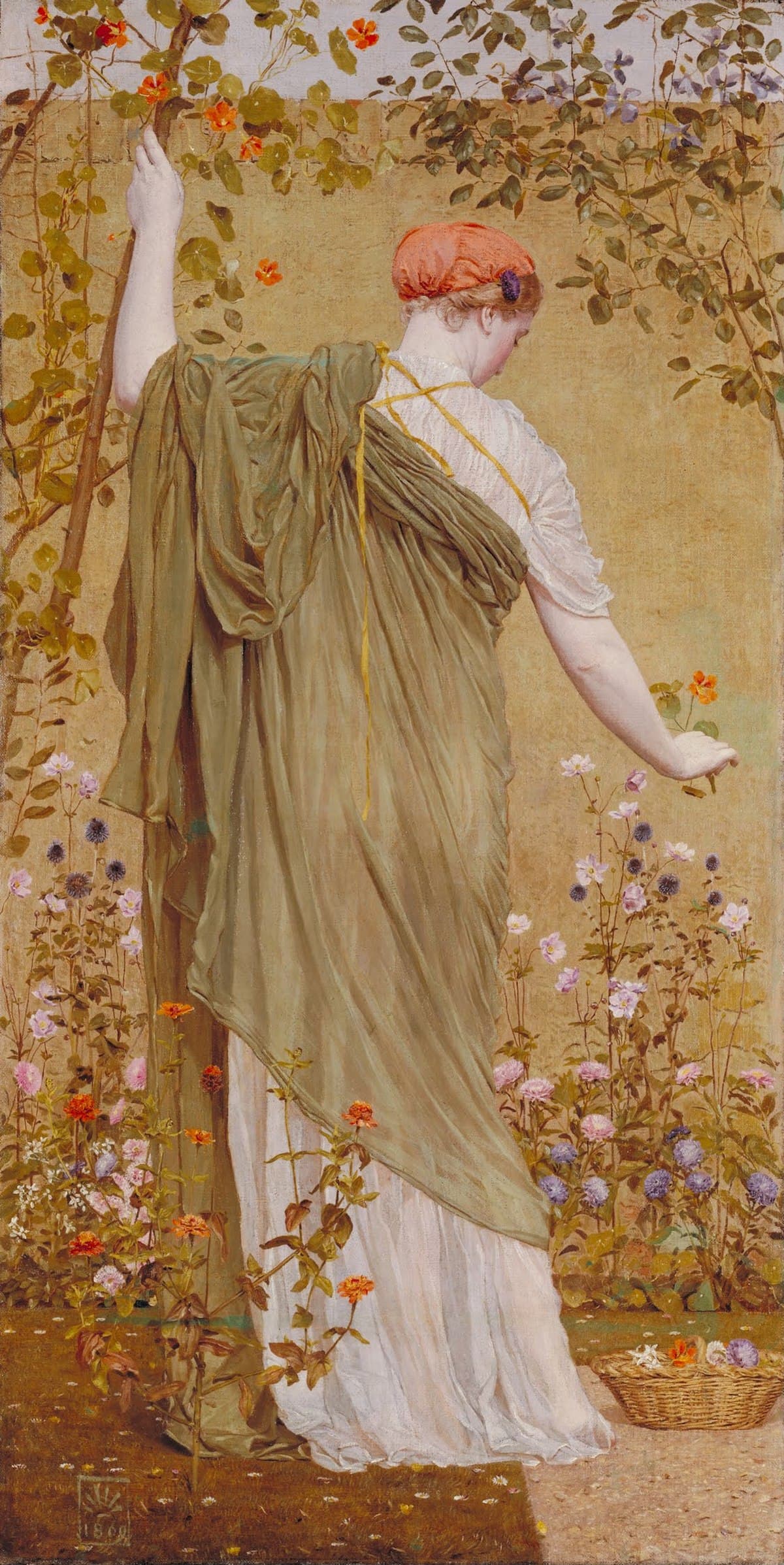
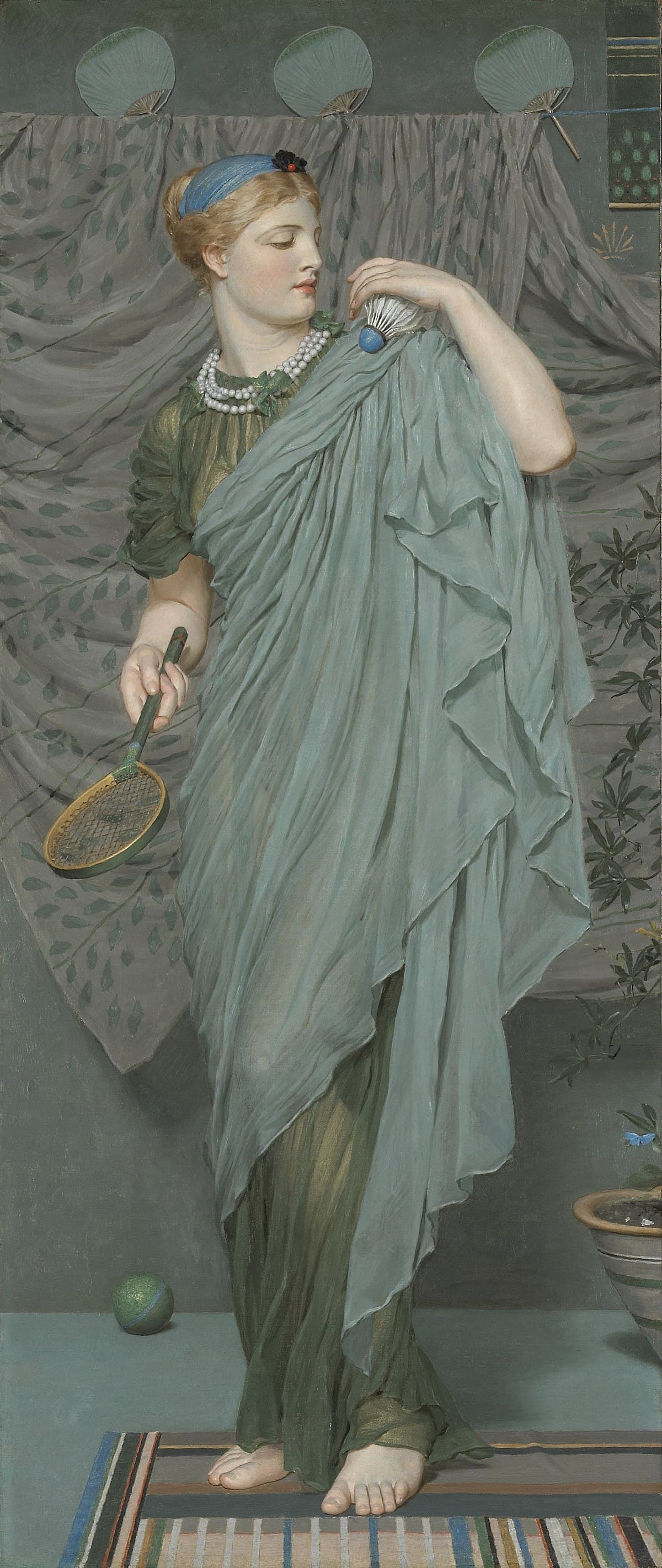
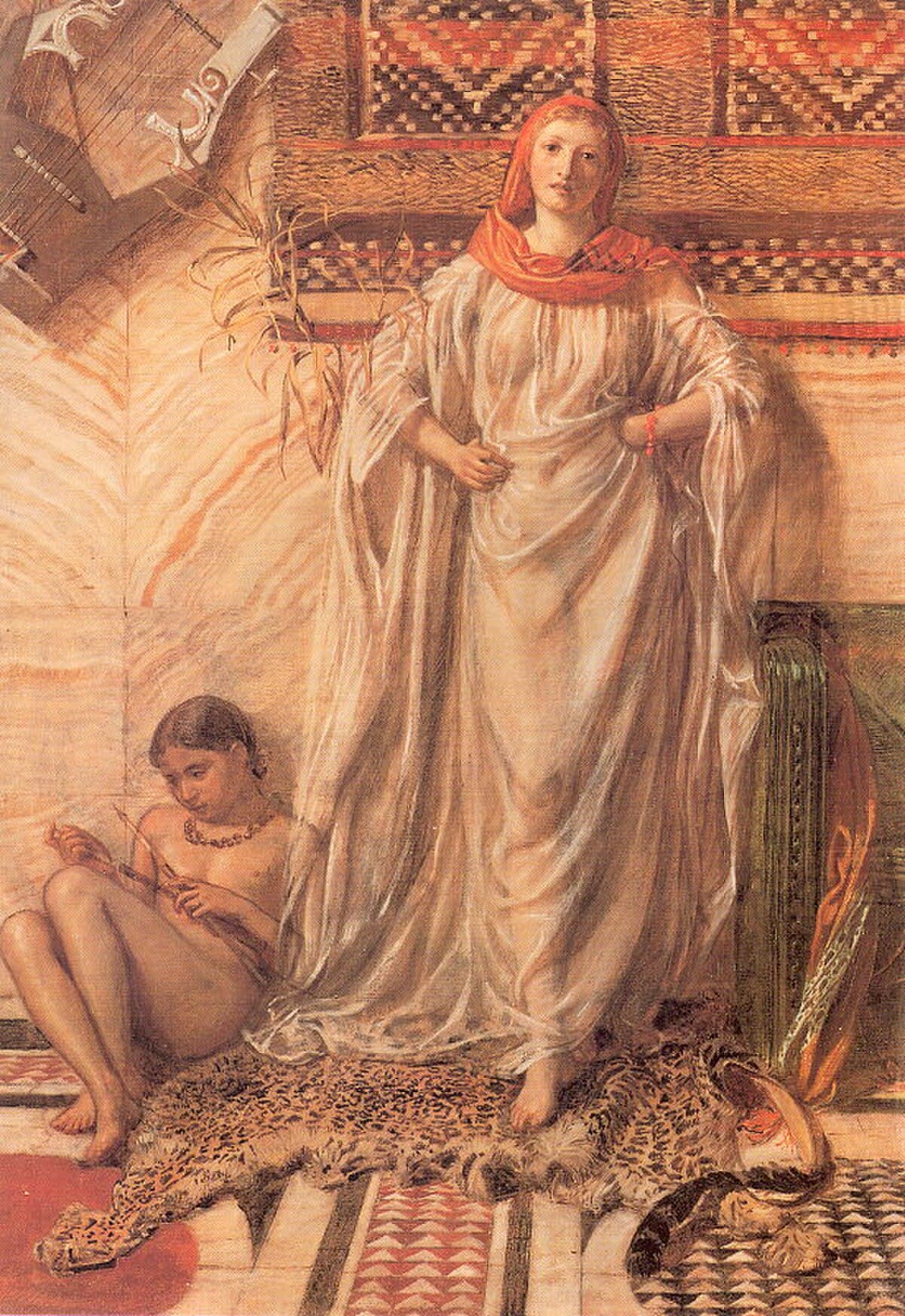
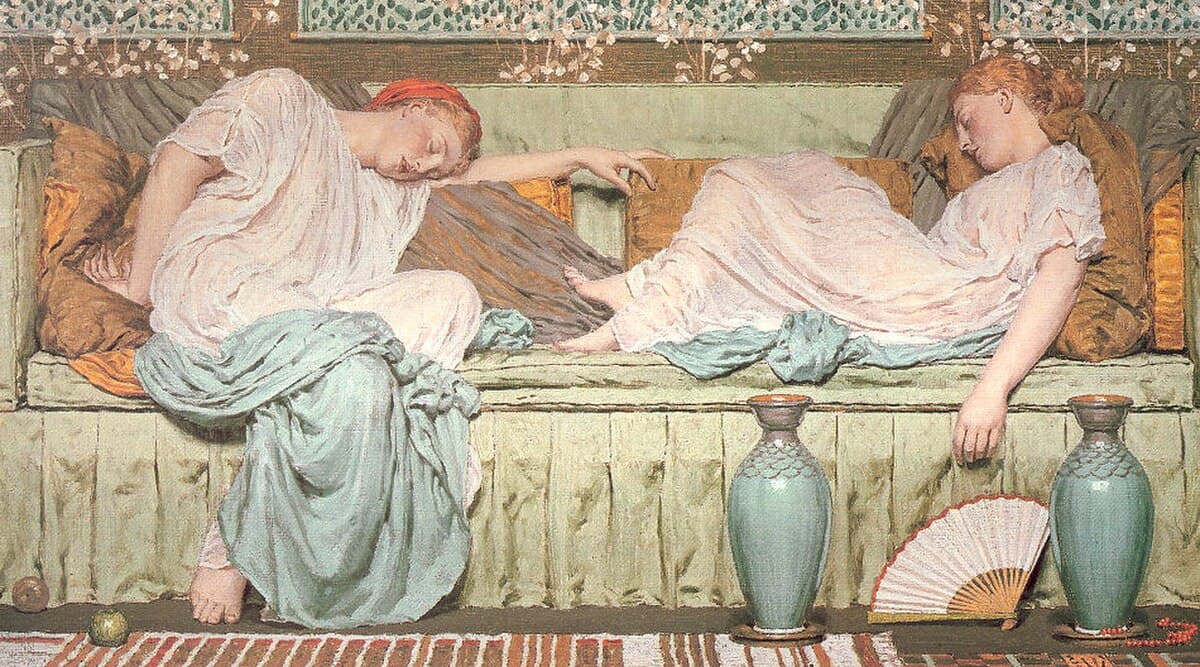
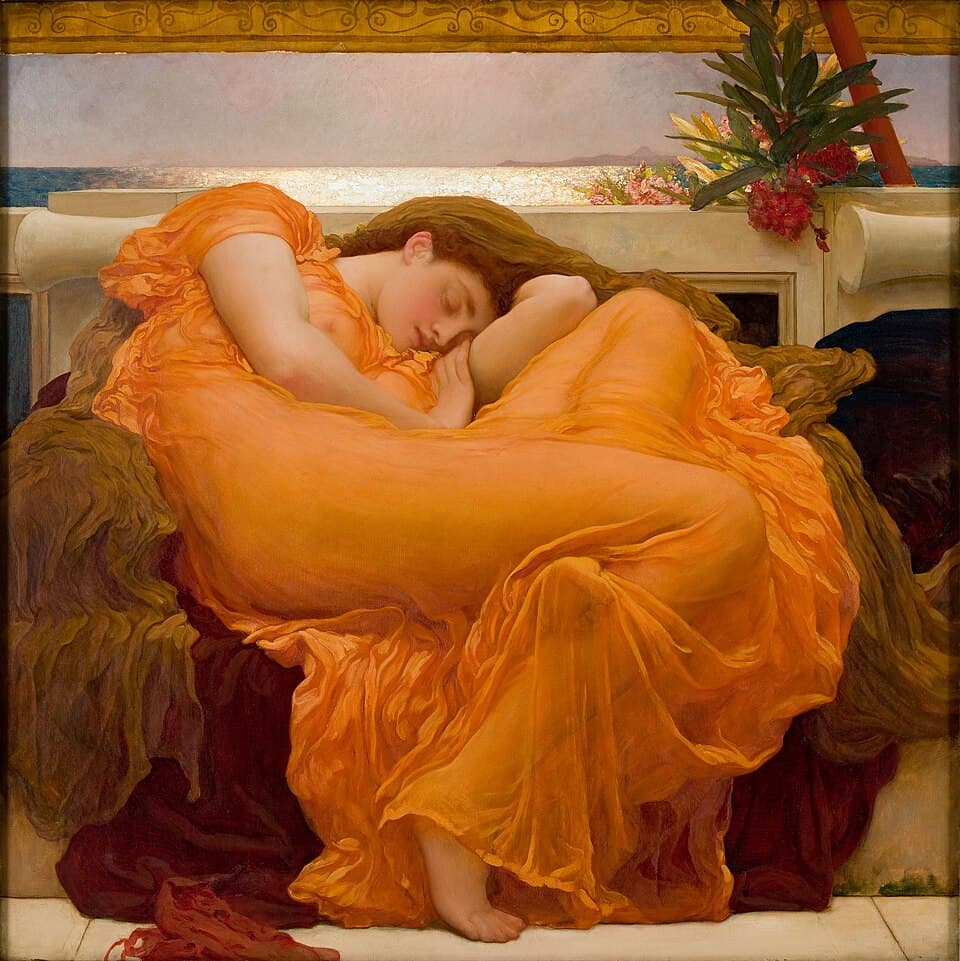
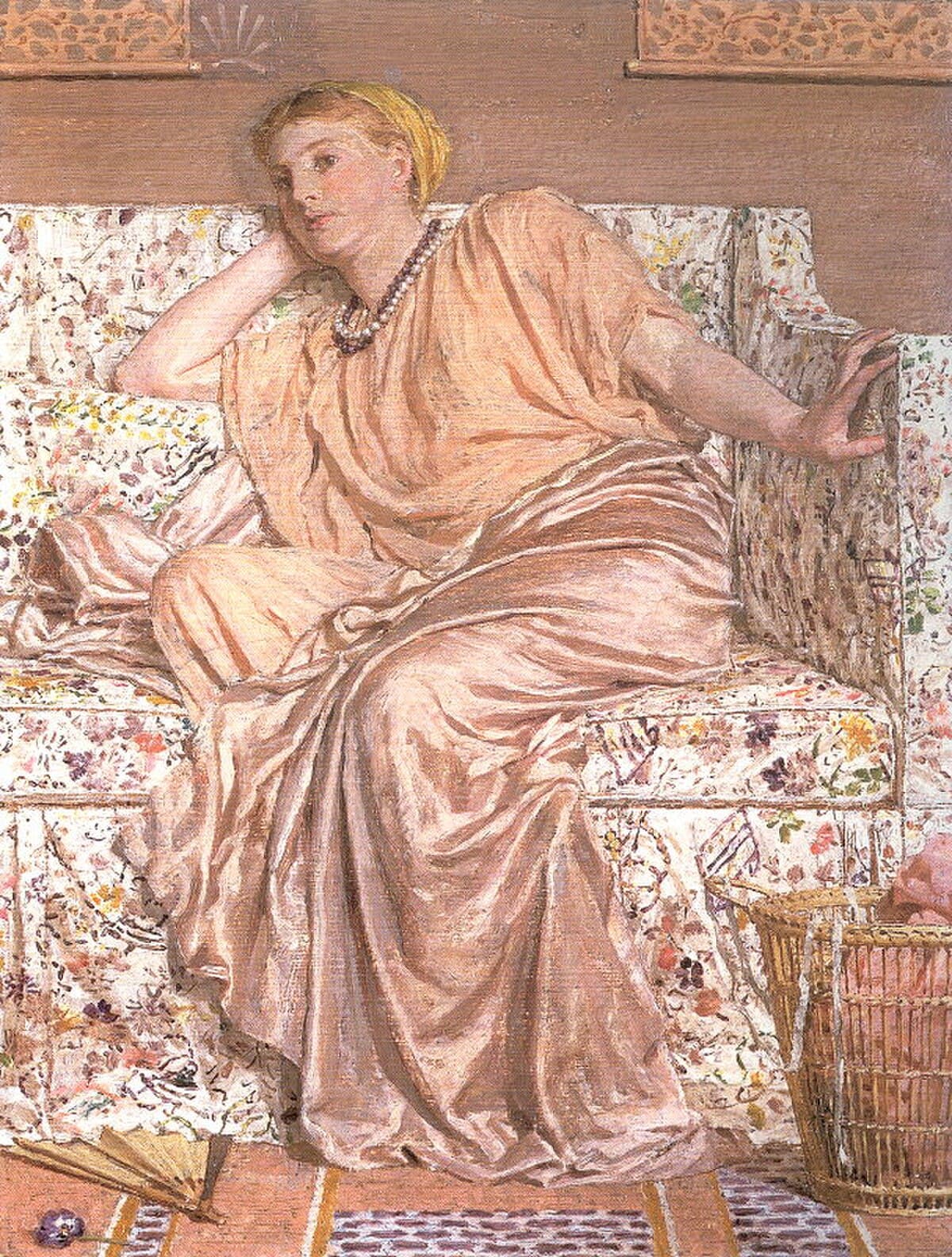
Albert Joseph Moore composed this work around 1875, depicting a woman in a moment of quiet contemplation. Despite its floral title, the painting focuses on a female figure seated against a richly patterned backdrop. Her attire, rendered in warm peach tones, drapes softly around her form, emphasizing the fluidity of the fabric. She gazes away from the viewer, suggesting introspection or daydreaming.
Moore was a central figure in the Aesthetic Movement that flourished in late Victorian Britain. The movement's motto, "art for art's sake," guided his work. There's no moral lesson or allegorical meaning here. Beauty of form takes precedence over function or narrative. This approach made aestheticism, and Moore's paintings, unconventional in Victorian Britain.
His friendship with James Abbott McNeill Whistler, formed around 1865, deepened his interest in decorative color harmonies. Moore's typical subjects became single female figures with formalized proportions, neo-classical drapery, and floral accessories. As critic Sidney Colvin wrote in 1870, "The subject, whatever subject is chosen, is merely a mechanism for getting beautiful people into beautiful situations." The painting measures approximately 19.1 by 26 centimeters and remains in a private collection.