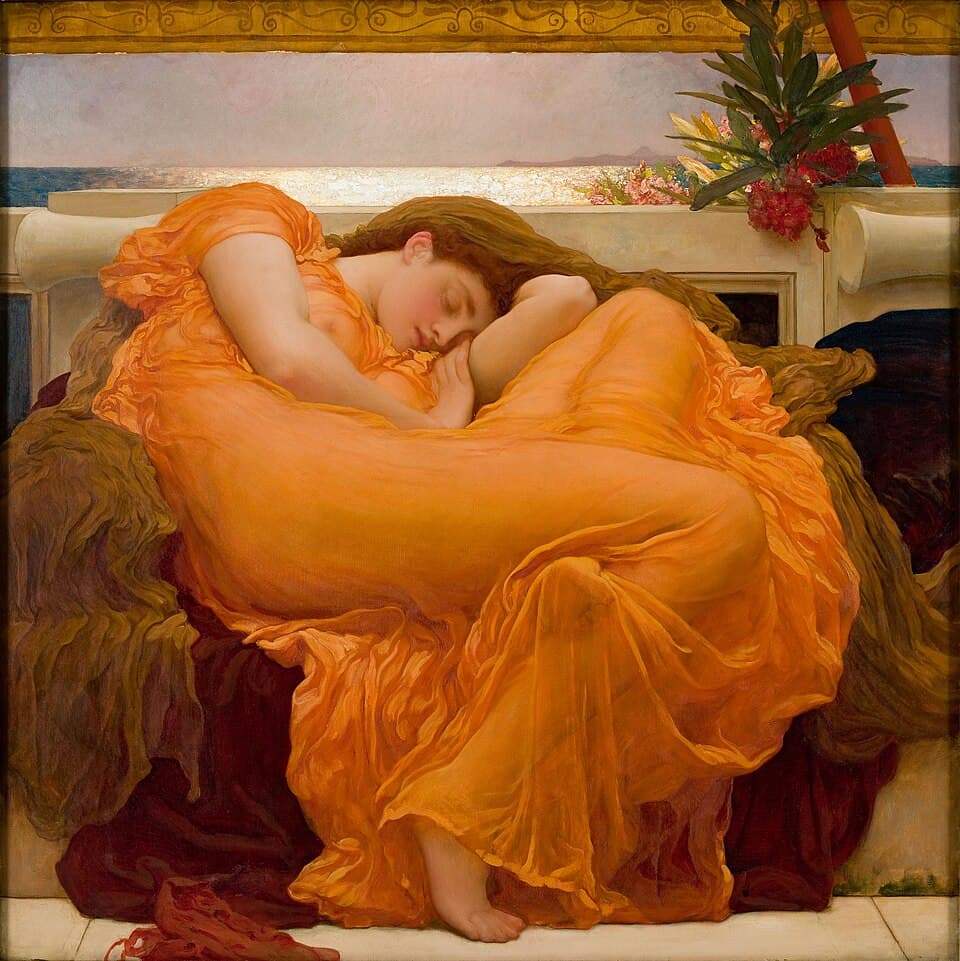
Flaming June
by Frederic Leighton, 1895
StyleAcademic Art
Artwork Details
Details
- Year
- 1895
- Medium
- Oil on canvas
- Size
- 120.6 cm × 120.6 cm
Cite or Embed This Work
APA · MLA · Chicago1-click academic citation and embeddable “On View” museum badge for articles, syllabi, and research.
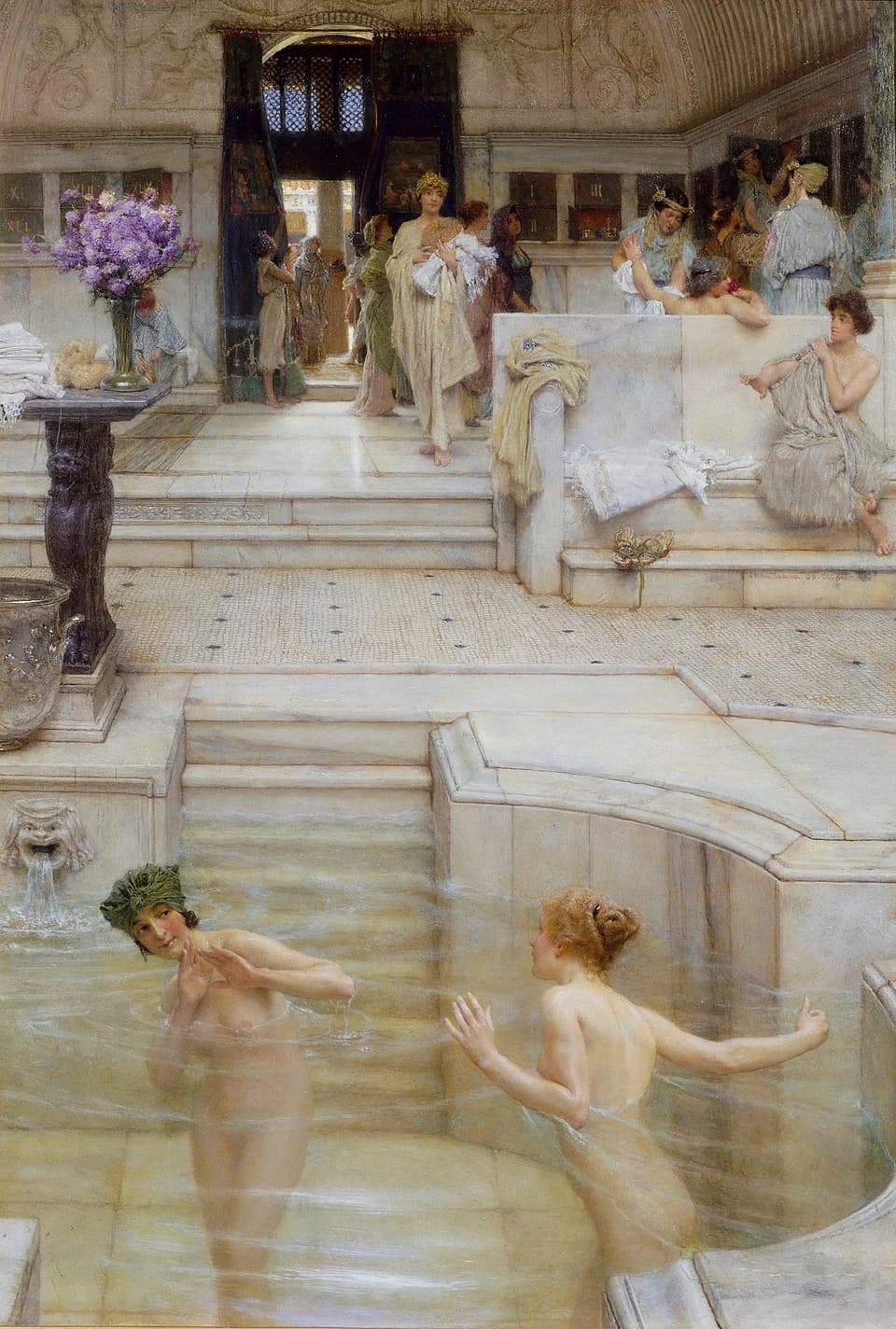
Working in oil on canvas, Frederic Leighton painted this iconic sleeping figure in 1895, the final year of his life. A woman in a brilliant orange dress curls on a marble terrace, her pose loosely modeled on Michelangelo's statue of Night in the Medici Tombs. Leighton originally conceived her as decoration for a marble bath in another painting but became so attached to the design he made it a work of its own.
Leighton was Victorian Britain's most eminent artist: painter, sculptor, president of the Royal Academy, and the only British artist ever ennobled. Critics at the 1895 Royal Academy exhibition called Flaming June one of his finest works. The Graphic magazine bought it, creating a high-quality reproduction as a Christmas gift that year. When Leighton died in January 1896, they displayed it in their office window as his funeral procession passed.
The painting vanished for three decades until 1962, when it reappeared in south London. Andrew Lloyd Webber saw it in a shop on Kings Road but couldn't afford the £50 asking price. In 1963, Puerto Rican collector Luis Ferré bought it for the Museo de Arte de Ponce, where it remains the collection's signature work.