Wikimedia Commons • Public Domain
The Summer
Artwork Details
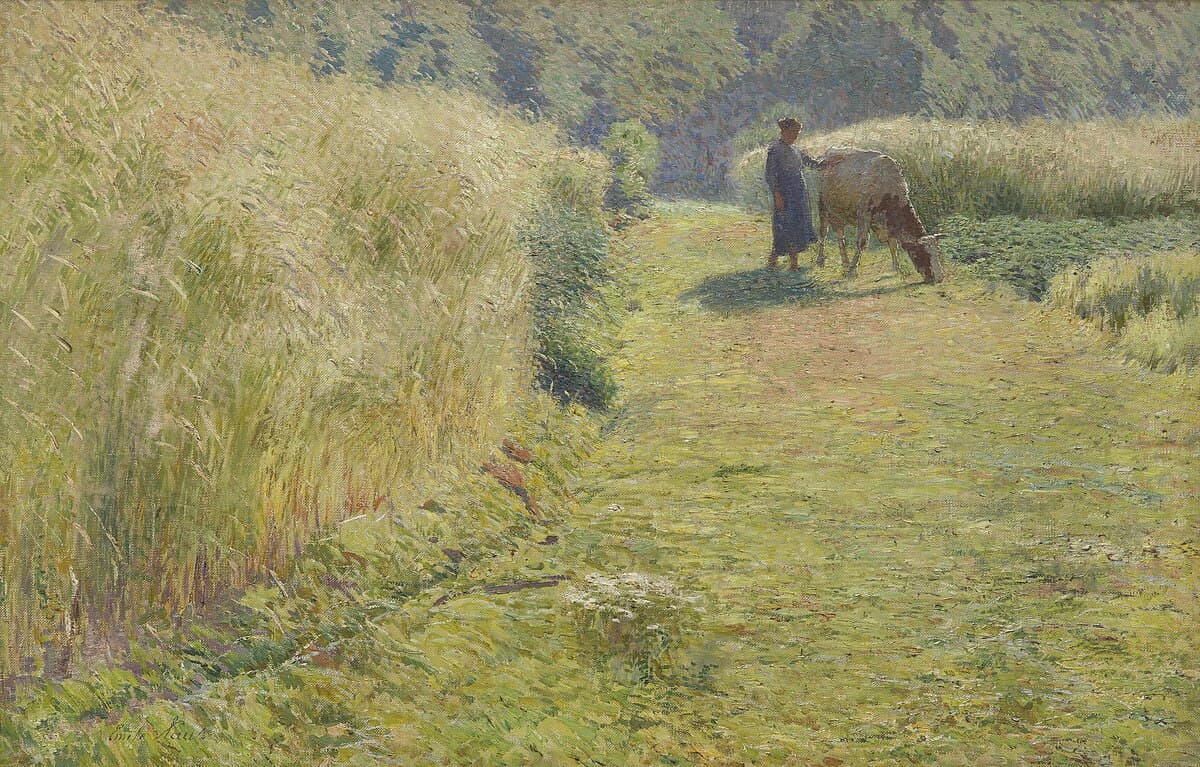
Caspar David Friedrich painted The Summer in 1807 as part of a series depicting the times of day and seasons. The composition shows two lovers embracing within a leafy bower, surrounded by the full abundance of summer vegetation. Flowers bloom, vines climb, and the natural world reaches its peak of vitality, framing the human couple in a celebration of life and love.
Friedrich typically avoided depicting human intimacy so directly. His figures usually appear alone, contemplating nature from behind, their backs to the viewer. Here the embrace feels almost hidden within the bower, sheltered by nature rather than exposed to it. The summer setting represents the prime of life, paralleling the couple's romantic connection with the season's warmth and fertility.
The series pairs this work with other seasons, creating a meditation on the cycle of life from youth to old age, morning to evening. Friedrich's Romantic vision saw nature as a mirror for human experience, each season carrying symbolic weight. The painting now hangs at the Neue Pinakothek in Munich, where it represents the more intimate, lyrical side of an artist better known for sublime landscapes.