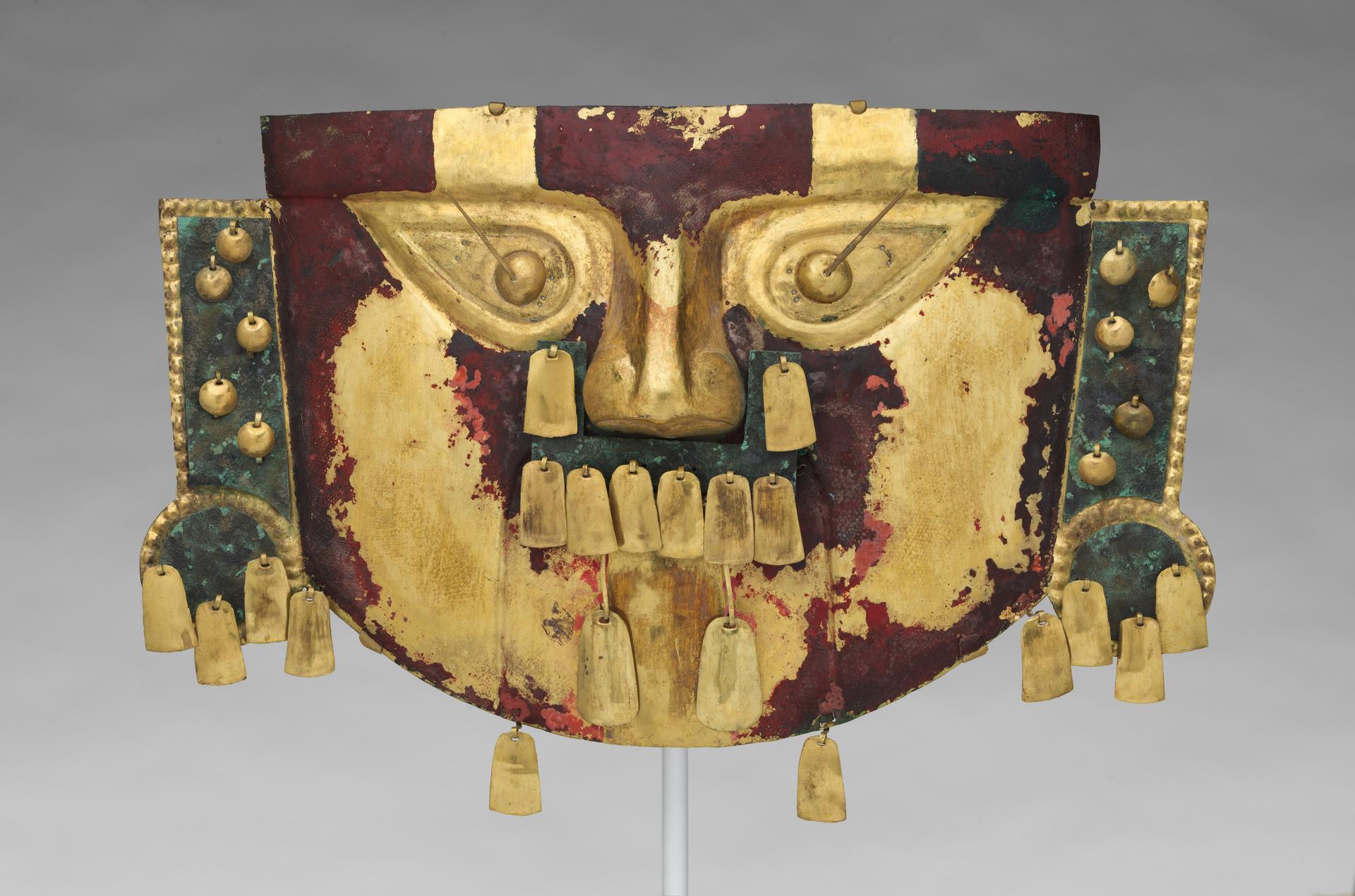
Aztec Xiuhtecuhtli Mask
by Ancient Aztec (Unknown), 1500
Artwork Details
Details
- Year
- 1500
- Medium
- Turquoise, cedar wood, mother-of-pearl
- Size
- 16.8 cm × 15.2 cm (6.6 × 6 in)
Cite or Embed This Work
APA · MLA · Chicago1-click academic citation and embeddable “On View” museum badge for articles, syllabi, and research.
This turquoise mosaic mask likely represents Xiuhtecuhtli, the Aztec god of fire and time. Created around 1500 CE, the cedar wood mask is covered with turquoise tesserae, with eyes made of mother-of-pearl and teeth of white conch shell. The serene expression and blue coloring associate it with fire's symbolic power and the passage of time.
Aztec craftsmen created such masks for ritual use, either worn by priests impersonating deities or placed on sacred bundles representing the gods. The turquoise's blue-green color held deep symbolic meaning, associated with both sky and fire. This mask was likely among objects taken to Europe shortly after the Spanish conquest.
The mask is at the British Museum.
More by Ancient Aztec (Unknown)
View all →Sculpture
A
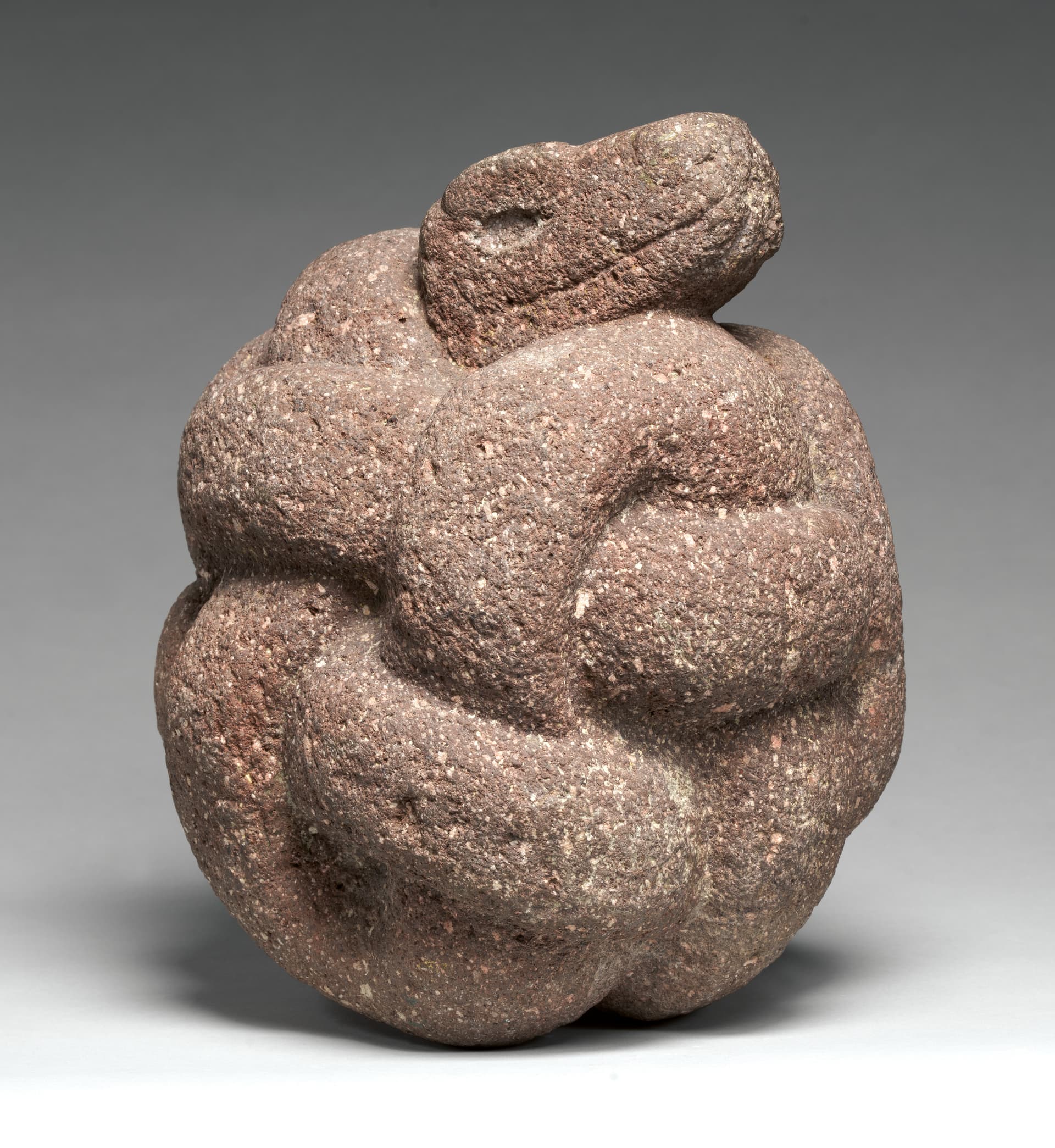
Aztec Double-Headed Serpent
Ancient Aztec (Unknown), 1480
British Library, London, London
Sculpture
C

Coatlicue
Ancient Aztec (Unknown), 1500
Museo Nacional de Antropología, Mexico City
Sculpture
A
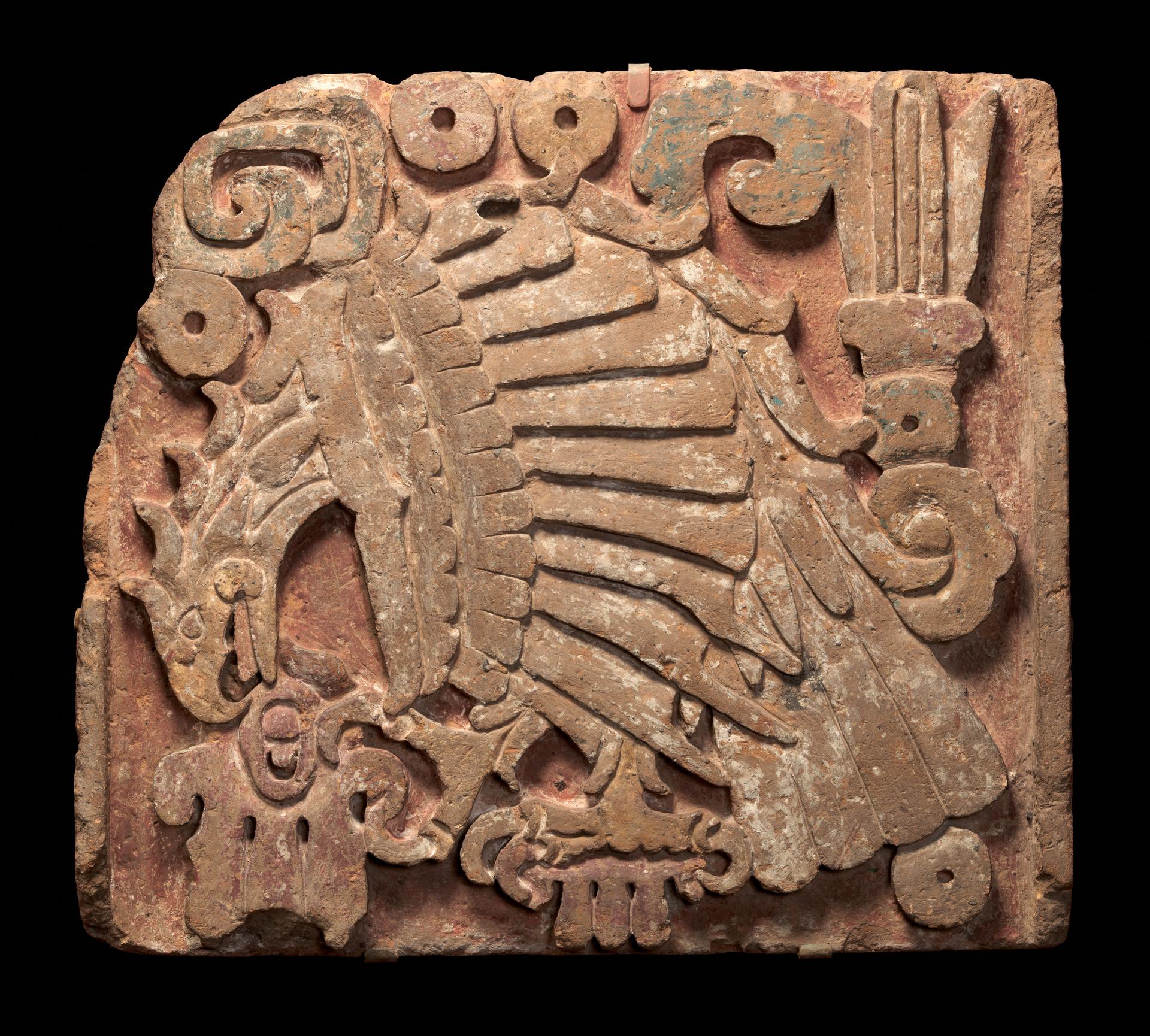
Aztec Sun Stone (Calendar Stone)
Ancient Aztec (Unknown), 1500
Museo Nacional de Antropología, Mexico City
Also at British Library, London
View all →Sculpture
R

Rosetta Stone
Ancient Egyptian (Unknown), -196
British Library, London, London
Drawing
H

Head of a Muse
Raphael, 1510
British Library, London, London
Sculpture
C
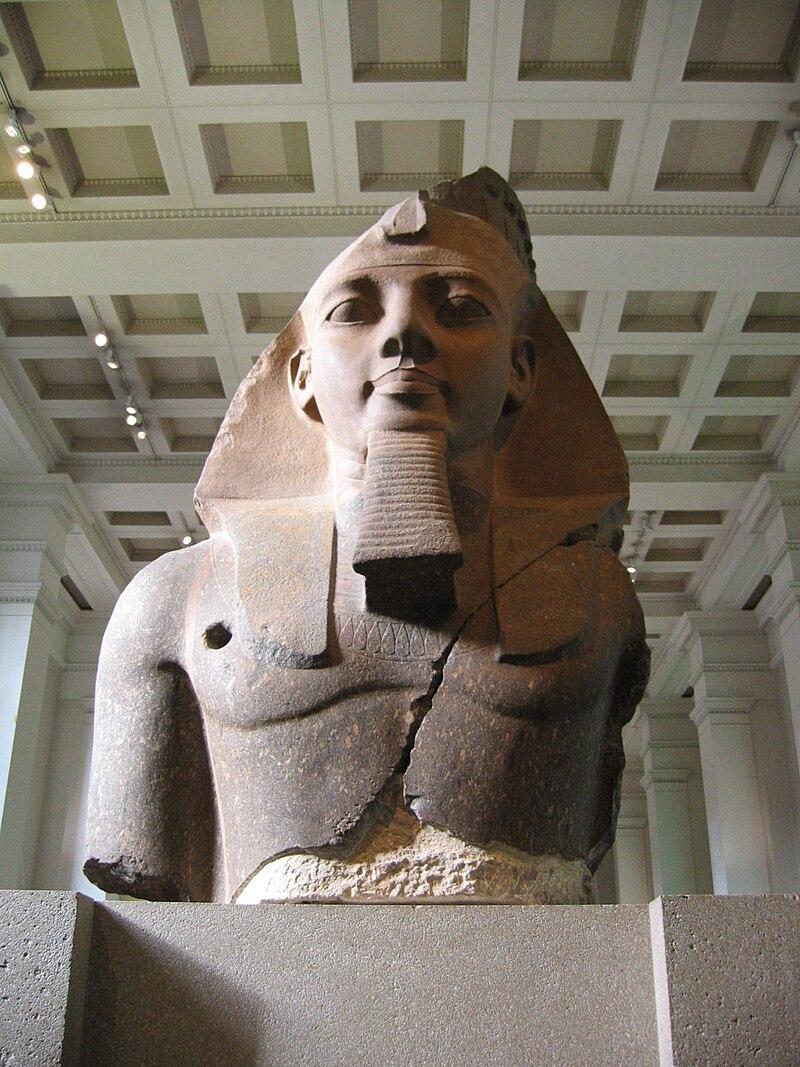
Colossal Bust of Ramesses II
Ancient Egyptian (Unknown), -1250
British Library, London, London
Sculpture
A
Aztec Double-Headed Serpent
Ancient Aztec (Unknown), 1480
British Library, London, London
Related Works
Works that share an artist, movement, museum, genre, palette or theme with Aztec Xiuhtecuhtli Mask.
- Same museum
Yaxchilán Lintel 24
Ancient Maya (Unknown), 725
- Same museum
Colossal Head of Amenhotep III
Ancient Egyptian (Unknown), -1350
- Same museum
Ife Bronze Head
Ancient Ife (Unknown), 1300
- Same museum
Benin Bronze Plaque: Warriors
Ancient Benin (Unknown), 1550
- Same museum
Benin Bronze Head of a Queen Mother
Ancient Benin (Unknown), 1500

- Same museum
Taharqa Sphinx
Ancient Egyptian (Unknown), -680
- Same museum
Lewis Chessmen
Ancient Japanese (Unknown), 1150
- Same museum
The Fall of Phaeton
Michelangelo, 1533
- Same museum
Rhinoceros
Albrecht Dürer, 1515
About Aztec Xiuhtecuhtli Mask
The mask is at the British Museum in London. It's one of only about 25 Aztec turquoise mosaics known to survive.
Xiuhtecuhtli was the Aztec god of fire and time. He presided over the New Fire ceremony, held every 52 years to renew the cosmic cycle.
The mask measures 16.8 × 15.2 cm (6.6 × 6 inches). Its small size suited placement on sacred bundles or wearing by priests.
Turquoise's blue-green color symbolized both fire and sky in Aztec thought. It was more valuable than gold to Mesoamerican peoples.
Own Art Like This
Luxury wall art with the same mood and energy. Gallery-quality canvas, no museum crowds.
Browse Collection