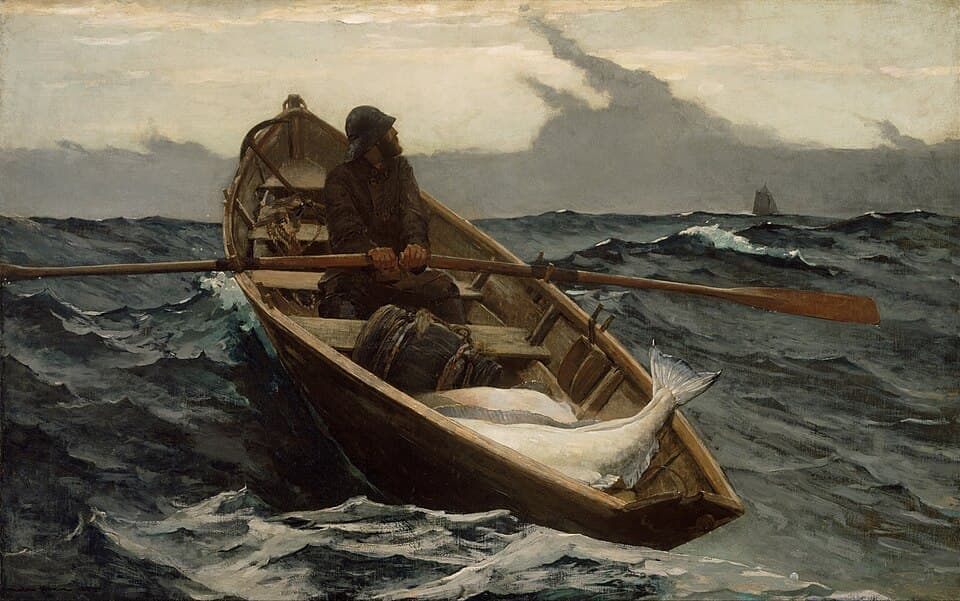
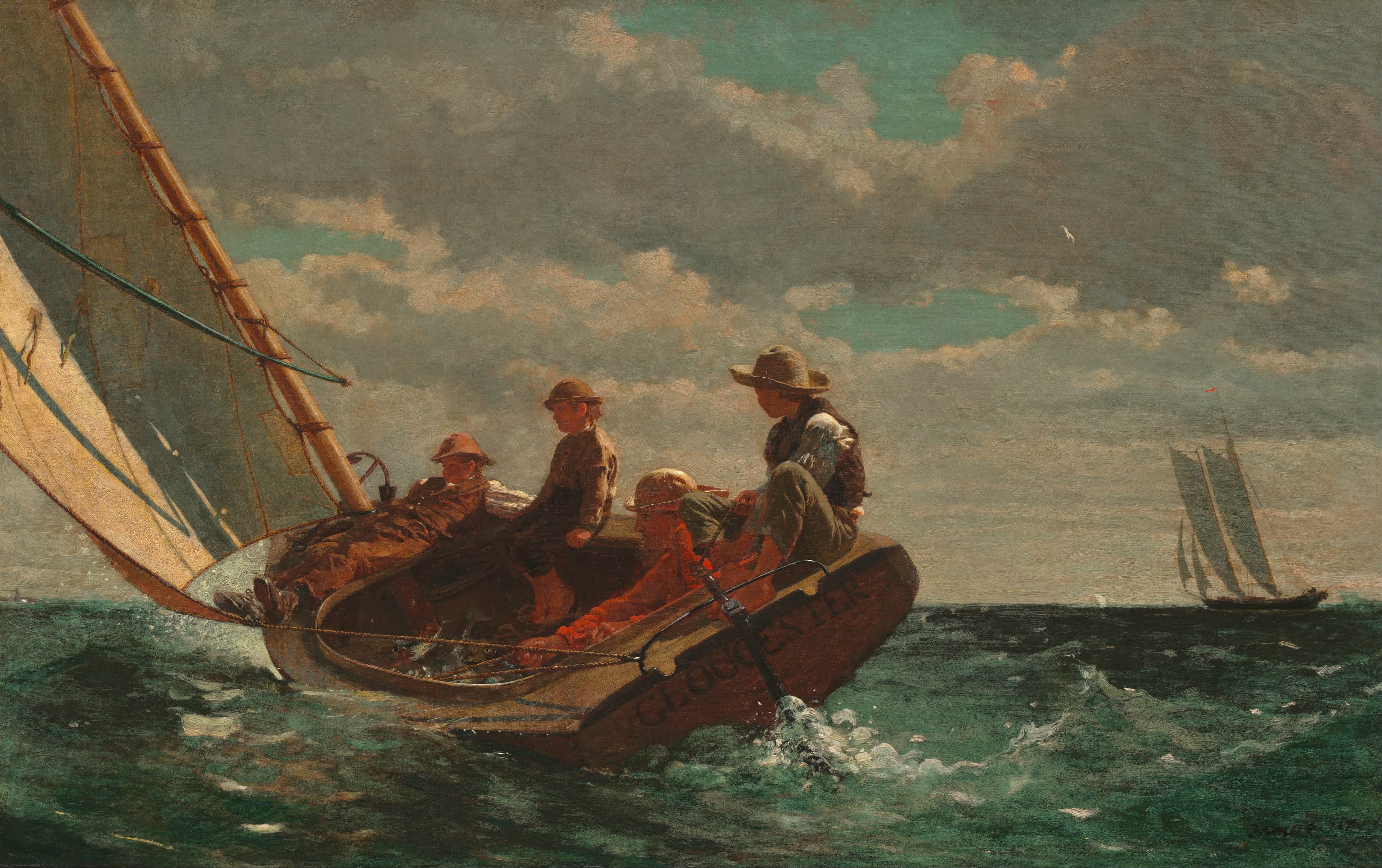
Breezing Up (A Fair Wind)
by Winslow Homer, 1876
StyleAmerican Realism
Artwork Details
Details
- Year
- 1876
- Medium
- Oil on canvas
- Size
- 61.5 cm × 97 cm
Cite or Embed This Work
APA · MLA · Chicago1-click academic citation and embeddable “On View” museum badge for articles, syllabi, and research.
Winslow Homer painted the Breezing Up (A Fair Wind) between 1873 and 1876, depicting a catboat chopping through Gloucester harbor. A man and three boys sail with their catch, the boat heeling in the wind as a schooner passes in the distance. Homer began the work in New York using watercolor sketches from his visits to Gloucester, Massachusetts.
The composition shows Japanese influence in its balance between the active left side and sparse right. Homer had visited France in 1866-67, absorbing both Japanese prints and French marine painting by Courbet and Monet. Infrared analysis revealed he made many changes, including removing a fourth boy near the mast.
First exhibited at the National Academy of Design in 1876, America's centennial year, the painting came to be called "Breezing Up" though this wasn't Homer's title. The National Gallery of Art in Washington, D.C. purchased it in 1943. Today it's considered one of Homer's finest works and an icon of 19th-century American art.
![Gian Federico Madruzzo Oil Canvas Giovanni Battista[1] by Giovanni Battista Moroni](/apps/masterpieces/_next/image?url=https%3A%2F%2Fyfndmpigludzuzjjdfce.supabase.co%2Fstorage%2Fv1%2Fobject%2Fpublic%2Fartwork-images%2Fartwork-wiki%2Fgiovanni-battista-moroni-gian-federico-madruzzo-oil-canvas-giovanni-battist.jpg&w=3840&q=75)