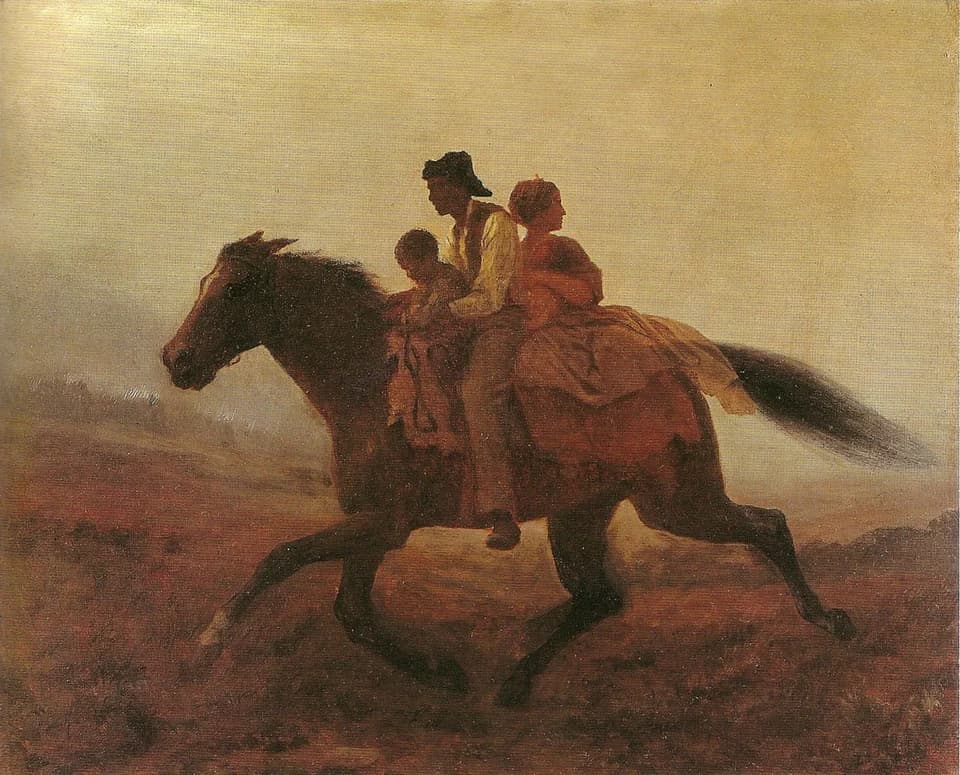
A Ride for Liberty – The Fugitive Slaves
by Eastman Johnson, 1862
StyleAmerican Realism
Artwork Details
Details
- Year
- 1862
- Medium
- Oil on board
- Size
- 55.8 cm × 66.4 cm
Cite or Embed This Work
APA · MLA · Chicago1-click academic citation and embeddable “On View” museum badge for articles, syllabi, and research.
Eastman Johnson painted A Ride for Liberty in 1862, depicting an African American family fleeing enslavement during the Civil War. A father, mother, and small child ride a galloping horse across a barren battlefield. The father looks ahead to the future, the mother glances back at the past, while the child stares down at the present moment.
Johnson claimed to witness this scene near Manassas, Virginia, on March 2, 1862, inscribing the back of one canvas with the date and location. The absence of white figures makes this liberation subject virtually unique in American art of the period. These African Americans are agents of their own freedom, not passive recipients of emancipation.
Three versions exist. The Brooklyn Museum version, signed "E.J." at lower right, was donated by Johnson's granddaughter in 1940. The painting's title references the Fugitive Slave Act, which had prohibited anyone from aiding escaped slaves before the war began.