Wikimedia Commons • Public Domain
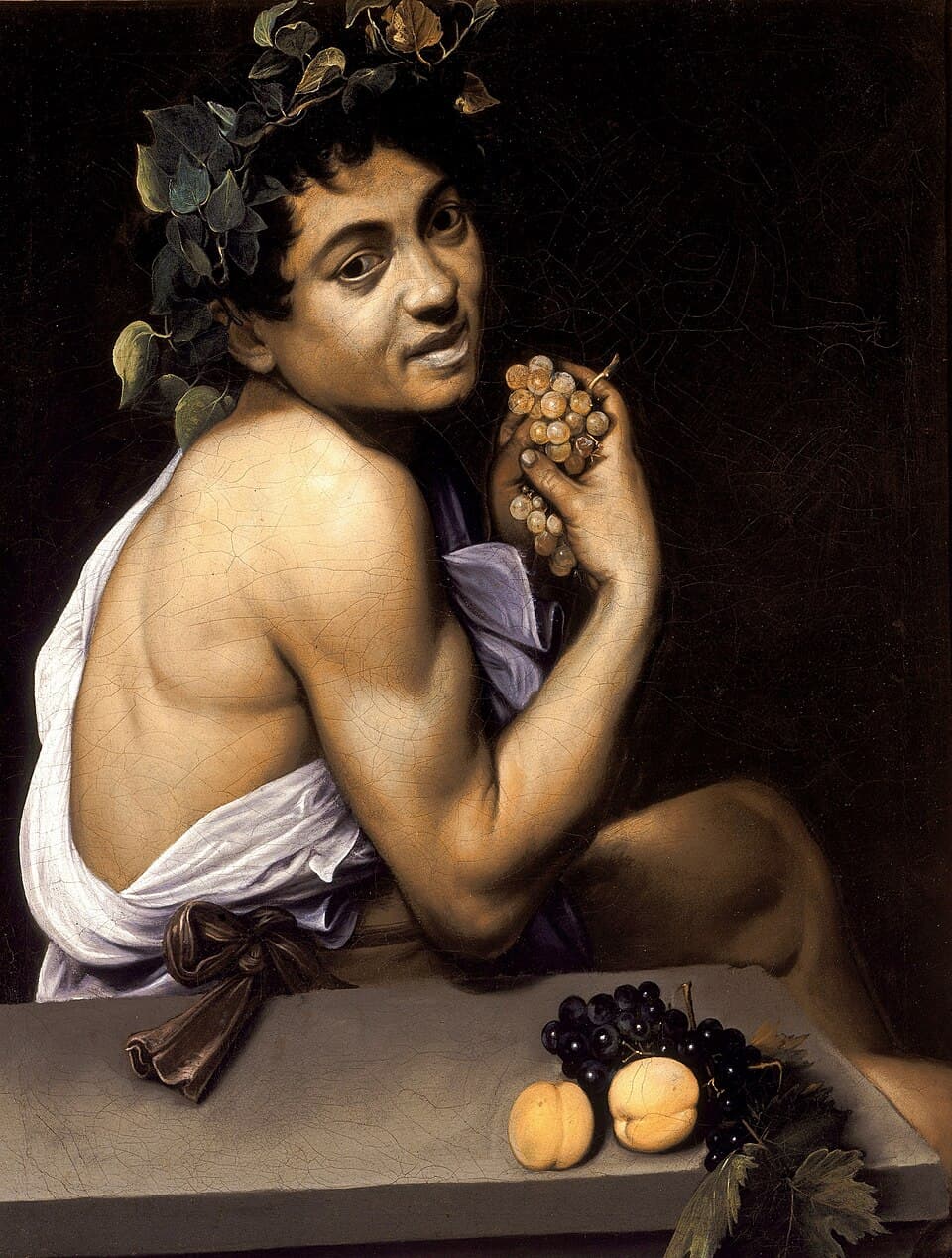
Young Sick Bacchus
by Caravaggio
StyleBaroque
GenreMythological
Artwork Details
Cite or Embed This Work
APA · MLA · Chicago1-click academic citation and embeddable “On View” museum badge for articles, syllabi, and research.
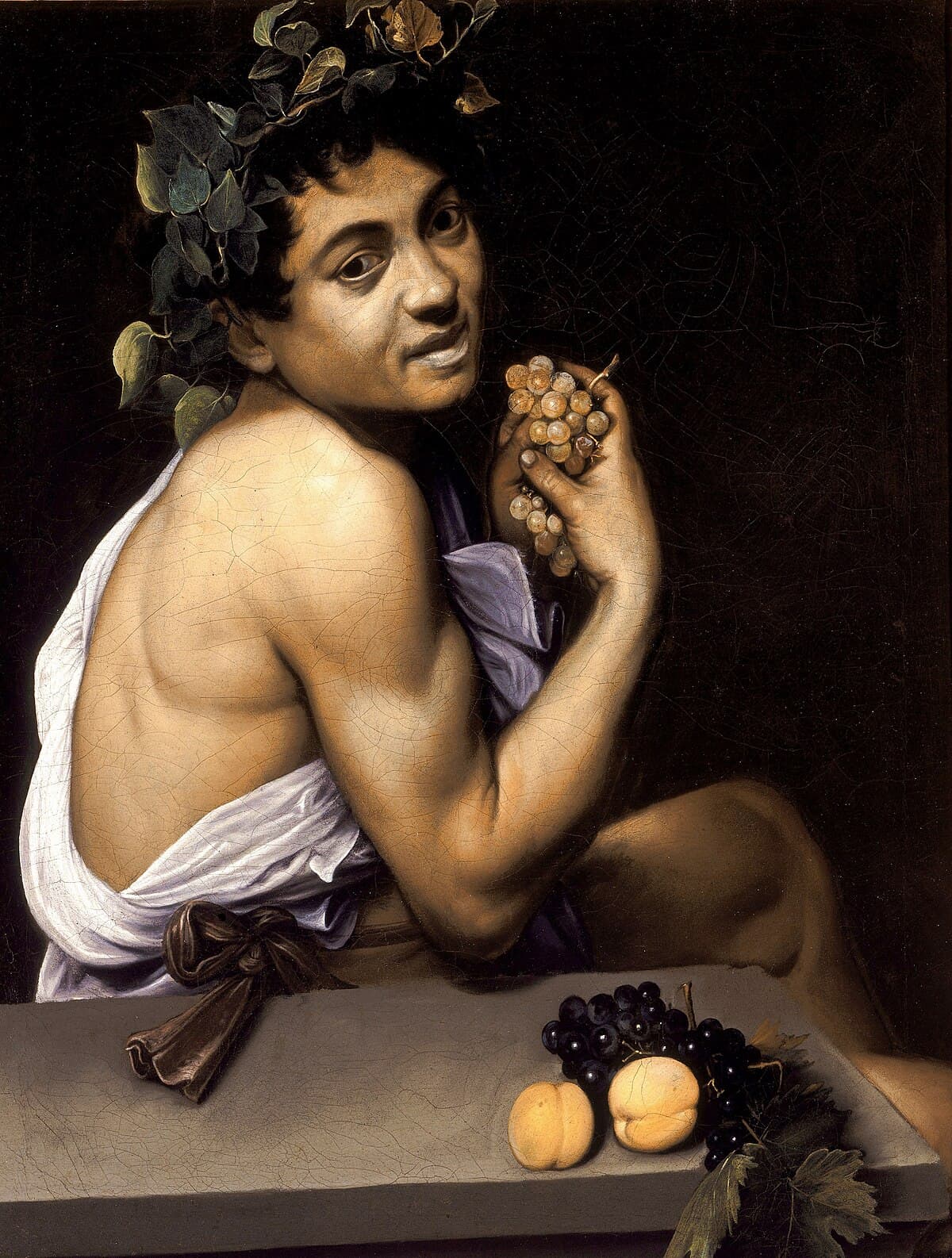
Caravaggio completed this early self-portrait around 1593-1594, depicting himself as the wine god Bacchus during a period of serious illness. The figure's face has a sickly, jaundiced cast, and the lips appear pale rather than the rosy hue typical of Bacchus imagery. Instead of the god's traditional grape vine crown, Caravaggio wears a wreath of ivy, a substitution that signals something is wrong.
The painting was likely made while Caravaggio recovered from an illness, possibly malaria, which was common in Rome. Working with a mirror, he captured his own weakened state with unflinching honesty. The grapes and peaches he holds look ripe and inviting, but the young man offering them appears too unwell to enjoy them. This tension between pleasure and suffering runs throughout Caravaggio's work.
The painting originally belonged to the workshop of Giuseppe Cesari, Caravaggio's early employer. In 1607, Cardinal Scipione Borghese seized Cesari's property and claimed this work along with others. It now hangs at the Borghese Gallery in Rome, where it represents the young artist's raw talent before he developed his mature radical style.