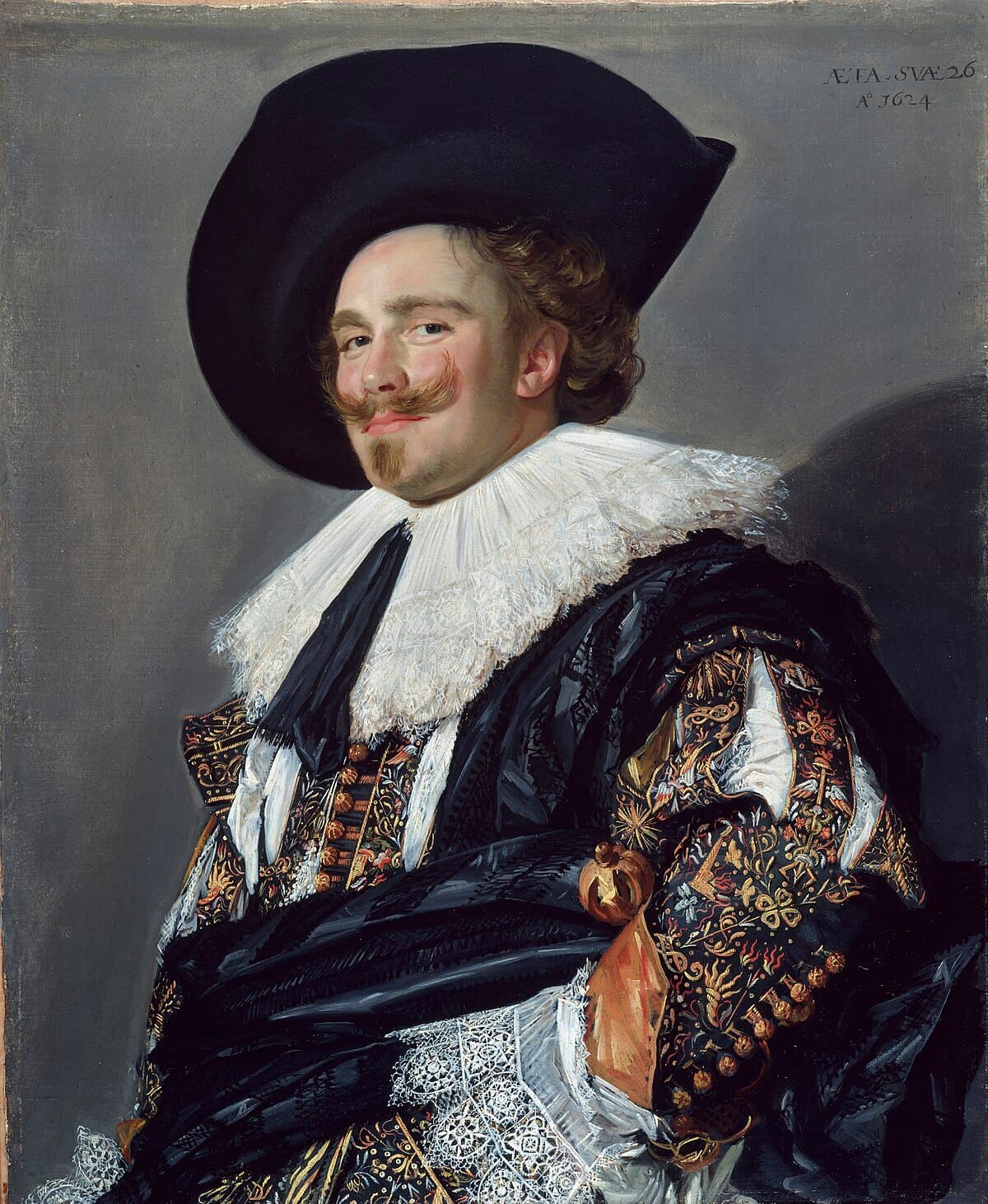
The Laughing Cavalier
by Frans Hals, 1624
Artwork Details
Details
- Year
- 1624
- Medium
- Oil on canvas
- Size
- 83 cm × 67.3 cm
Cite or Embed This Work
APA · MLA · Chicago1-click academic citation and embeddable “On View” museum badge for articles, syllabi, and research.
Frans Hals painted The Laughing Cavalier in 1624, though the man neither laughs nor is clearly a cavalier. The title was invented by Victorian audiences when the painting arrived in England. An inscription tells us the sitter was 26 years old; his identity remains unknown. Some suggest linen merchant Tieleman Roosterman, but nothing is confirmed.
The subject's upturned mustache and half-smile give an impression of amusement, amplified by his confident pose with hand on hip. His costume is notable: an elaborately embroidered doublet featuring symbols of love, fortune, and virtue. The black sash demonstrates Hals's legendary ability to paint with a limited palette. Van Gogh claimed Hals "must have had 27 blacks."
The canvas measures 83 by 67.3 centimeters and hangs at the Wallace Collection in London. The 4th Marquess of Hertford bought it at auction in Paris in 1865 for 51,000 francs, eleven times what the previous owner paid. It's been one of Britain's most beloved portraits ever since.