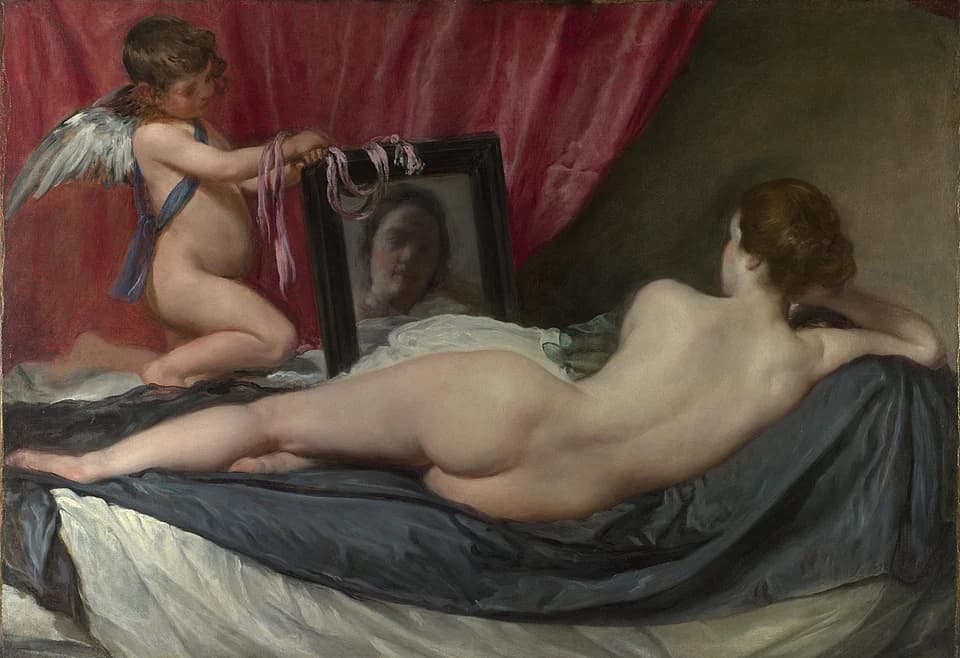
The Rokeby Venus
by Diego Velázquez, 1650
Artwork Details
Details
- Year
- 1650
- Medium
- Oil on canvas
- Size
- 122.5 cm × 177 cm
Diego Velázquez painted The Rokeby Venus between 1647 and 1651, likely during his second Italian trip. Venus lies on gray silk sheets, her back to the viewer, gazing at her reflection in a mirror held by Cupid. It's the only surviving female nude by Velázquez. The Spanish Inquisition made such subjects rare, though collectors at court eagerly acquired foreign nudes.
The painting takes its name from Rokeby Park in Yorkshire, where it hung after reaching England in 1813. The National Gallery bought it in 1906 with public fundraising help. Eight years later, suffragette Mary Richardson attacked it with a meat cleaver, slashing seven gashes into the canvas. She was protesting the arrest of Emmeline Pankhurst. The painting was fully restored within weeks.
The canvas measures 122 by 177 centimeters and hangs at the National Gallery in London. In 2023, climate activists struck again, this time smashing the protective glass. The surface sustained minimal damage. The painting's history of attacks underscores its status as a cultural flashpoint and symbol.