Wikimedia Commons • Public Domain
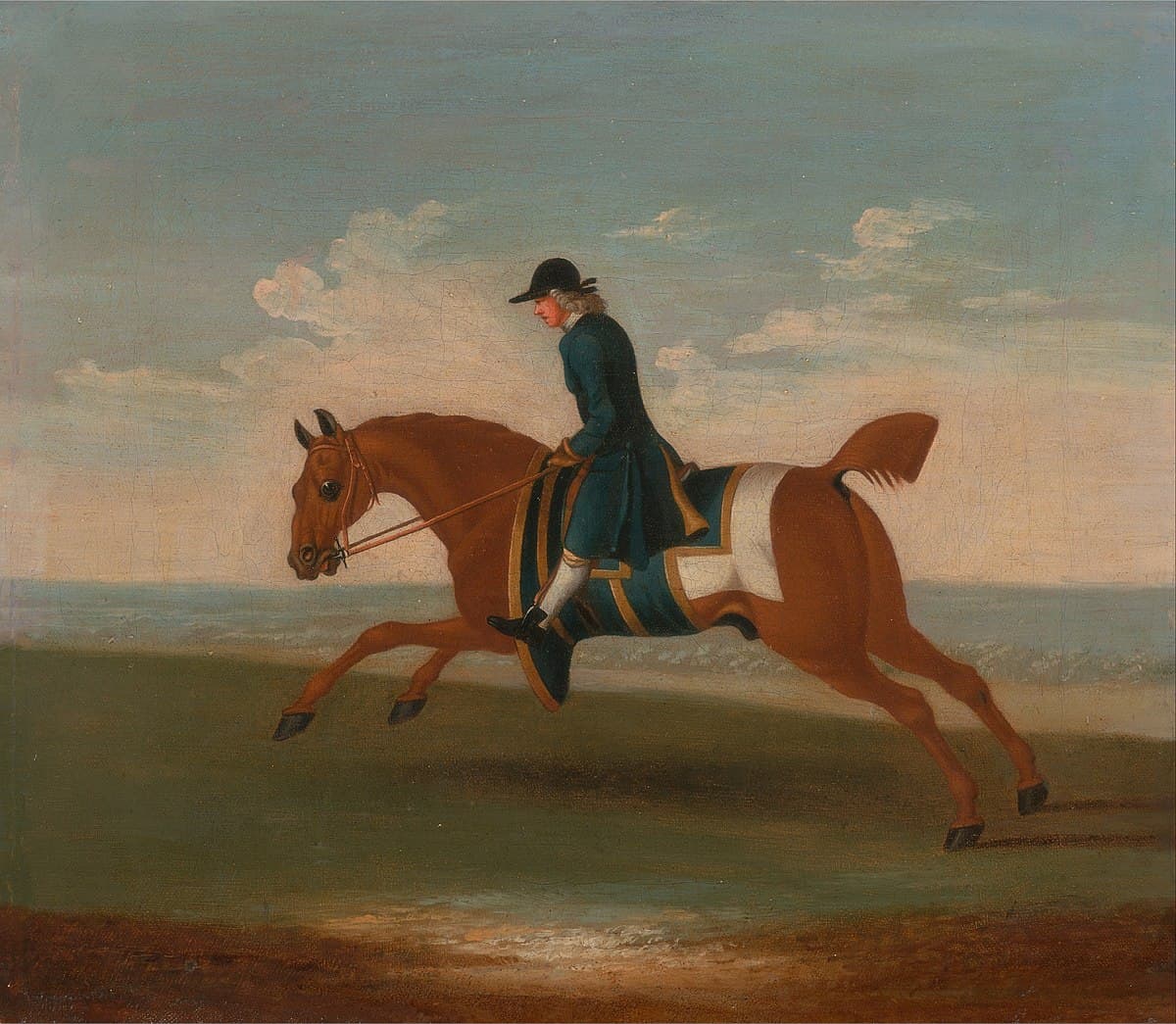
Jockey in Blue on a Chestnut Horse
by Edgar Degas
GenreAnimal
Artwork Details
Cite or Embed This Work
APA · MLA · Chicago1-click academic citation and embeddable “On View” museum badge for articles, syllabi, and research.
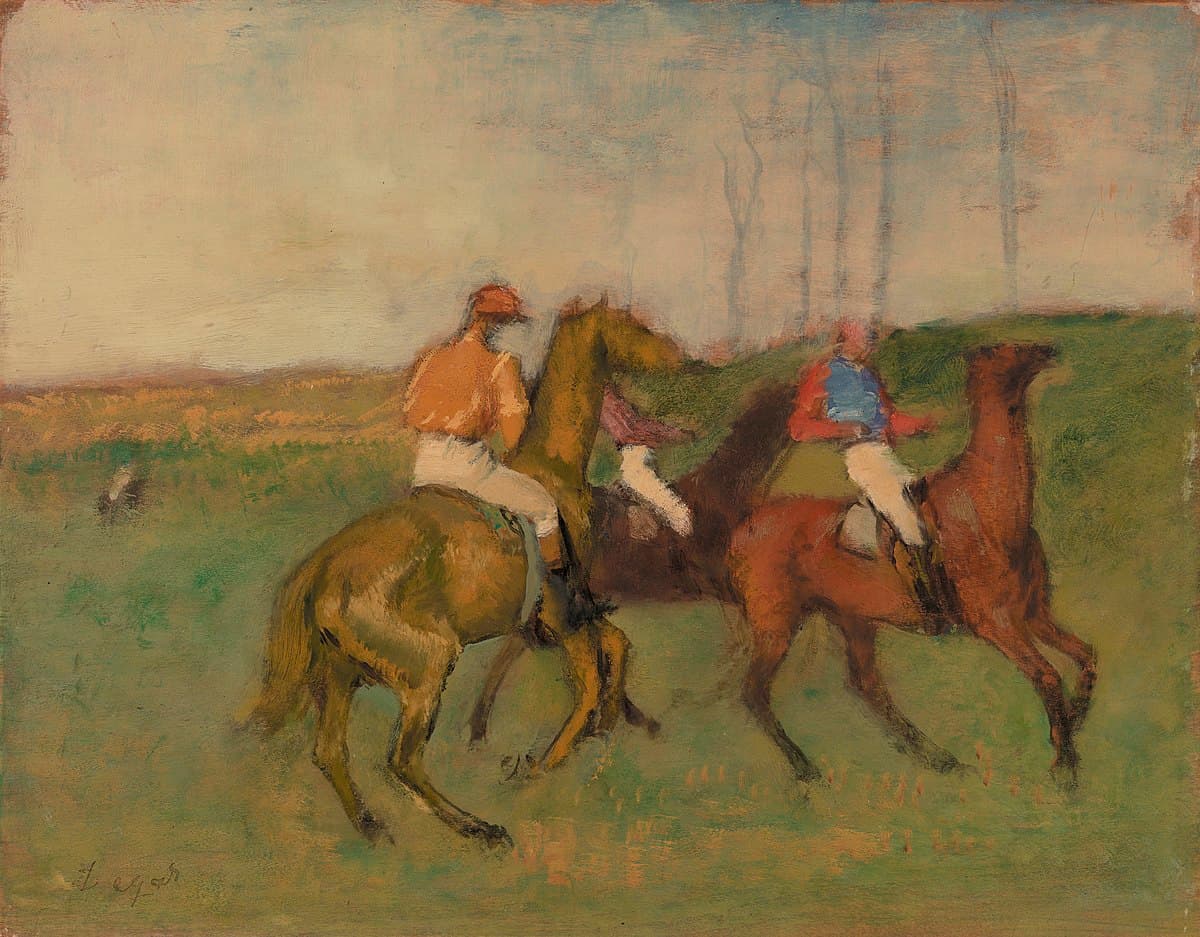
French artist Edgar Degas painted this oil on panel around 1889. The small work, measuring just 27 by 22 centimeters, captures a jockey in blue silks steering a chestnut horse sharply to the right. Degas positioned the figures off-center on the left side of the composition, a bold choice that reinforces the sense of movement and direction change.
This modestly sized sketch served as an experiment in capturing motion. Degas made multiple attempts to convey the forceful energy of the animal while the rider imposes an abrupt change of trajectory. A serpentine river flows in the background, its curves echoing the dynamic tension of the main figures. The artist approached similar problems in his wax sculptures of horses.
Degas began painting horse racing scenes in the 1860s after visiting friends in Normandy and attending the newly opened Longchamp racecourse. He returned to the subject throughout his career, manipulating horses and jockeys from one picture to the next. The Virginia Museum of Fine Arts holds this painting as part of the Paul Mellon Collection.