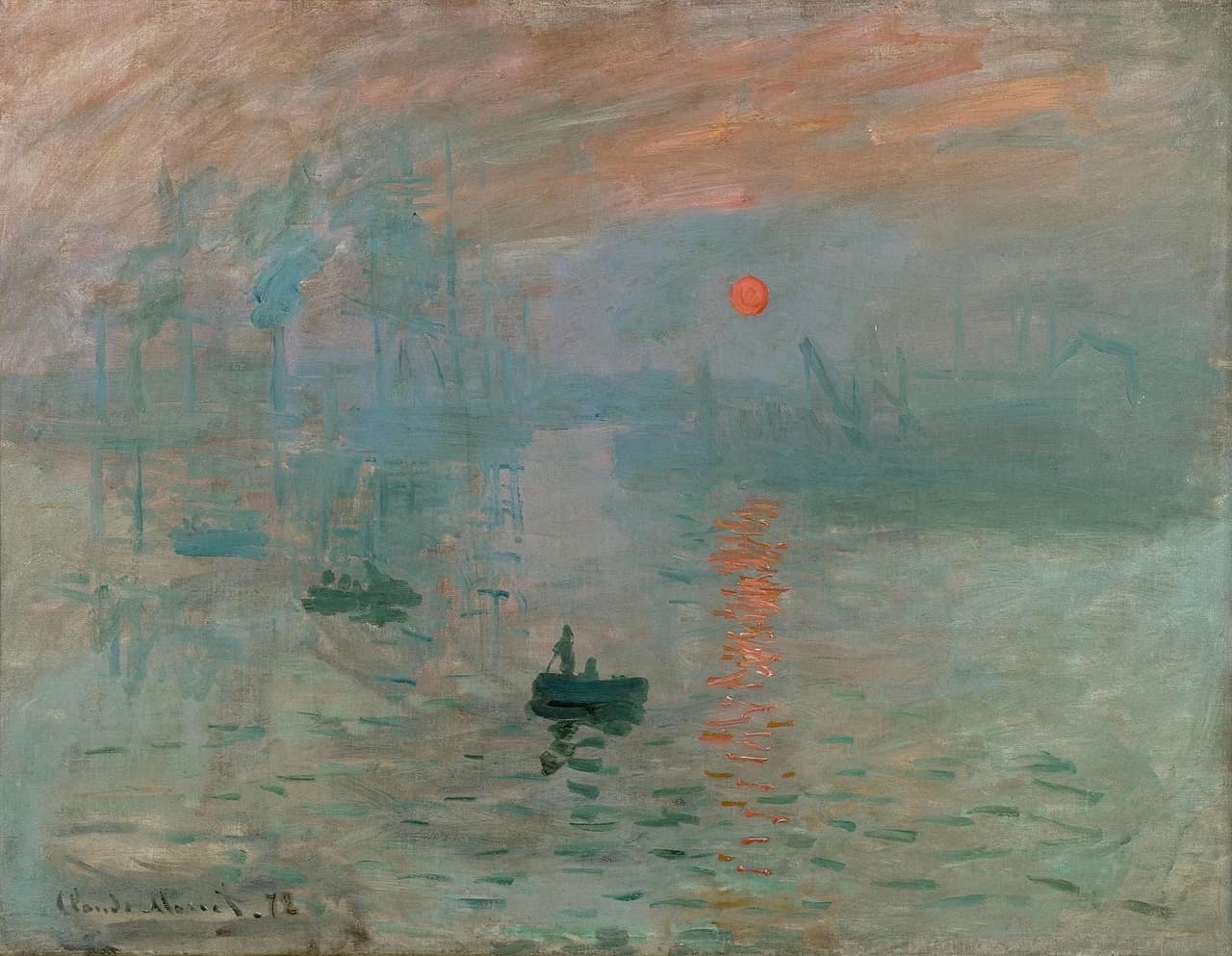
Impression, Sunrise
by Claude Monet, 1872
Palette
Artwork Details
Details
- Year
- 1872
- Medium
- Oil on canvas
- Size
- 48 cm × 63 cm
- Gallery
- Impressionism Gallery
Find It In The Museum
Impressionism Gallery
Musée d'Orsay, Paris
Part of the permanent collection
This small painting of the harbor at Le Havre gave Impressionism its name. When Claude Monet exhibited it in 1874, a hostile critic seized on the title to mock the entire show: "Impression, indeed! Wallpaper in its embryonic state is more finished." The artists embraced the insult, and a movement was born.
The scene shows the industrial port at dawn, with smokestacks and ship masts emerging from morning mist. A brilliant orange sun hangs low over the water, its reflection broken into dabs of pure color. Monet painted quickly, capturing the fleeting effect of light on haze rather than rendering every detail. The visible brushwork and unfinished quality that so offended academic critics became the defining characteristics of the new style.
Monet later said he chose the title "Impression" because the painting couldn't really be called a view of Le Havre. Today it hangs at Musée d'Orsay in Paris, recognized as one of the key moments in art history.
Historical Significance
A critic's derisive use of 'Impressionism' from this painting's title became the movement's name.