Public Domain
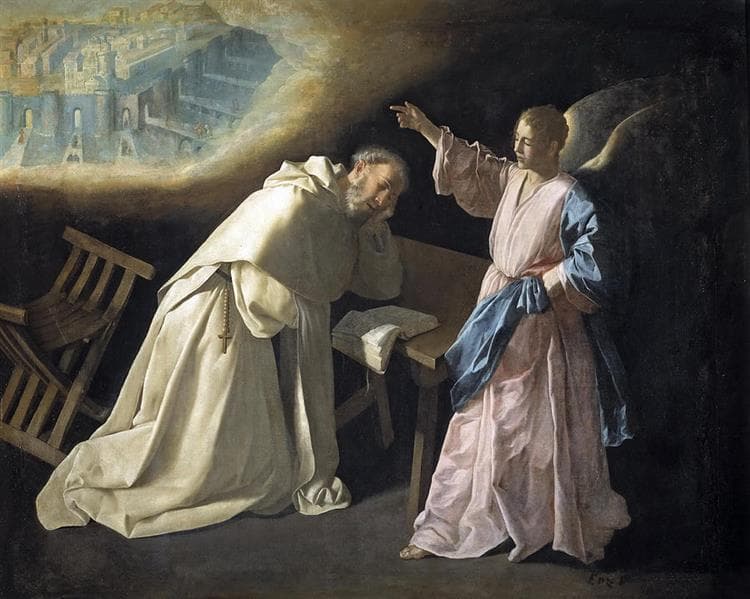
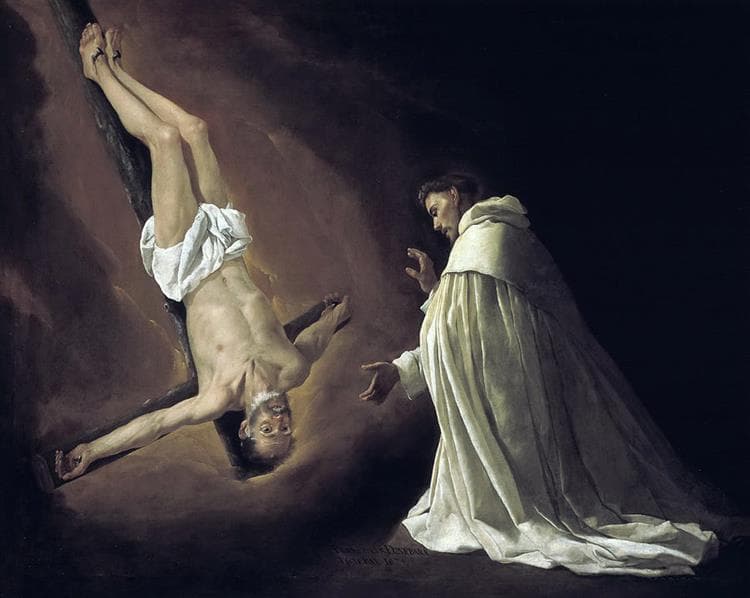
Appearance of St. Peter to St. Peter Nolasco
GenreReligious
Artwork Details
Cite or Embed This Work
APA · MLA · Chicago1-click academic citation and embeddable “On View” museum badge for articles, syllabi, and research.
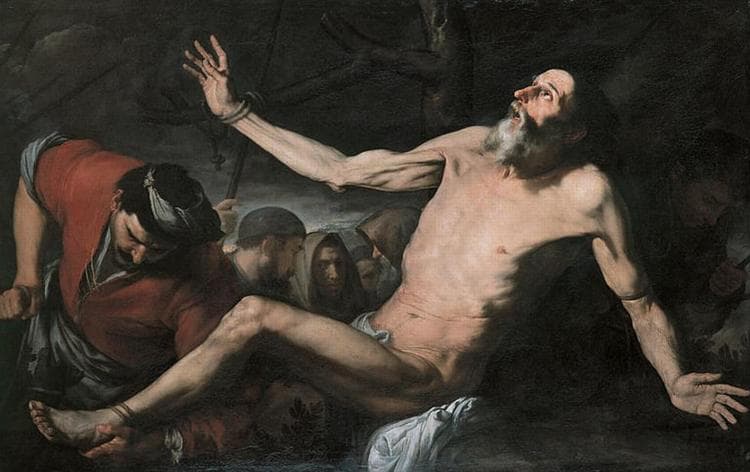
Francisco de Zurbaran composed this vision scene in 1629 for the Convent of Mercy in Seville, which St. Peter Nolasco had founded. The composition shows the apostle Peter appearing crucified upside-down to his namesake, the 13th-century Spanish saint who established the Order of Mercy to ransom Christian slaves.
According to legend, Peter Nolasco longed to visit the apostle's tomb in Rome but couldn't leave Spain. St. Peter appeared to him in dreams three nights running, finally descending crucified to console him. The saint falls to his knees before this impossible vision. Zurbaran's stark lighting and minimal background create an atmosphere of suspended reality.
The canvas measures 179 by 223 centimeters and now hangs at the Museo del Prado in Madrid. In 1808, Manuel Lopez Cepero, dean of Seville Cathedral, purchased it. He gave it to King Ferdinand VII in 1821, and it entered the royal collections. The extraordinary Baroque realism shows Zurbaran at the height of his powers.