Artemisia
by Rembrandt van Rijn, 1634
Artwork Details
Details
- Year
- 1634
- Medium
- Oil on canvas
- Size
- 142 cm × 153 cm (55.9 × 60.2 in)
Cite or Embed This Work
APA · MLA · Chicago1-click academic citation and embeddable “On View” museum badge for articles, syllabi, and research.
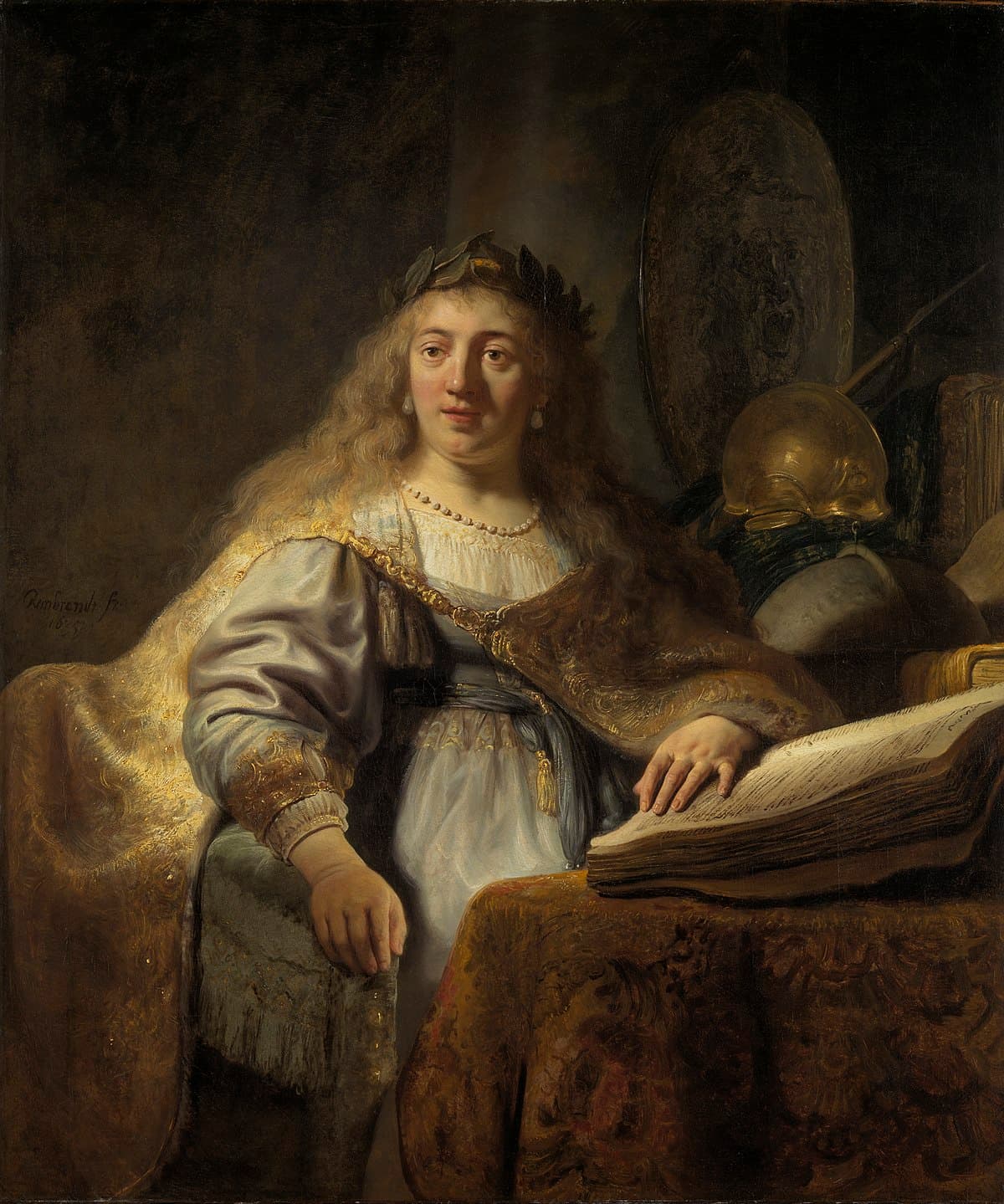
Working in oil on canvas, Rembrandt painted this Artemisia in 1634, depicting the ancient queen about to drink her husband's ashes mixed with wine. After King Mausolus died, Artemisia so grieved that she consumed his remains, becoming a living tomb. A servant offers the cup while another holds a cloth.
The subject was popular in the 17th century as an example of wifely devotion. Rembrandt dressed his Artemisia in contemporary Dutch costume, her golden gown and pearls glowing against the dark background. The model may have been his wife Saskia, whom he married the same year.
The Prado displays this painting as one of Rembrandt's finest history paintings from his successful Amsterdam years.