Wikimedia Commons • Public Domain
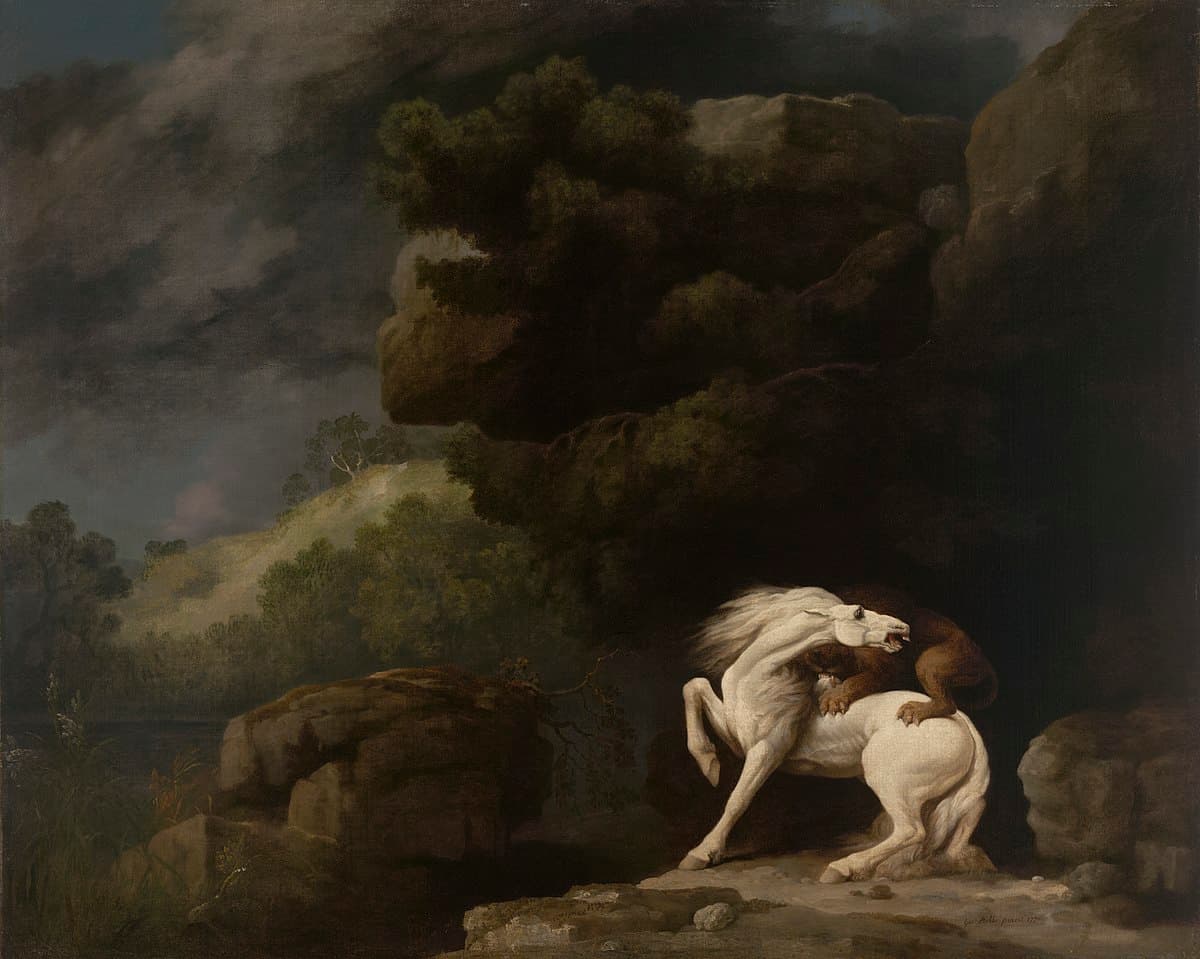
Lion Attacking a Horse
Artwork Details
George Stubbs completed this dramatic scene around 1762, one of seventeen versions he created on the theme of a lion attacking a horse. The composition shows the moment of assault: the lion has leapt onto the horse's back, claws sinking into flesh, while the terrified horse rears against a stormy sky. The contrast between predator and prey captures what eighteenth-century viewers called the sublime: terror mixed with awe.
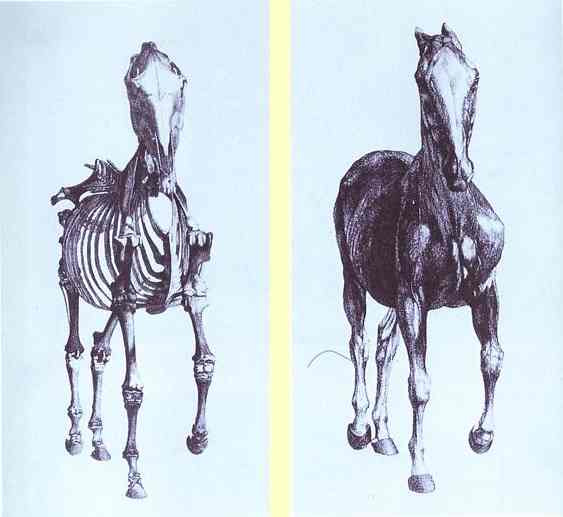
Stubbs drew inspiration from an ancient Roman marble sculpture he may have seen in Italy, but he transformed the classical source into something uniquely his own. His deep anatomical knowledge, gained from years of dissecting horses, gives the struggling animal convincing musculature and movement. The lion's attack feels viscerally real despite the theatrical setting.
The theme obsessed Stubbs throughout his career. He returned to it repeatedly, varying the composition, the landscape, and the precise moment depicted. This version now belongs to the National Gallery of Victoria in Melbourne, Australia. The painting represents the darker side of Stubbs's work, far removed from the calm equestrian portraits that made his reputation among English aristocrats.