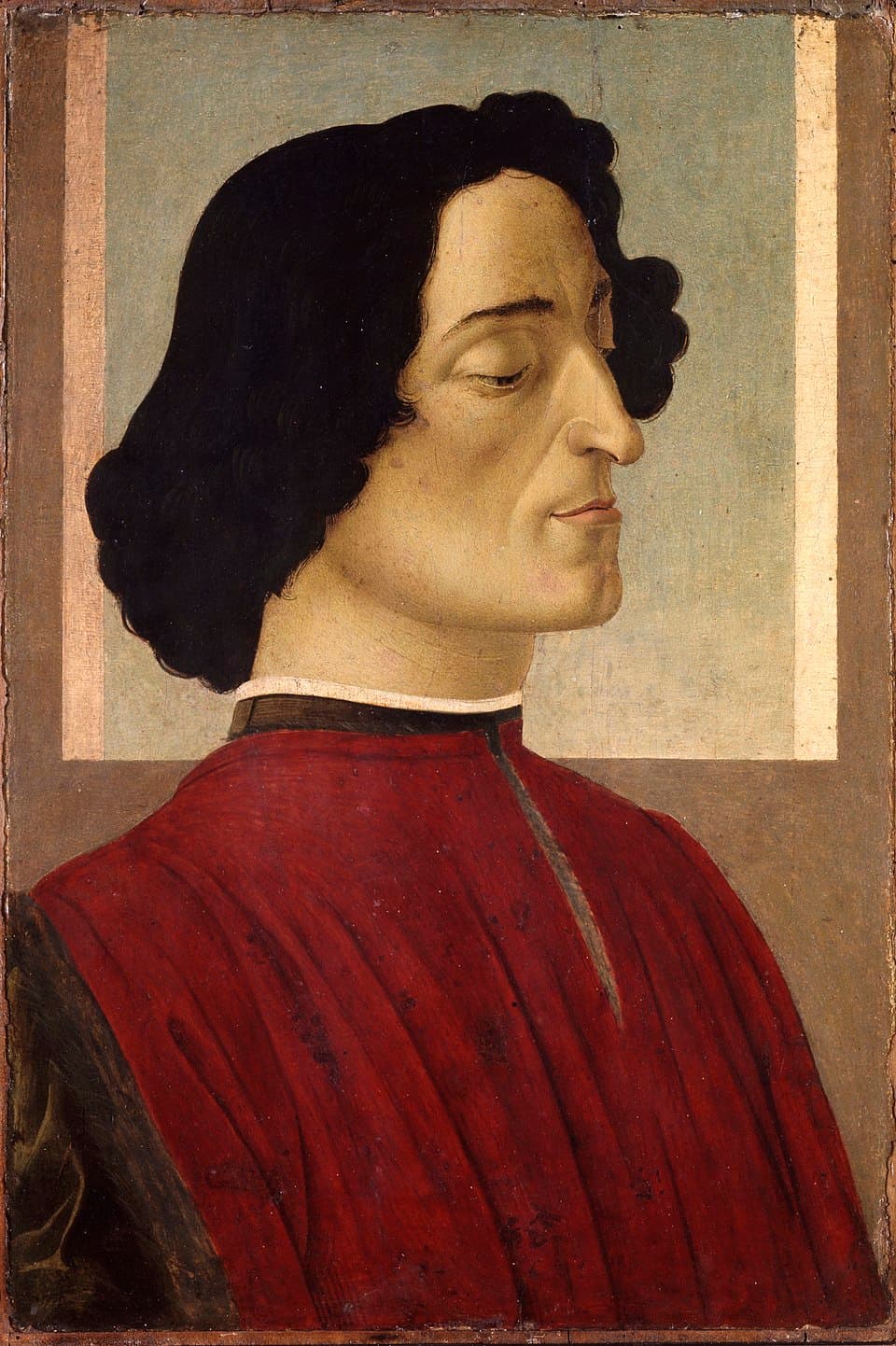
Giuliano de' Medici
by Sandro Botticelli, 1478
Artwork Details
Details
- Year
- 1478
- Medium
- Tempera on panel
- Size
- 75.6 × 52.6 cm (29.8 × 20.7 in)
Sandro Botticelli painted this posthumous portrait of Giuliano de' Medici after the young prince was murdered in the Pazzi Conspiracy of 1478. Giuliano and his brother Lorenzo were attacked during Mass in Florence Cathedral; Giuliano died, but Lorenzo escaped.
Botticelli shows Giuliano with half-closed eyes and a melancholic expression, perhaps suggesting his death. The partially open door behind him may symbolize his passage from life. The portrait commemorates a fallen Medici prince and Botticelli's own patron.
Several versions of this portrait exist, painted by Botticelli and his workshop. This one, at the National Gallery of Art, is considered among the finest.
![Gian Federico Madruzzo Oil Canvas Giovanni Battista[1] by Giovanni Battista Moroni](/apps/masterpieces/_next/image?url=https%3A%2F%2Fyfndmpigludzuzjjdfce.supabase.co%2Fstorage%2Fv1%2Fobject%2Fpublic%2Fartwork-images%2Fartwork-wiki%2Fgiovanni-battista-moroni-gian-federico-madruzzo-oil-canvas-giovanni-battist.jpg&w=3840&q=75)