Wikimedia Commons • Public Domain
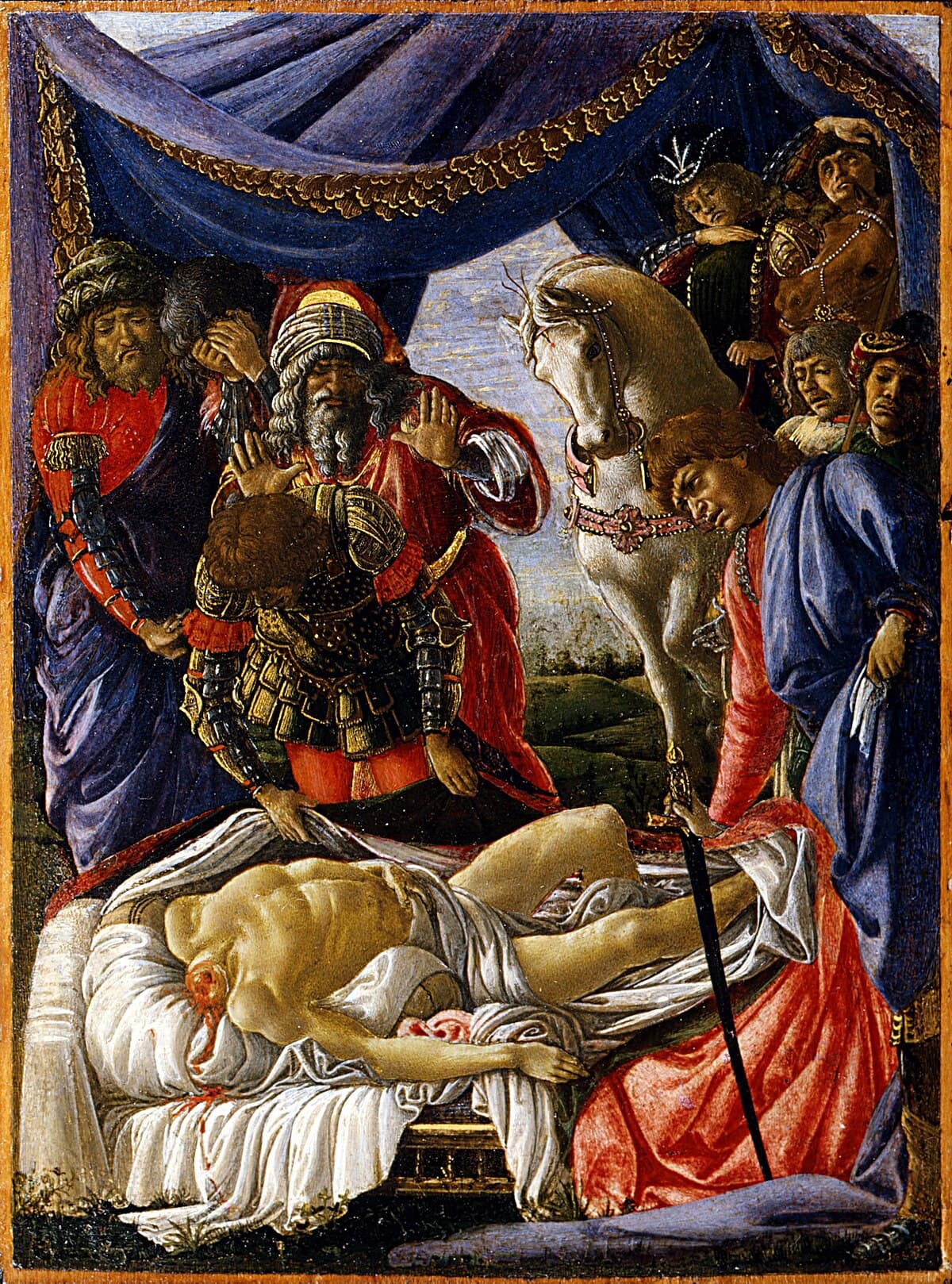
The Discovery of the Body of Holofernes
Artwork Details
Sandro Botticelli painted The Discovery of the Body of Holofernes around 1470-1472, creating one half of a small diptych illustrating the biblical story of Judith. This panel shows the aftermath: Assyrian soldiers have entered their general's tent to find him decapitated, his headless body sprawled across the bed. The companion piece, The Return of Judith to Bethulia, depicts the heroine and her maid fleeing with their prize.
Botticelli made a striking choice. Rather than show the violent act itself, he painted the moments before and after. Judith walks triumphantly away. The soldiers discover their leader's corpse. The decapitation happens off-stage, left to the viewer's imagination. The body of Holofernes dominates this panel's foreground, its youthful proportions and relaxed posture suggesting deep sleep rather than violent death. Botticelli studied anatomy from live models and drew on Greco-Roman sculpture for this early nude.
The two panels once shared a carved walnut frame, forming a proper diptych. They entered the Uffizi Gallery collection in 1632, though the frame has since been lost. In Renaissance Florence, Judith symbolized liberty and victory over tyranny, making these small panels carry political weight beyond their intimate scale.