Wikimedia Commons • Public Domain
Antiochus and Stratonice
StyleNeoclassicism
Artwork Details
Where to See It
École nationale supérieure des Beaux-Arts (ENSBA), ParisParis, France
Permanently housed
Cite or Embed This Work
APA · MLA · Chicago1-click academic citation and embeddable “On View” museum badge for articles, syllabi, and research.
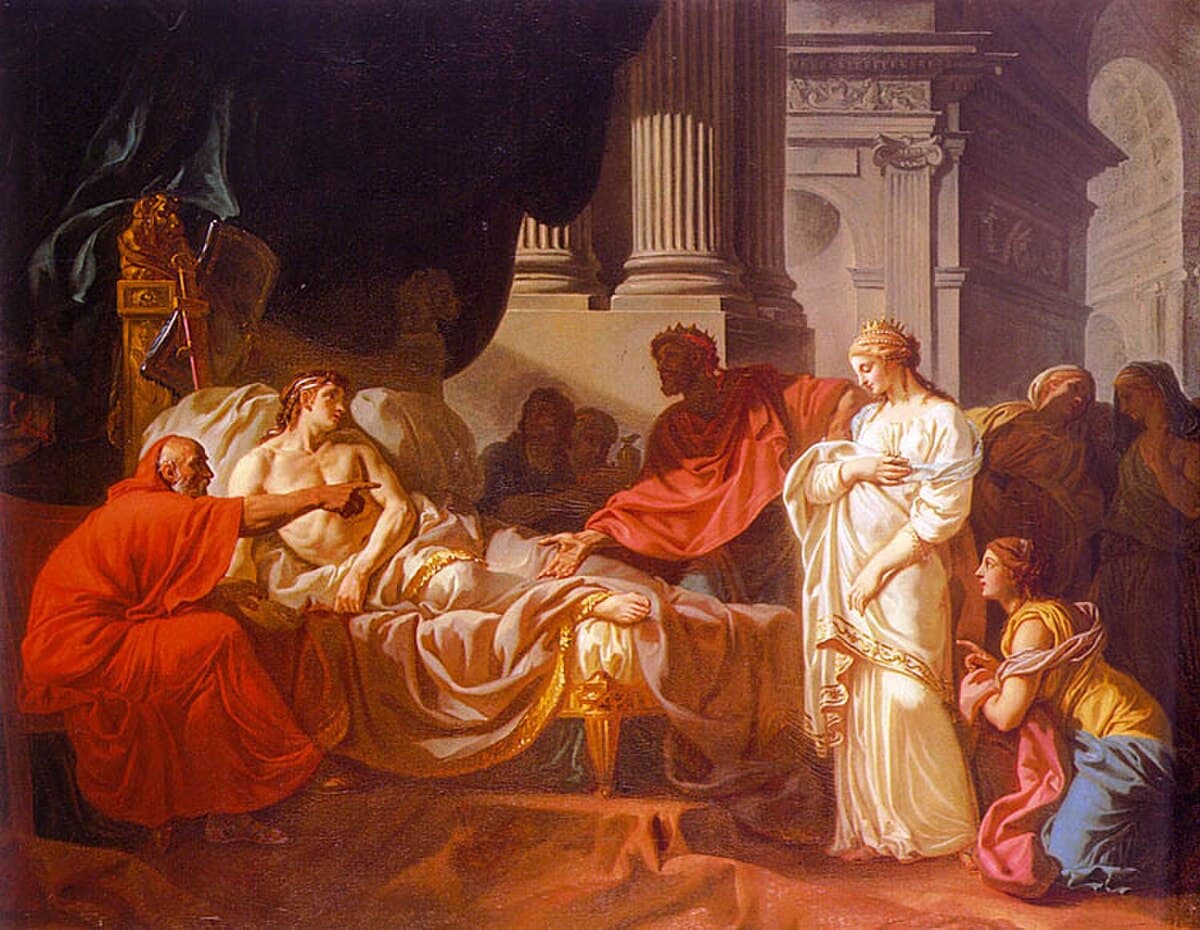
Jacques-Louis David completed this scene in 1774 as his entry for the Prix de Rome, which he won. The subject comes from ancient history: the physician Erasistratus discovers that Prince Antiochus is lovesick for his stepmother Stratonice by feeling his pulse quicken when she enters the room. David shows the moment of revelation, with the doctor pointing to identify the "cause of the disease."
The composition places Antiochus on a bed in shadow while King Seleucus sits at the foot. Stratonice enters from the right, beautifully dressed, unaware of the diagnosis about to be revealed. David was 26 when he won the prize, having failed in previous attempts. This success launched his career as France's leading Neoclassical painter.
The canvas measures 120 by 155 centimeters and hangs at the Ecole nationale superieure des Beaux-Arts in Paris. It was restored in 1860 and 1981. The painting entered the school's collection after passing through various private hands following its prize-winning presentation.