Wikimedia Commons • Public Domain
Patroclus
StyleNeoclassicism
Artwork Details
Cite or Embed This Work
APA · MLA · Chicago1-click academic citation and embeddable “On View” museum badge for articles, syllabi, and research.
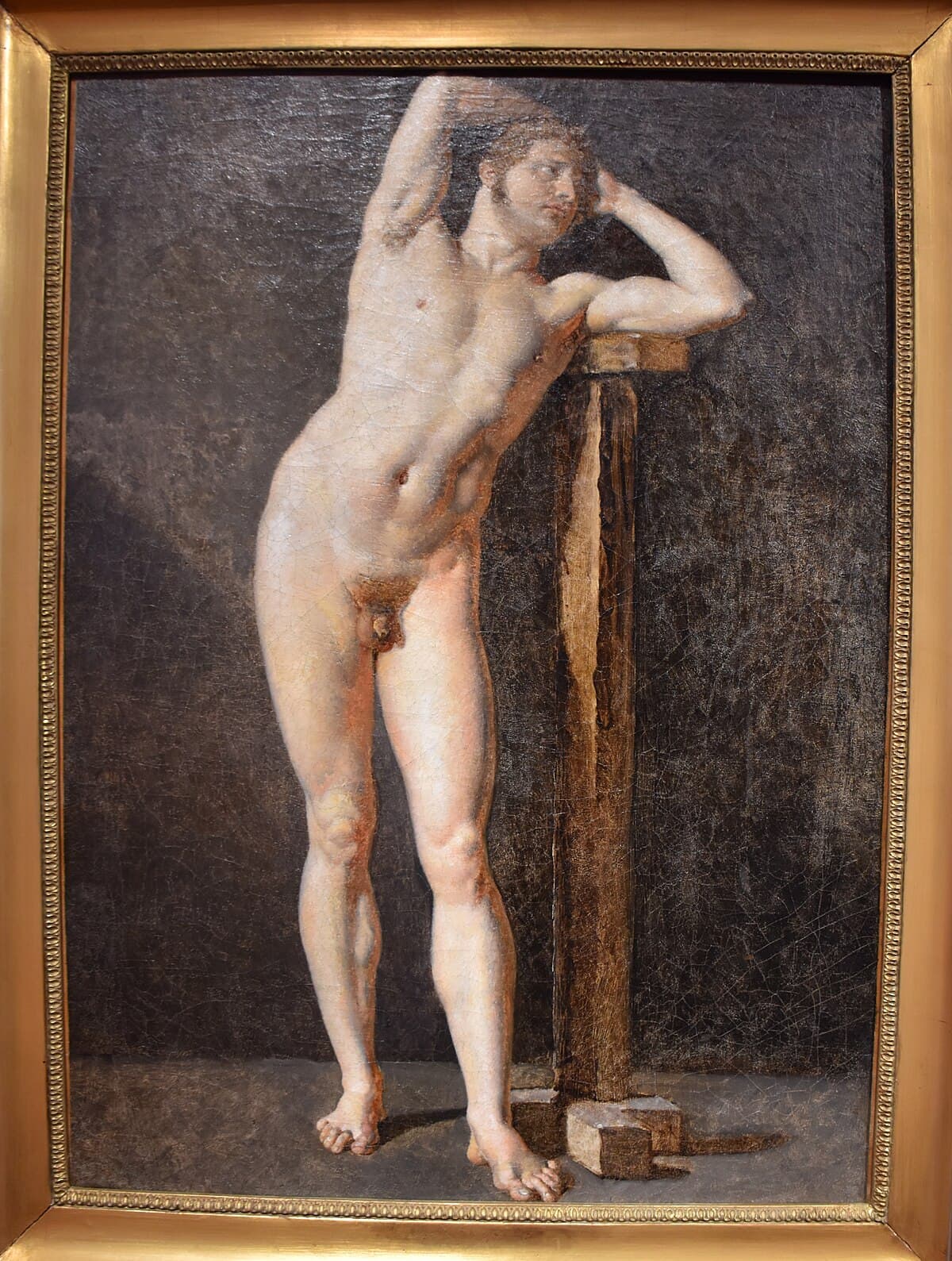
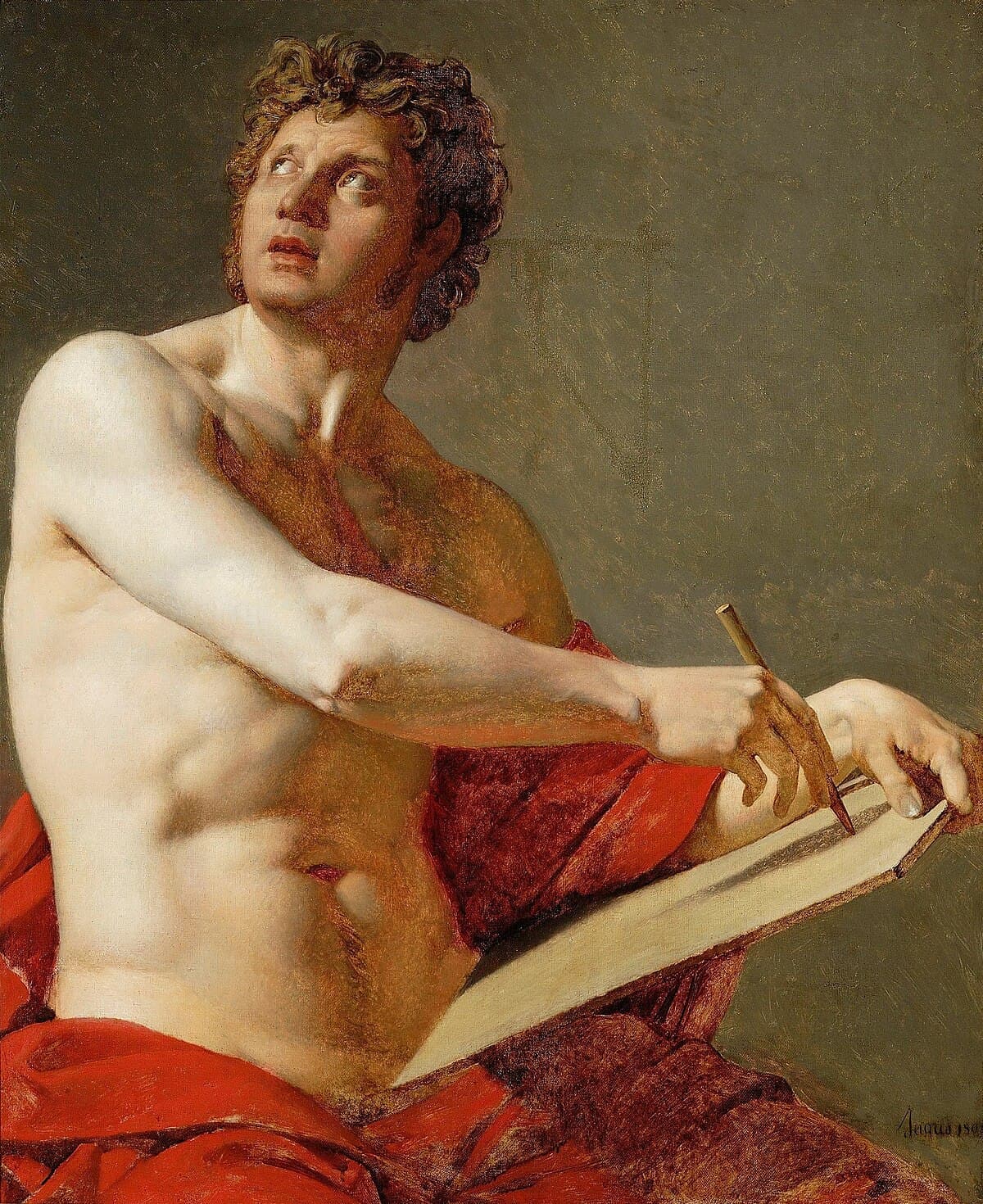
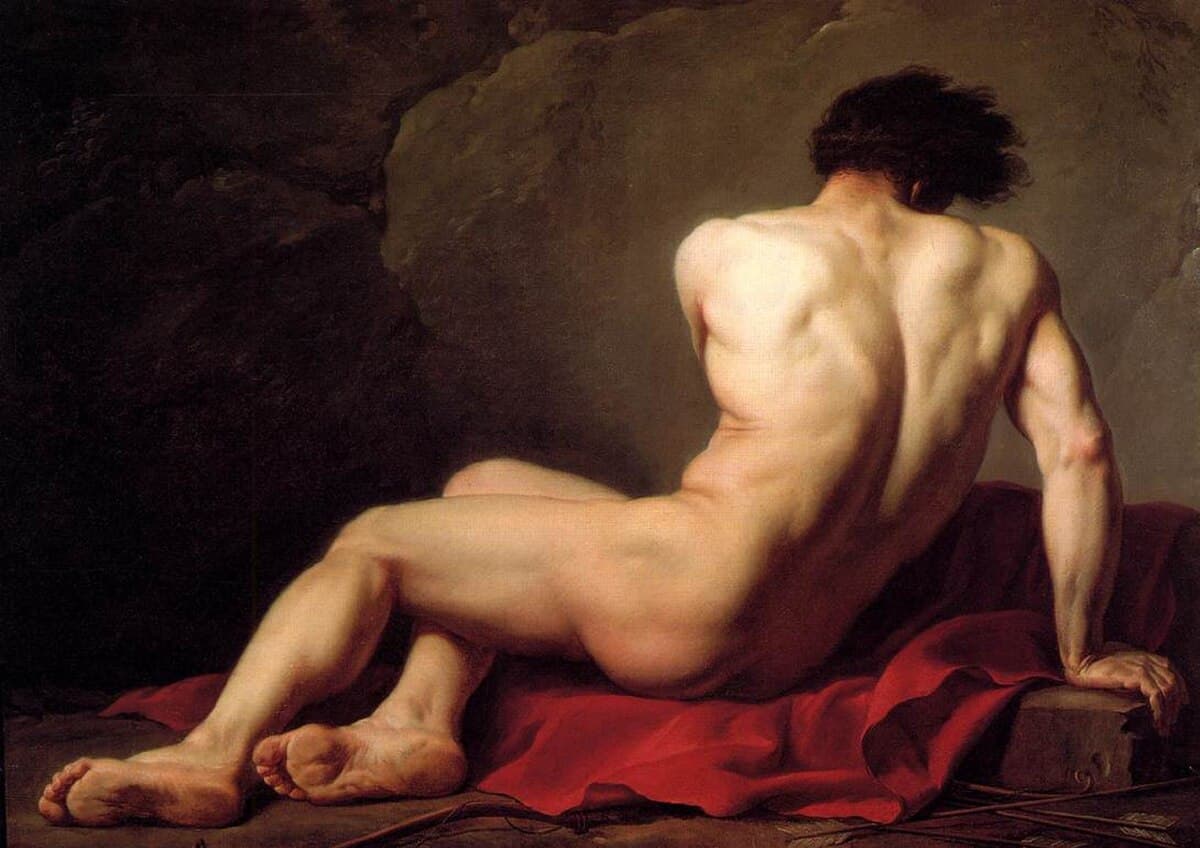
Jacques-Louis David completed this powerful nude study around 1780 while studying in Rome under his teacher Joseph-Marie Vien. The canvas shows Patroclus from behind, seated on a stone block with arrows at his feet and red drapery beneath him. As Achilles' companion in Homer's Iliad, Patroclus represents courage, loyalty, and tragic loss.
David discovered the dramatic potential of light and shadow through studying Caravaggio's work. This influence shows clearly here, with chiaroscuro adding depth and dimensionality to the figure. The play of light enhances the sculptural qualities that would define Neoclassical aesthetics. The muscular form demonstrates David's skill in rendering the male body, a subject he explored intensively during his Roman years.
David first exhibited the nude at the Paris Salon of 1781, where it helped establish his reputation. The painting represents a key moment in his development, bridging his academic training with the Neoclassical style that would make him France's leading painter. The Musée Thomas-Henry in Cherbourg holds this canvas, which measures 121.5 by 170.4 centimeters. David's work would later define the heroic human form in art.