Wikimedia Commons • Public Domain
David
by Michelangelo
StyleRenaissance
Artwork Details
Cite or Embed This Work
APA · MLA · Chicago1-click academic citation and embeddable “On View” museum badge for articles, syllabi, and research.
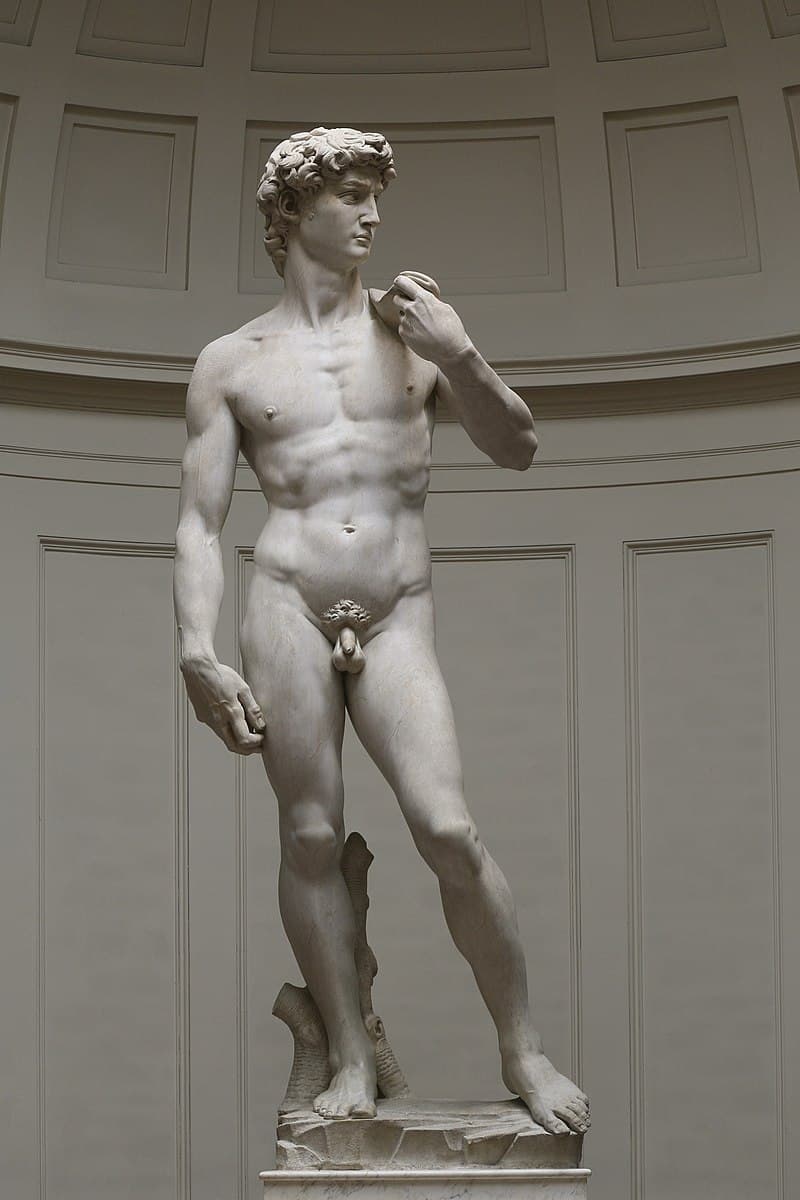
Michelangelo carved this colossal marble statue between 1501 and 1504, depicting the biblical hero David before his battle with Goliath. He was 26 years old when he began. The marble block itself had a history: Agostino di Duccio roughed out the legs and torso in 1464, then abandoned it. Antonio Rossellino tried in 1476 and also quit. The block sat exposed in a cathedral workshop yard for 25 years, nicknamed "The Giant."
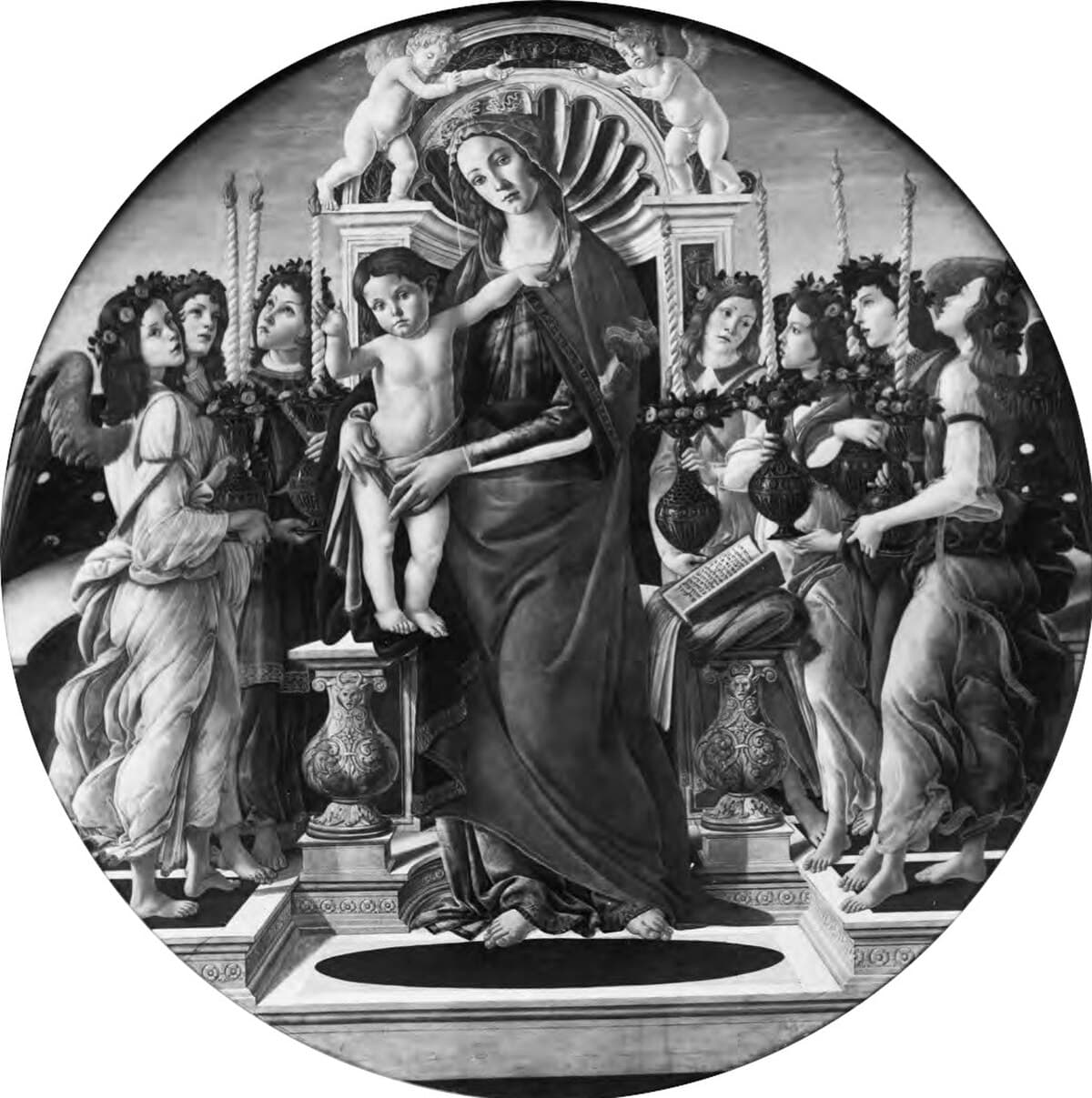
Michelangelo worked in near-total secrecy behind a scaffolding enclosure. He had to work within the constraints of earlier cuts, which partly explains the relatively flat pose. The deliberately oversized head and right hand were calculated for the original plan: display on Florence Cathedral's roofline, where normal proportions would look wrong from below. A committee including Leonardo da Vinci and Botticelli decided it was too good for the rooftop and placed it in the Piazza della Signoria instead. It took four days to move on greased logs.
The statue stood outdoors for nearly 400 years before being moved to the Galleria dell'Accademia in 1873. David's eyes look in slightly different directions (confirmed by Stanford's digital scan in 2004), his pupils are carved in a heart shape to catch light, and his sling is nearly invisible over his left shoulder. A full-size replica now stands in the original piazza location.