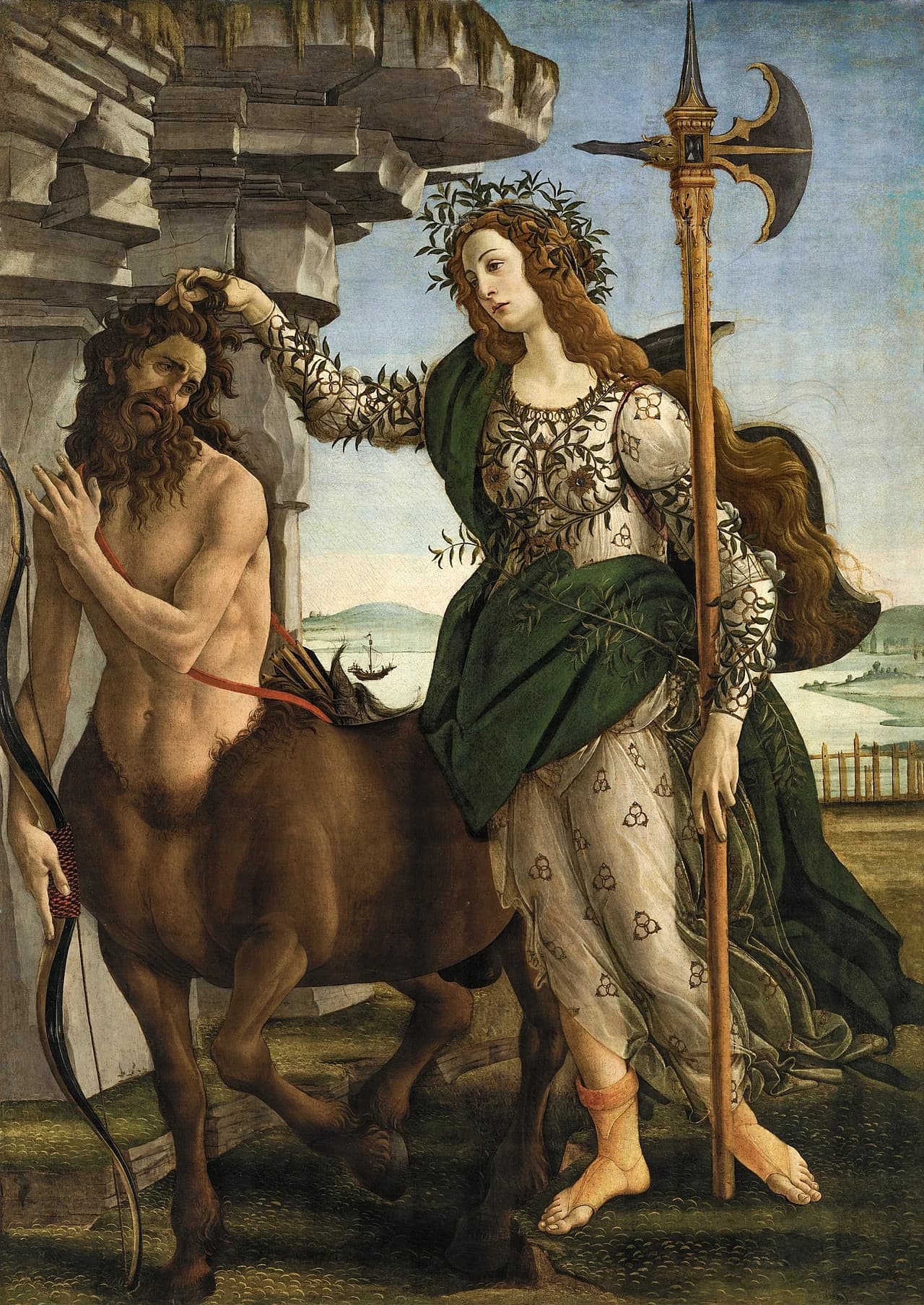
Pallas and the Centaur
by Sandro Botticelli, 1482
StyleRenaissance
Artwork Details
Details
- Year
- 1482
- Medium
- Tempera on canvas
- Size
- 207 cm × 148 cm
Cite or Embed This Work
APA · MLA · Chicago1-click academic citation and embeddable “On View” museum badge for articles, syllabi, and research.
Sandro Botticelli painted this allegorical scene around 1482, showing the goddess Pallas Athena grasping the hair of a centaur. The half-human creature looks up at her with a pained expression while she holds a halberd in her other hand. Her dress bears the interlocking diamond rings of the Medici family, suggesting the painting was made for this powerful Florentine dynasty.
The scene likely represents the triumph of wisdom over base instincts. Pallas, goddess of wisdom and strategic warfare, subdues the centaur, a creature associated with chaos and appetites. Some scholars connect the work to a specific political moment, perhaps celebrating Lorenzo de' Medici's diplomatic success in Naples in 1480.
The painting hangs in the Uffizi Gallery in Florence, near Botticelli's more famous mythological works. Its large scale and refined execution demonstrate his skill with allegorical subjects.