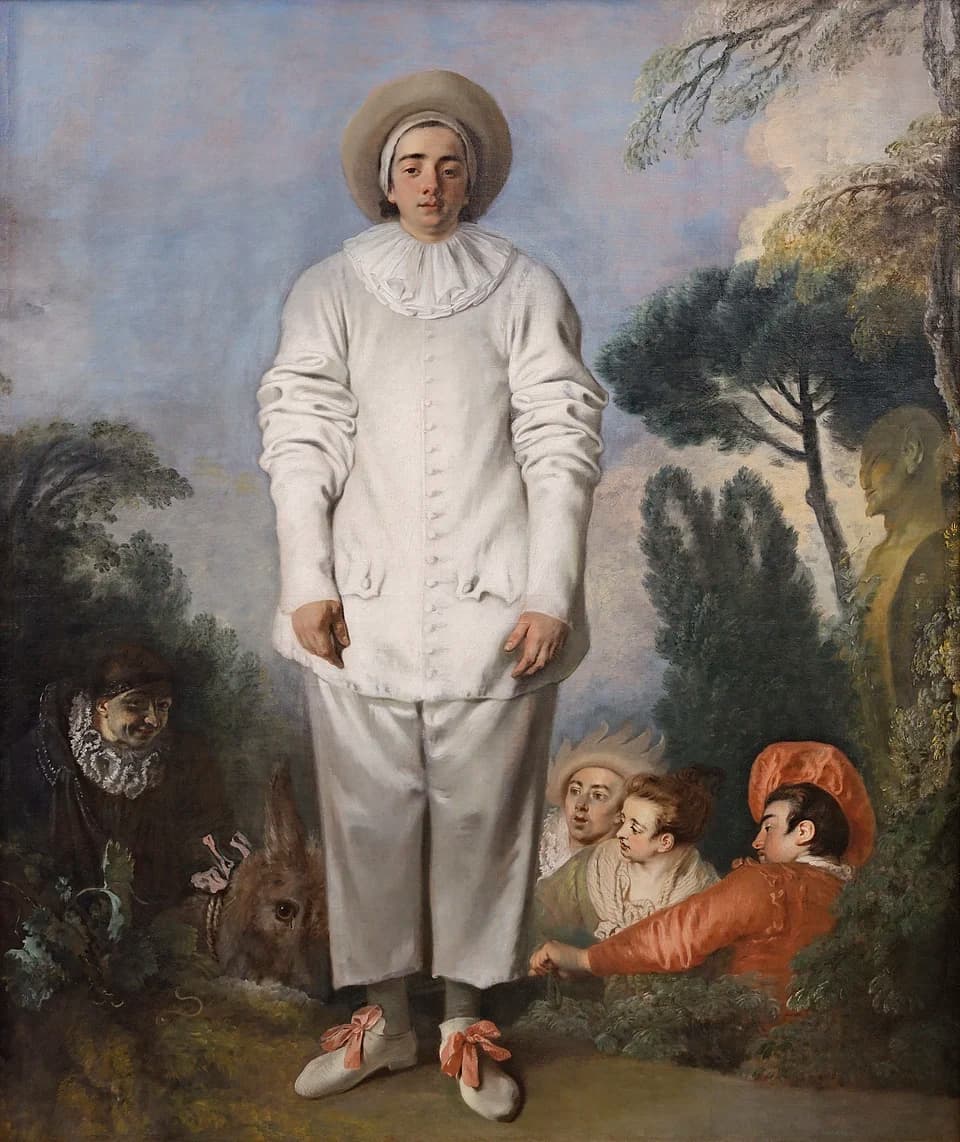
Pierrot (Gilles)
by Jean-Antoine Watteau, 1719
Artwork Details
Details
- Year
- 1719
- Medium
- Oil on canvas
- Size
- 184 cm × 149 cm
Jean-Antoine Watteau painted this nearly life-sized figure around 1718-1719. The subject is Pierrot, a stock character from commedia dell'arte, standing alone in his loose white costume with a skullcap. He gazes directly at the viewer with an expression that's hard to read. Sadness, boredom, or detachment?
Behind him, smaller figures dressed in colorful theatrical costumes form a procession. A doctor rides a donkey, lovers embrace, and a captain struts past. The scene suggests the itinerant life of early 18th-century performers who moved from fair to fair across France.
The painting's purpose remains a mystery. We don't know who commissioned it or whether it hung in a home or served as a theater advertisement. A 2024 restoration at the Louvre revealed hidden details, including what may be a self-portrait of Watteau lurking in the shadows at left.