Wikimedia Commons • Public Domain
Vanitas Still Life With The Spinario
StyleDutch Golden Age
GenreStill Life
Artwork Details
Cite or Embed This Work
APA · MLA · Chicago1-click academic citation and embeddable “On View” museum badge for articles, syllabi, and research.
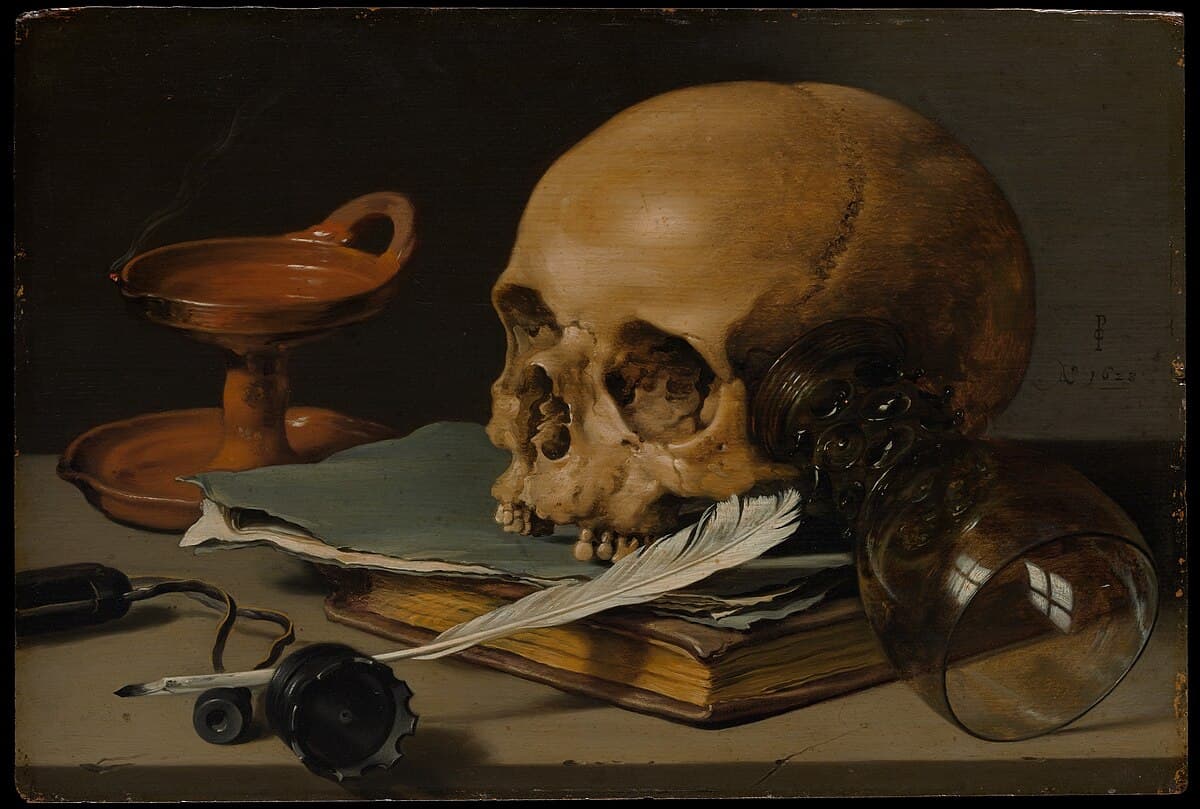
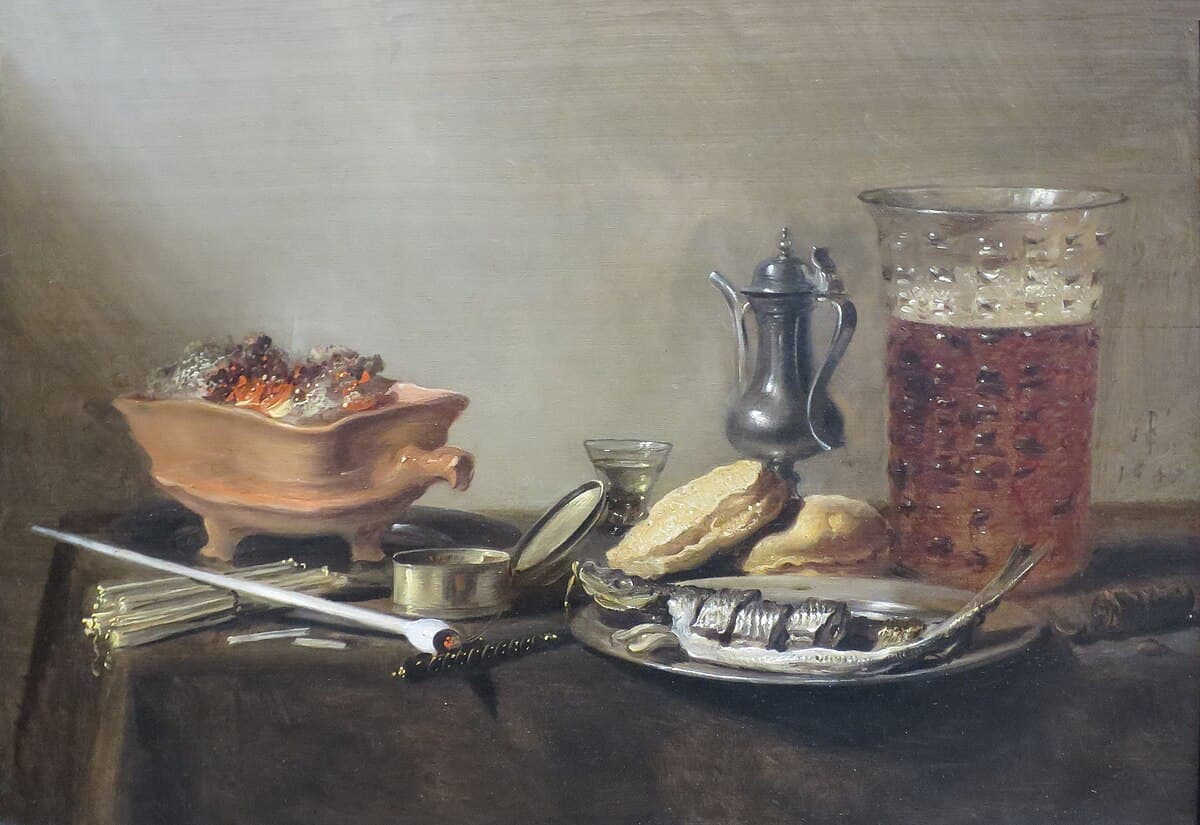
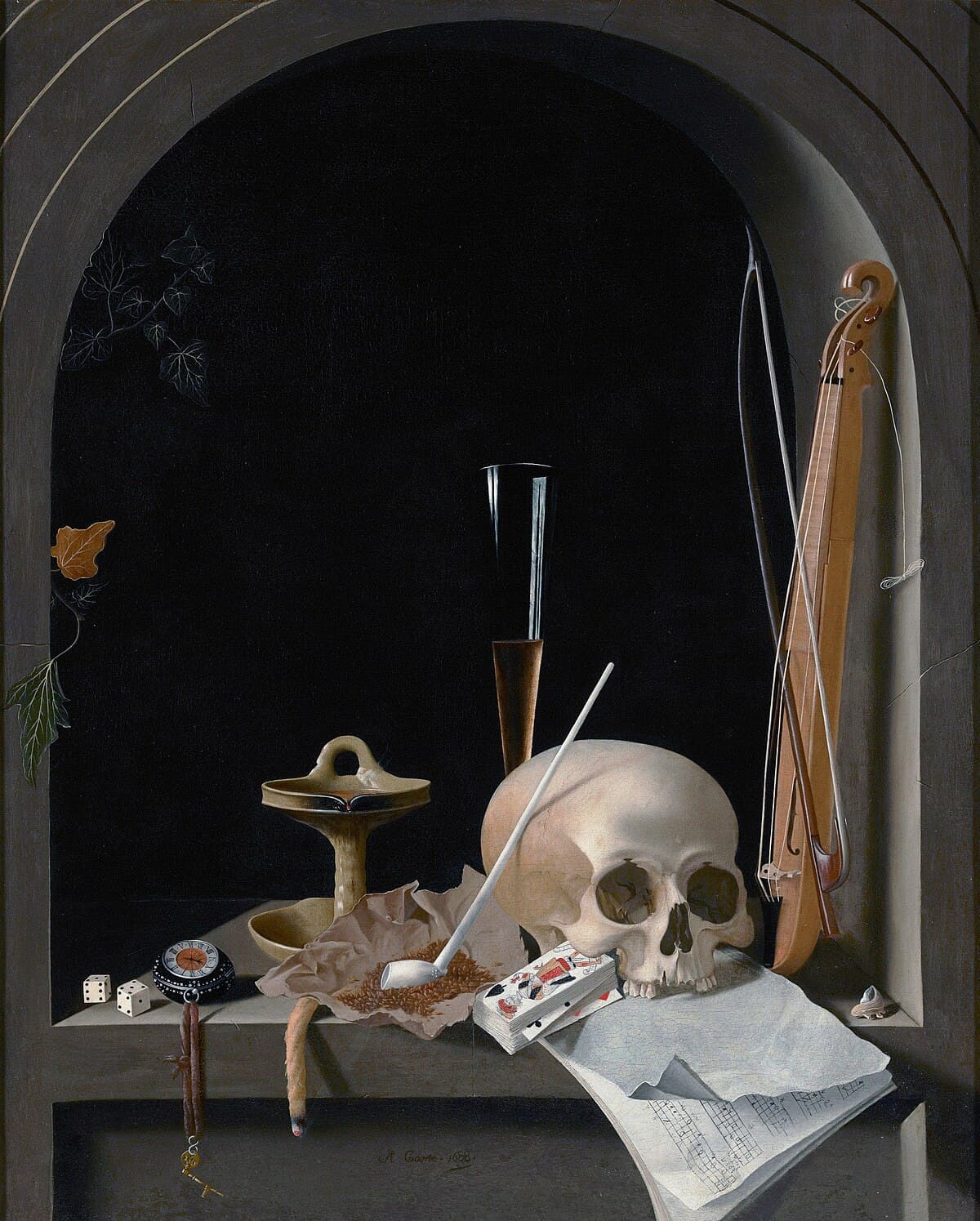
Pieter Claesz made this sophisticated vanitas including a small bronze copy of the ancient Spinario sculpture (boy removing a thorn). The classical figure shares the composition with typical mortality symbols: a skull, overturned roemer, and extinguished lamp. The juxtaposition comments on the transience even of classical fame.
This work demonstrates Claesz's ability to layer meaning in his Dutch Golden Age still lifes. The ancient sculpture, though famous, cannot escape time's passage. Now at the Rijksmuseum in Amsterdam, showcasing his intellectual complexity.