Public Domain
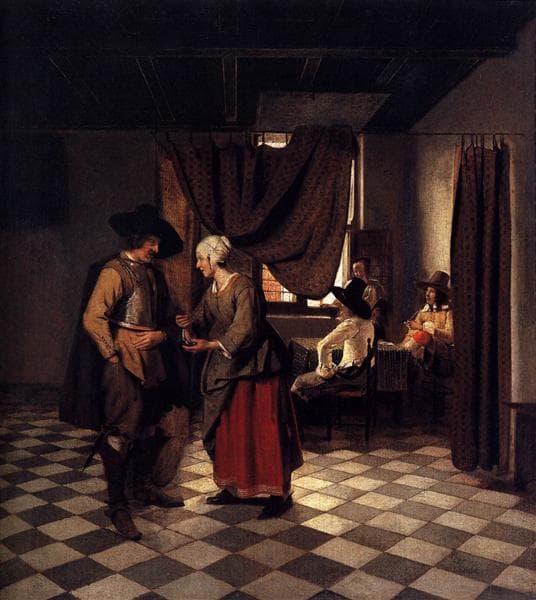
Paying the Hostess
Artwork Details
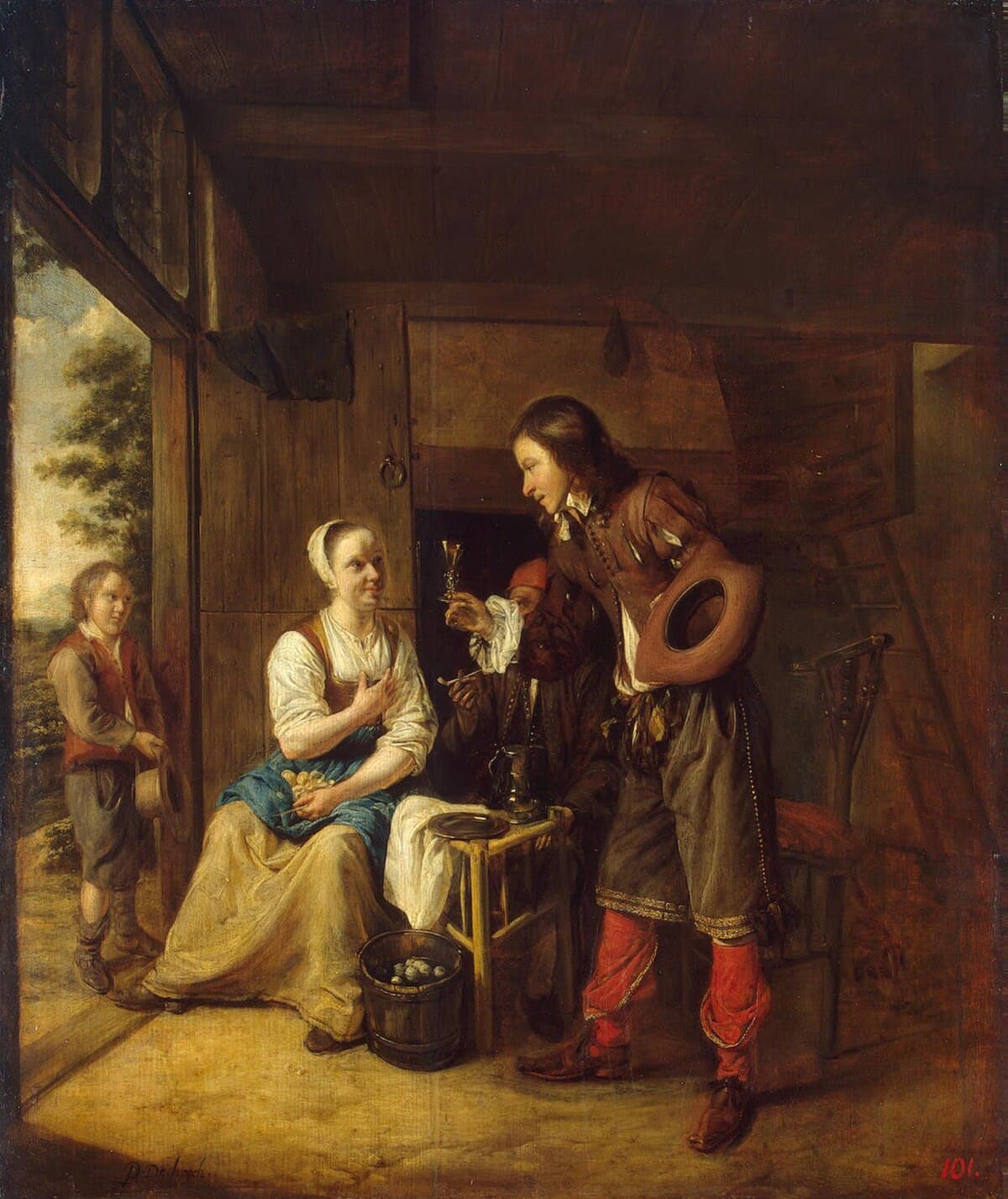
Pieter de Hooch rendered this scene around 1658, showing a fashionably dressed man and an innkeeper apparently disputing his bill in a country inn's courtyard. In the background, other guests continue their revelry while a man delivers sheaves of wheat and a woman with a child looks on. The composition captures everyday life in the Dutch Golden Age.
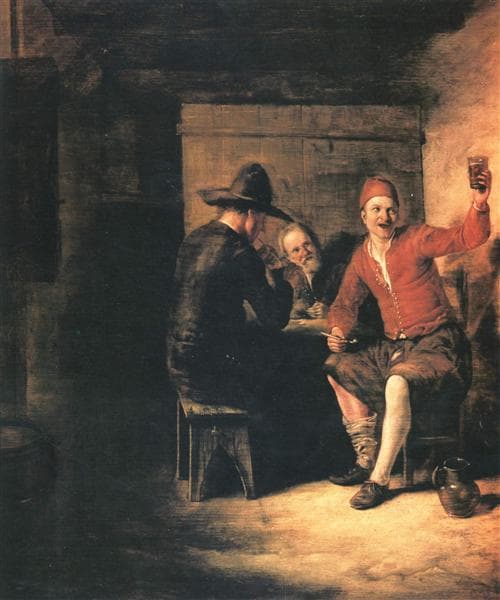
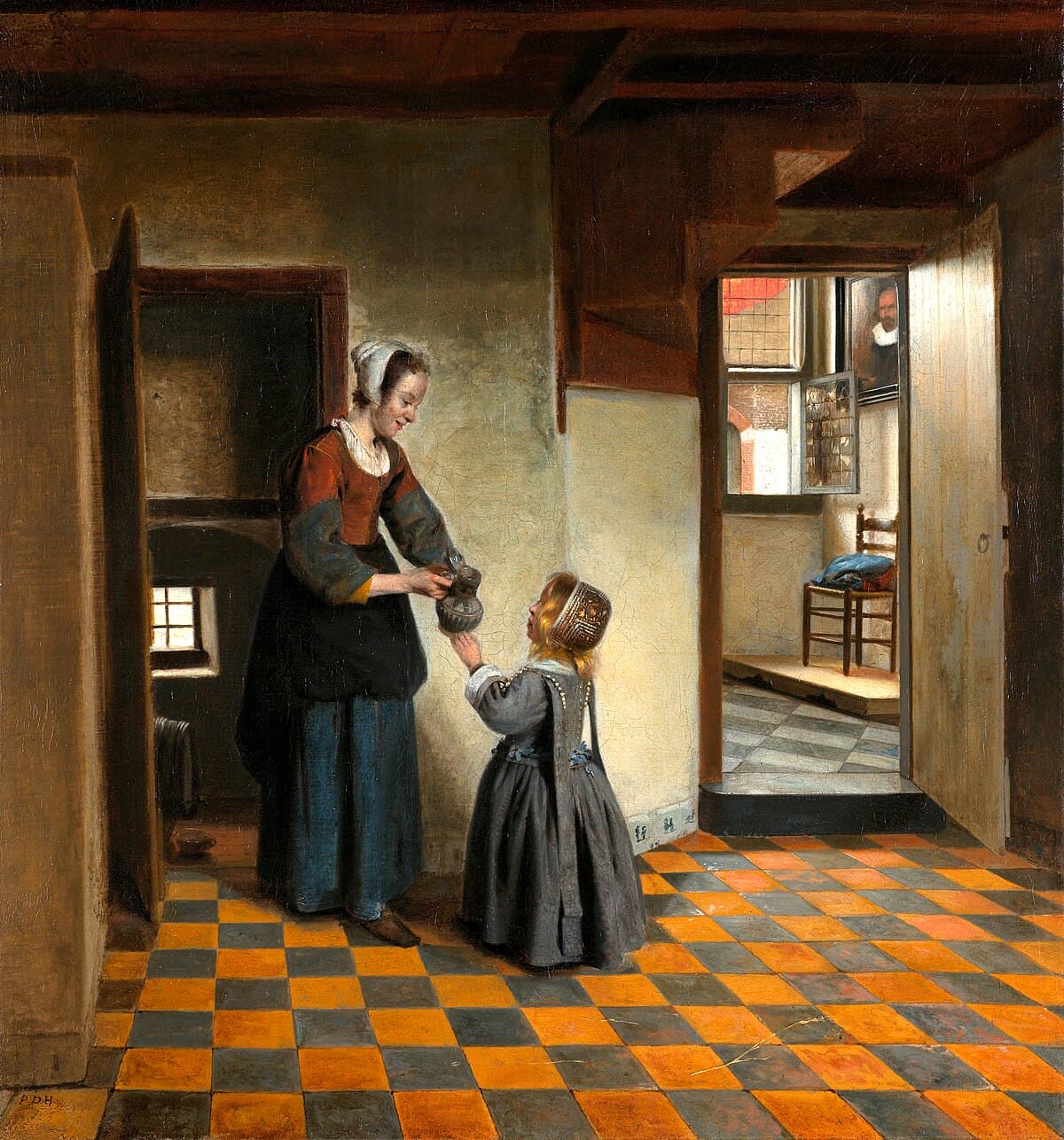
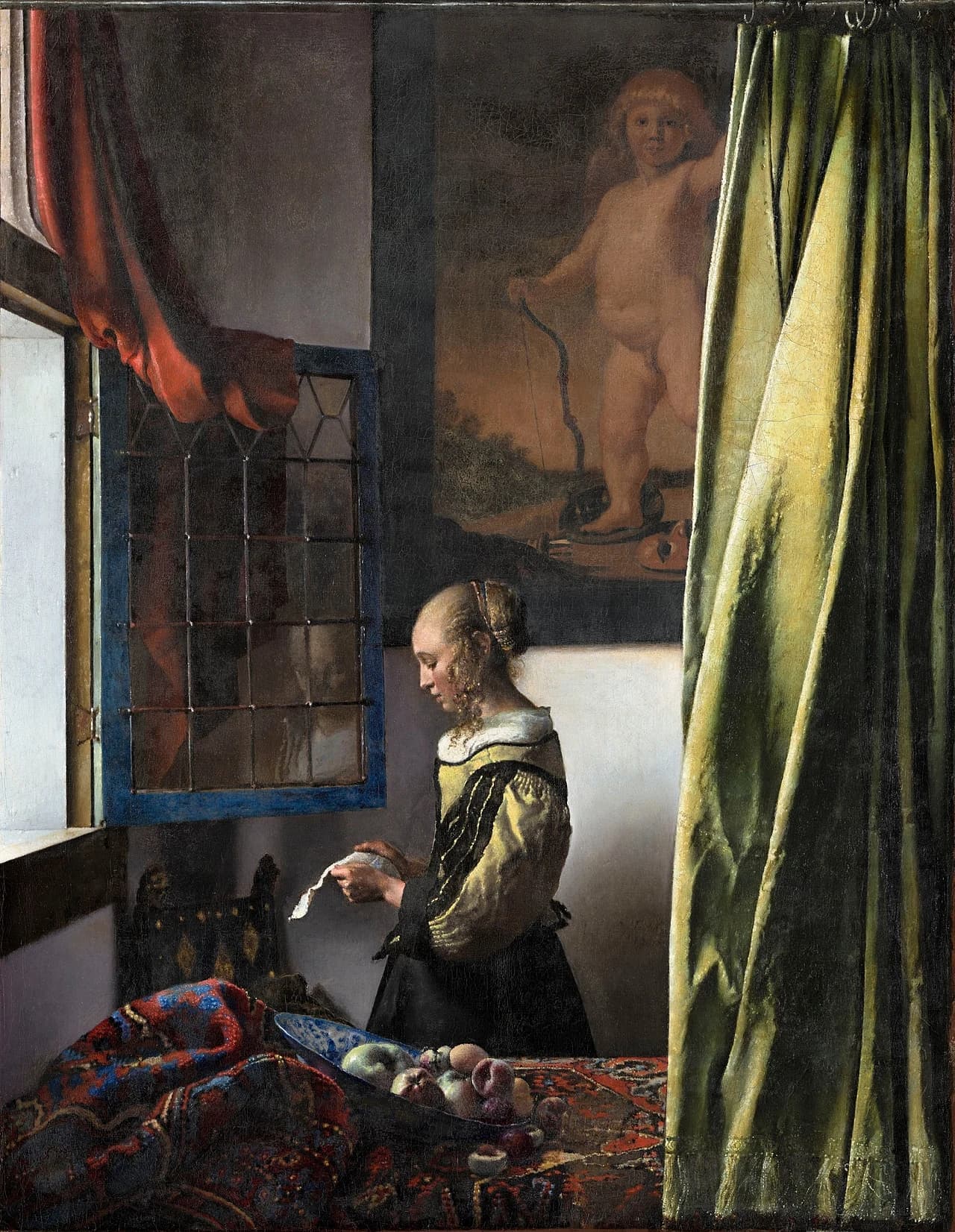
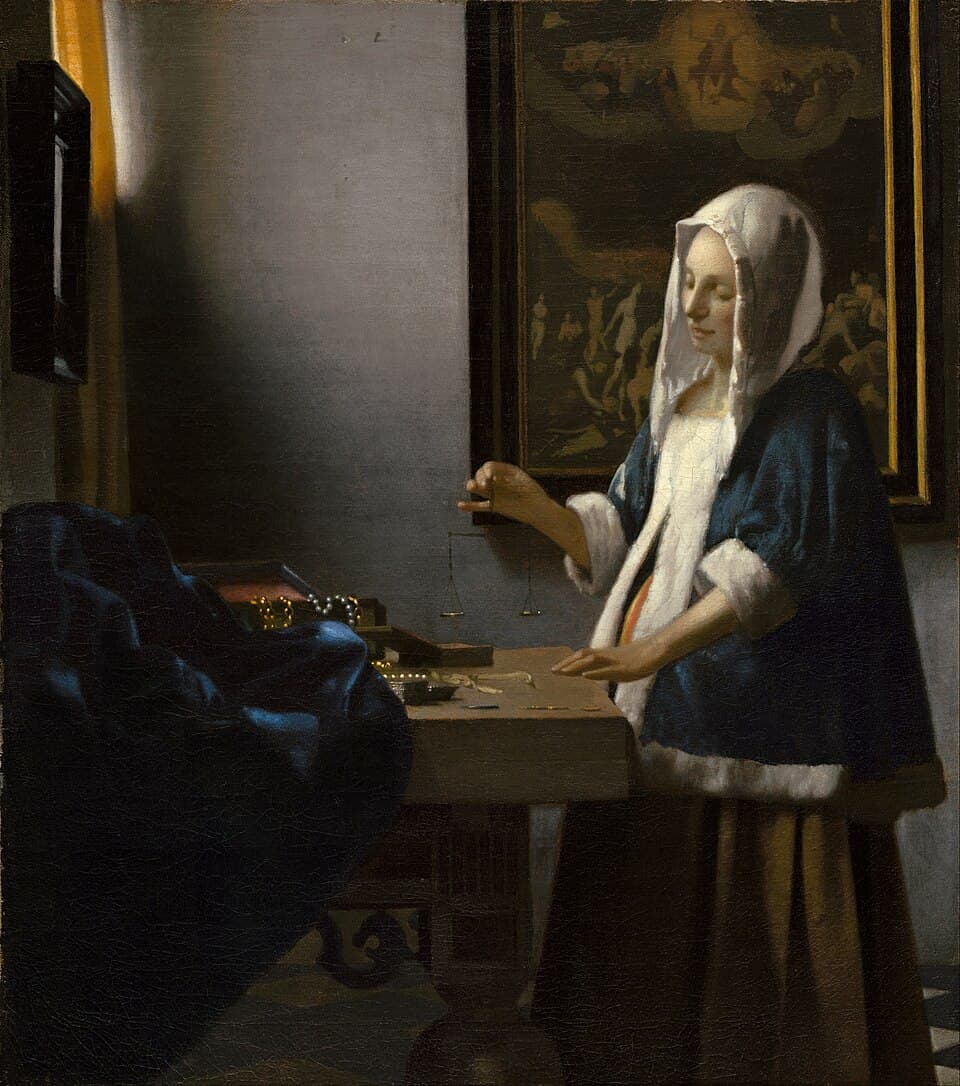
De Hooch was a contemporary of Jan Vermeer in the Delft Guild of St. Luke. Both artists became famous for their handling of light and careful attention to interior spaces. De Hooch's early work focused on soldiers and peasants in taverns, in the manner of Adriaen van Ostade. Through these subjects, he developed great skill in light, color, and perspective.
While Italian painters of the period created Baroque allegories from mythology and the Bible, Dutch masters like de Hooch documented domestic life: households, courtyards, and "merry company" scenes of Dutchmen at local taverns. The genre scenes had moral undertones, showing wealthy townsmen how not to behave. The Metropolitan Museum of Art holds a version of this subject, measuring 94.6 by 111.1 centimeters.