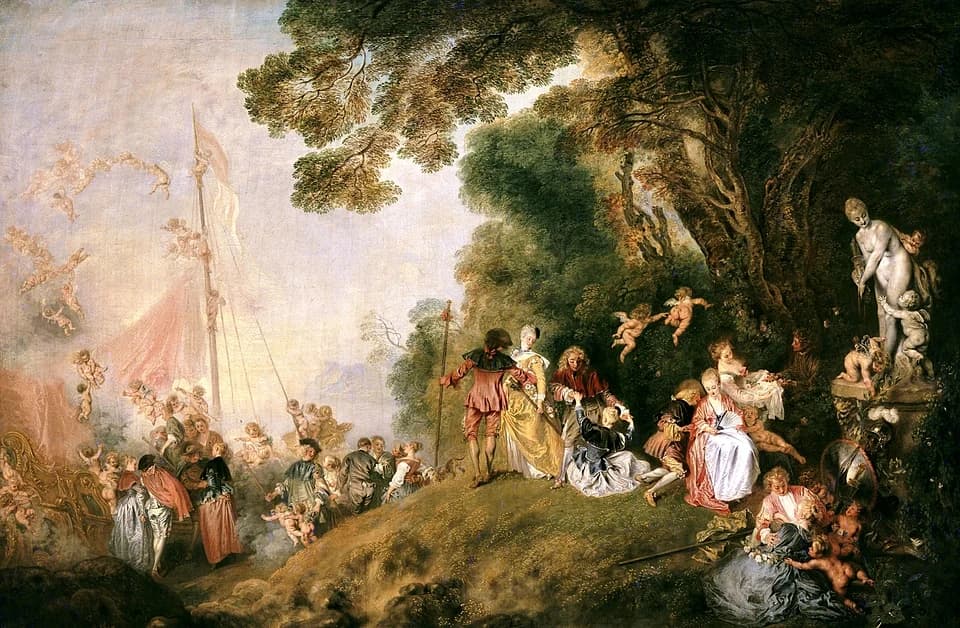
Pilgrimage to Cythera
by Jean-Antoine Watteau, 1717
Artwork Details
Details
- Year
- 1717
- Medium
- Oil on canvas
- Size
- 129 cm × 194 cm
Jean-Antoine Watteau painted this scene of aristocratic romance in 1717, showing elegantly dressed couples preparing to depart from or arriving at the island of Cythera. In Greek mythology, Cythera was sacred to Aphrodite, goddess of love. Cupids flutter through the air, pushing lovers together.
The painting caused problems for the French Academy. Watteau had been accepted as a member in 1714 but kept delaying his required reception piece. When he finally delivered this work in 1717, the Academy invented a new category for it: the fête galante, or elegant outdoor entertainment.
This new genre captured something distinct about early 18th-century France. After the somber final years of Louis XIV's reign, the aristocracy embraced pleasure and play. Watteau painted a second version around 1718-19, now in Charlottenburg Palace in Berlin. The original remains at the Louvre.