Wikimedia Commons • Public Domain
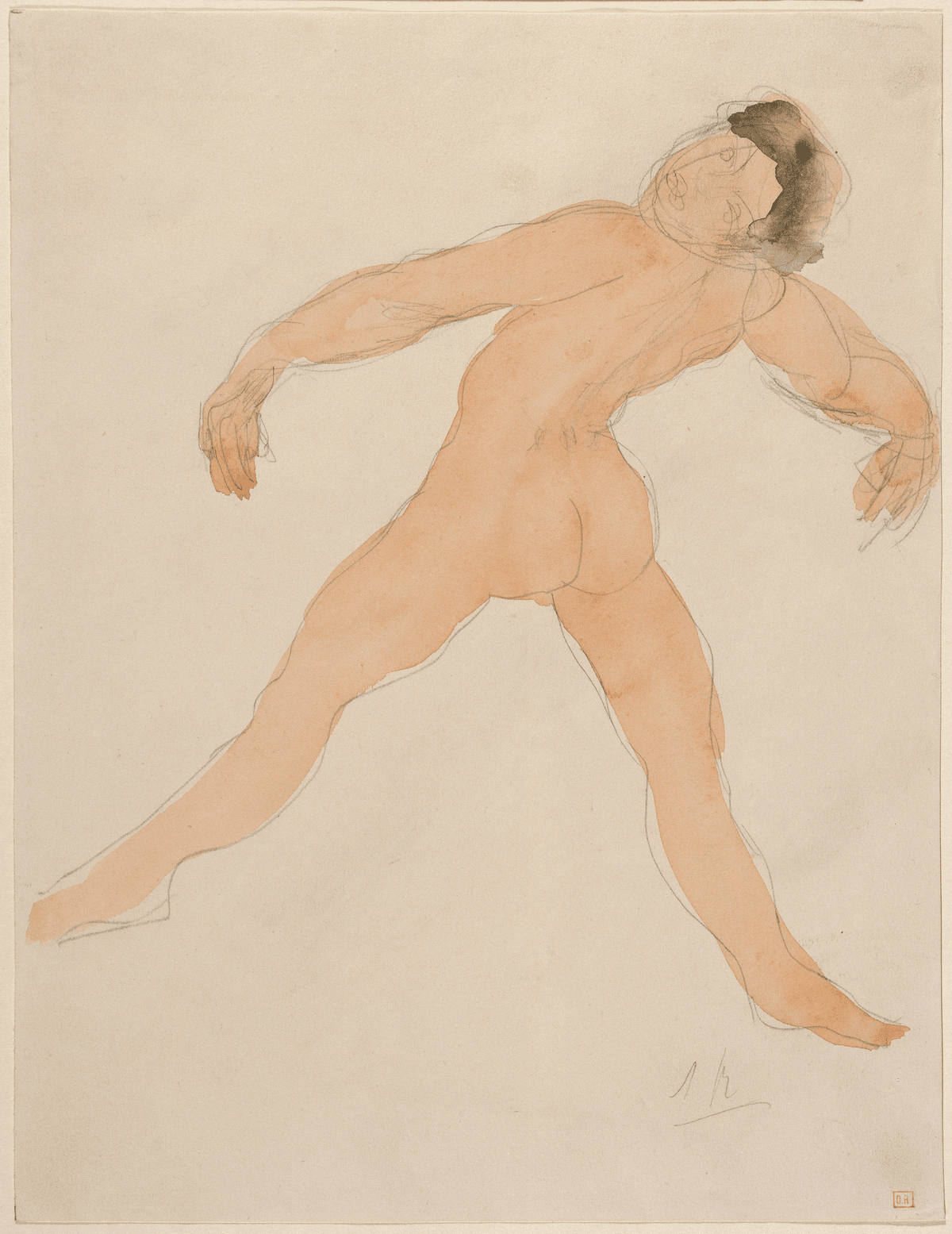
A Study of a Female Nude Seen from the Back
Artwork Details
Rembrandt created A Study of a Female Nude Seen from the Back in 1634, a small drawing measuring just 17 x 12 cm. A seated model turns away from the viewer, her spine, shoulders, and hips mapped in soft charcoal with sparing heightening. The velvety contours and tender pressure of the drawing reveal Rembrandt's mastery of line.
Unlike many 17th-century artists who idealized the nude with myth or classical perfection, Rembrandt valued honest observation over flattery. He focused on the nude only during certain phases of his career, and very few of these intimate studies survive. This drawing demonstrates that for Rembrandt, accuracy was a deeper courtesy than idealization.