Wikimedia Commons • Public Domain
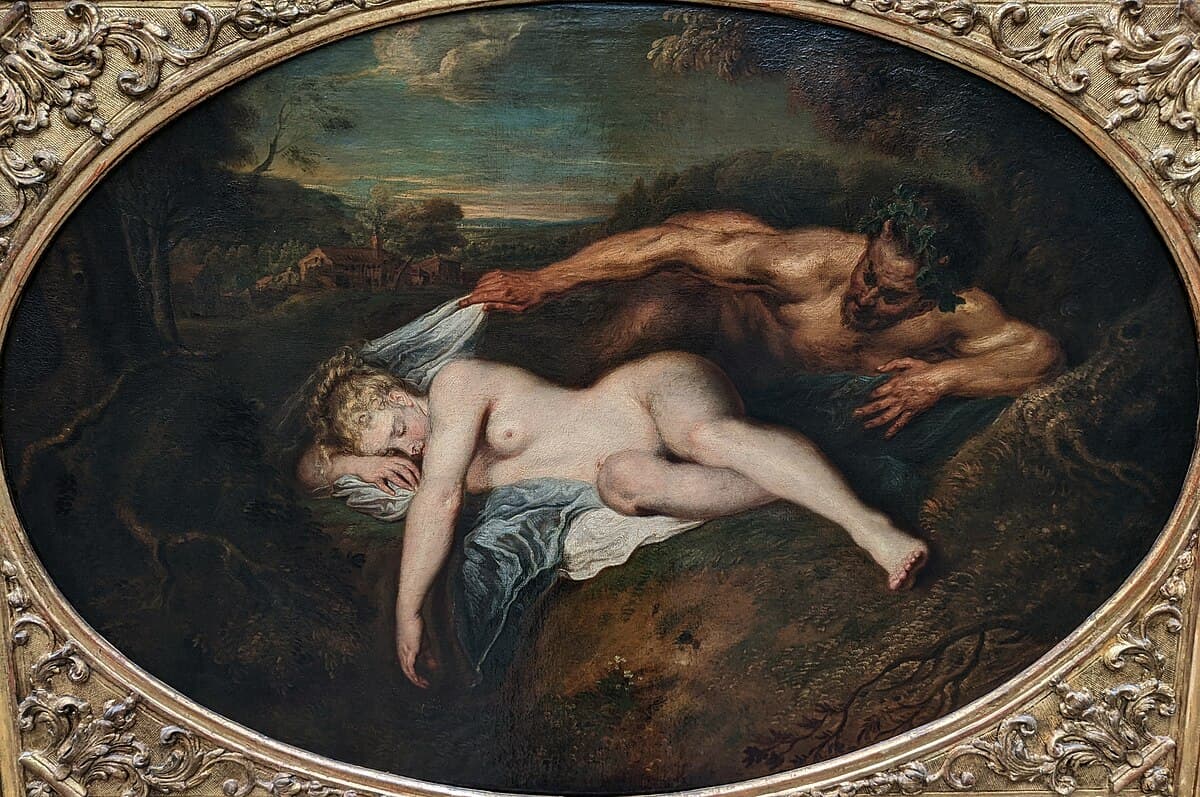
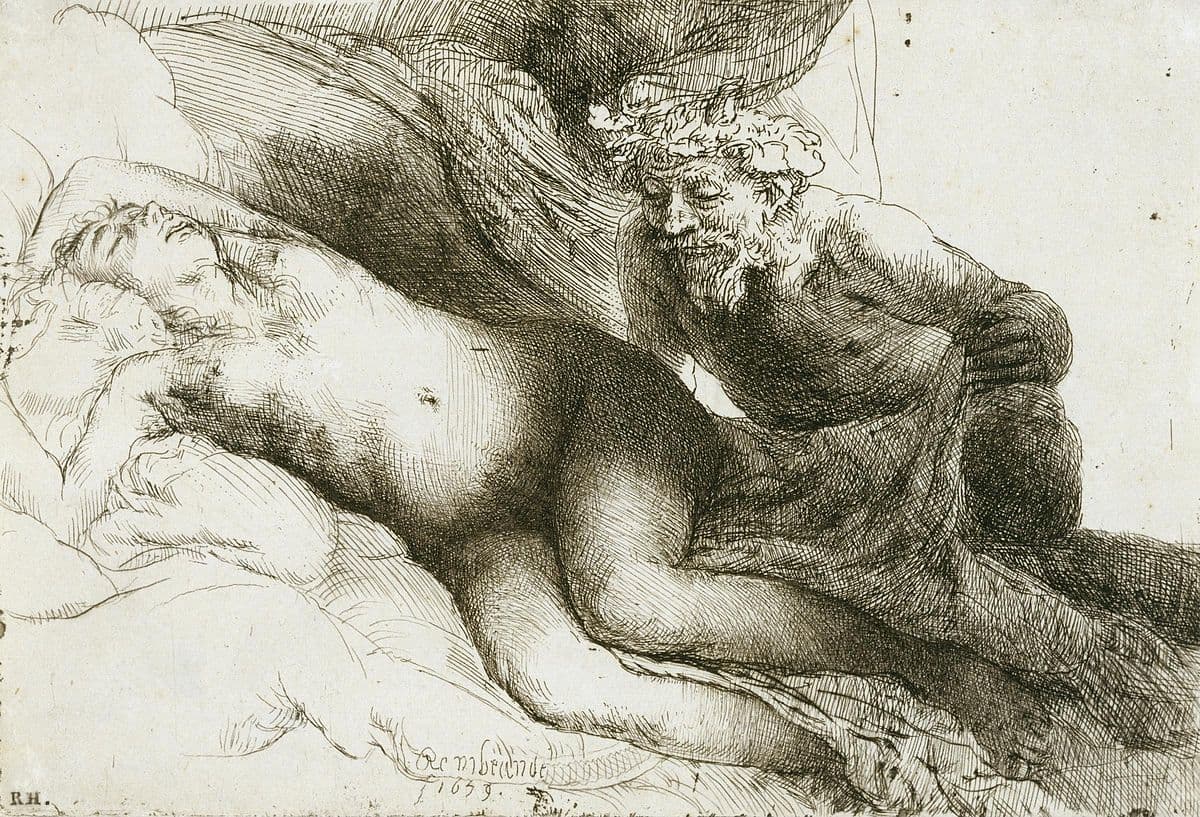
Antiope and Jupiter
GenreMythological
Artwork Details
Cite or Embed This Work
APA · MLA · Chicago1-click academic citation and embeddable “On View” museum badge for articles, syllabi, and research.
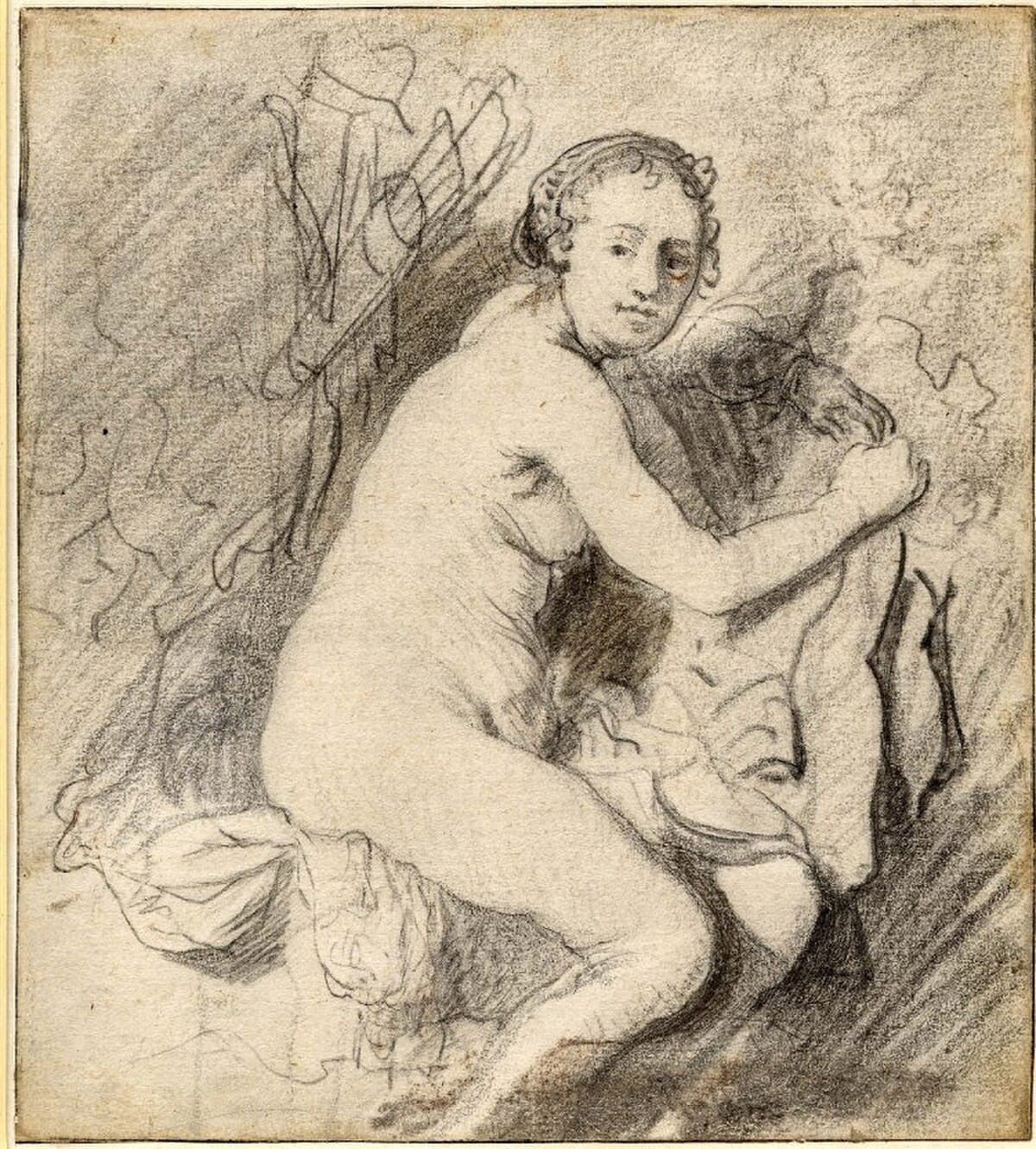
Rembrandt made this etching in 1659, depicting the myth of Jupiter visiting the sleeping Antiope disguised as a satyr. The subject comes from Ovid's Metamorphoses: the god lifts her bedsheet to gaze at the Theban princess while she sleeps unaware. It's considered Rembrandt's most powerfully erotic print.
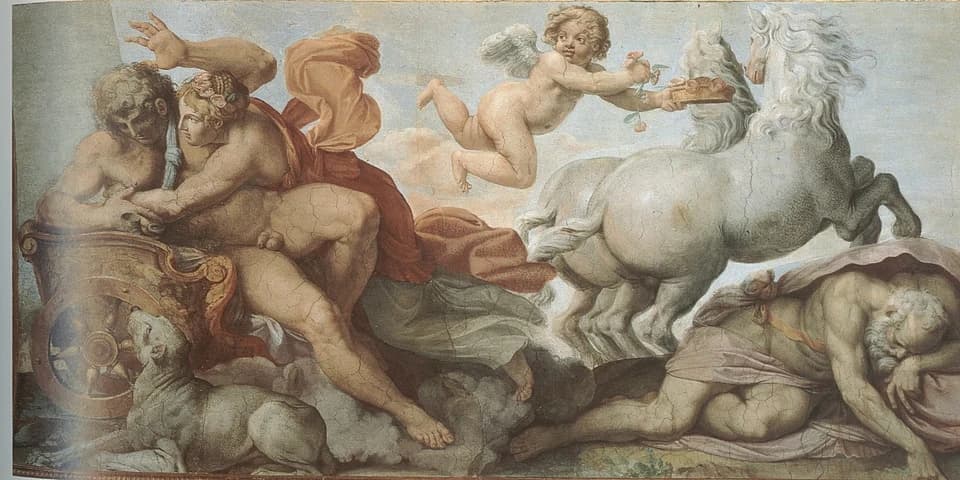
The composition draws from an earlier etching by Annibale Carracci, though Rembrandt made the scene more intimate through his use of drypoint and large areas of white space. The print measures 13.8 by 20.5 centimeters in its larger version. He also made a smaller version in the 1630s.
Prints from this plate are held in collections worldwide, including the Rembrandt House Museum in Amsterdam, which sells high-quality reproductions. This was Rembrandt's last rendering of a classical mythological subject. The image later inspired Picasso's famous print "Faun Unveiling a Sleeping Girl."