Wikimedia Commons • Public Domain
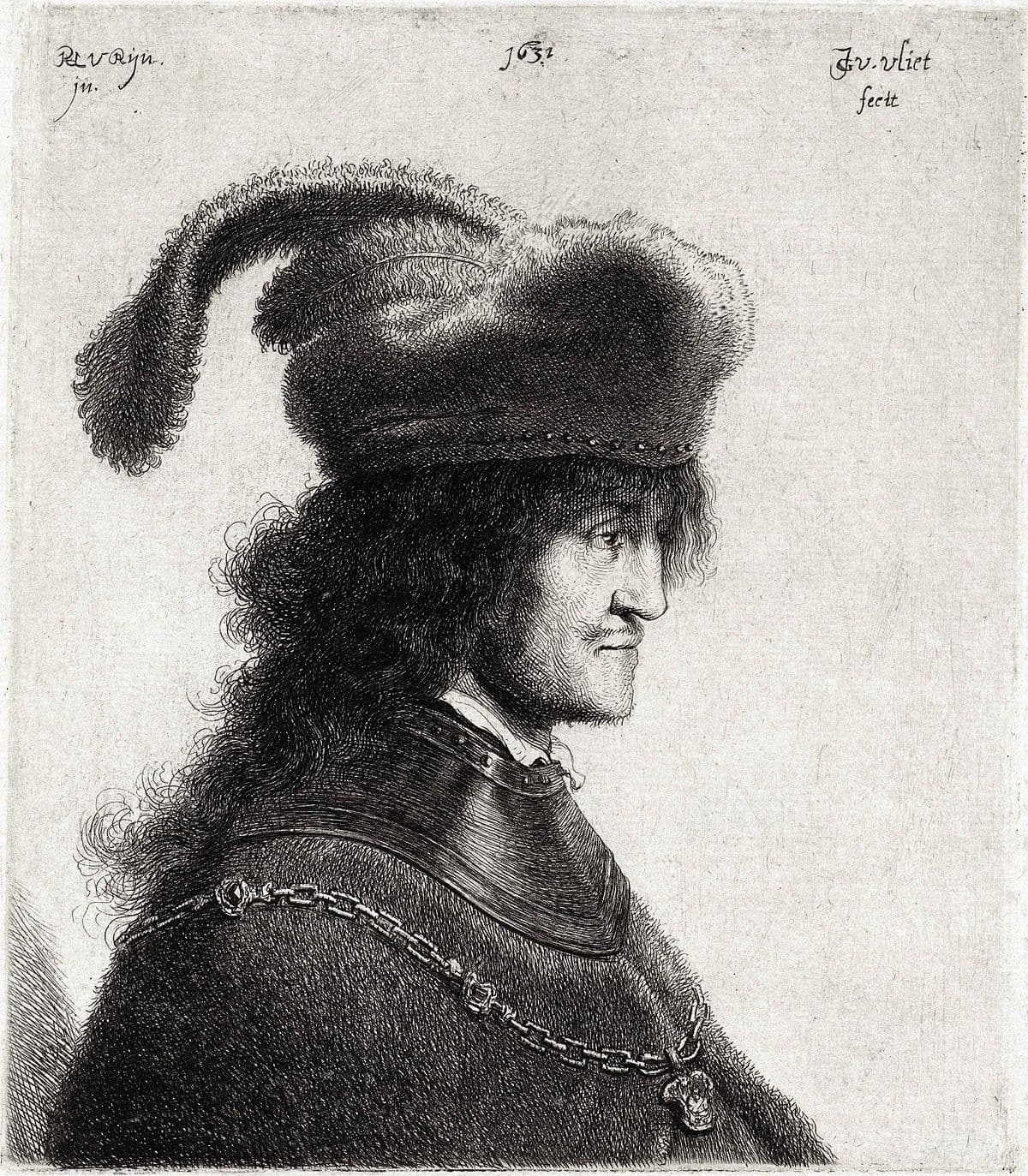
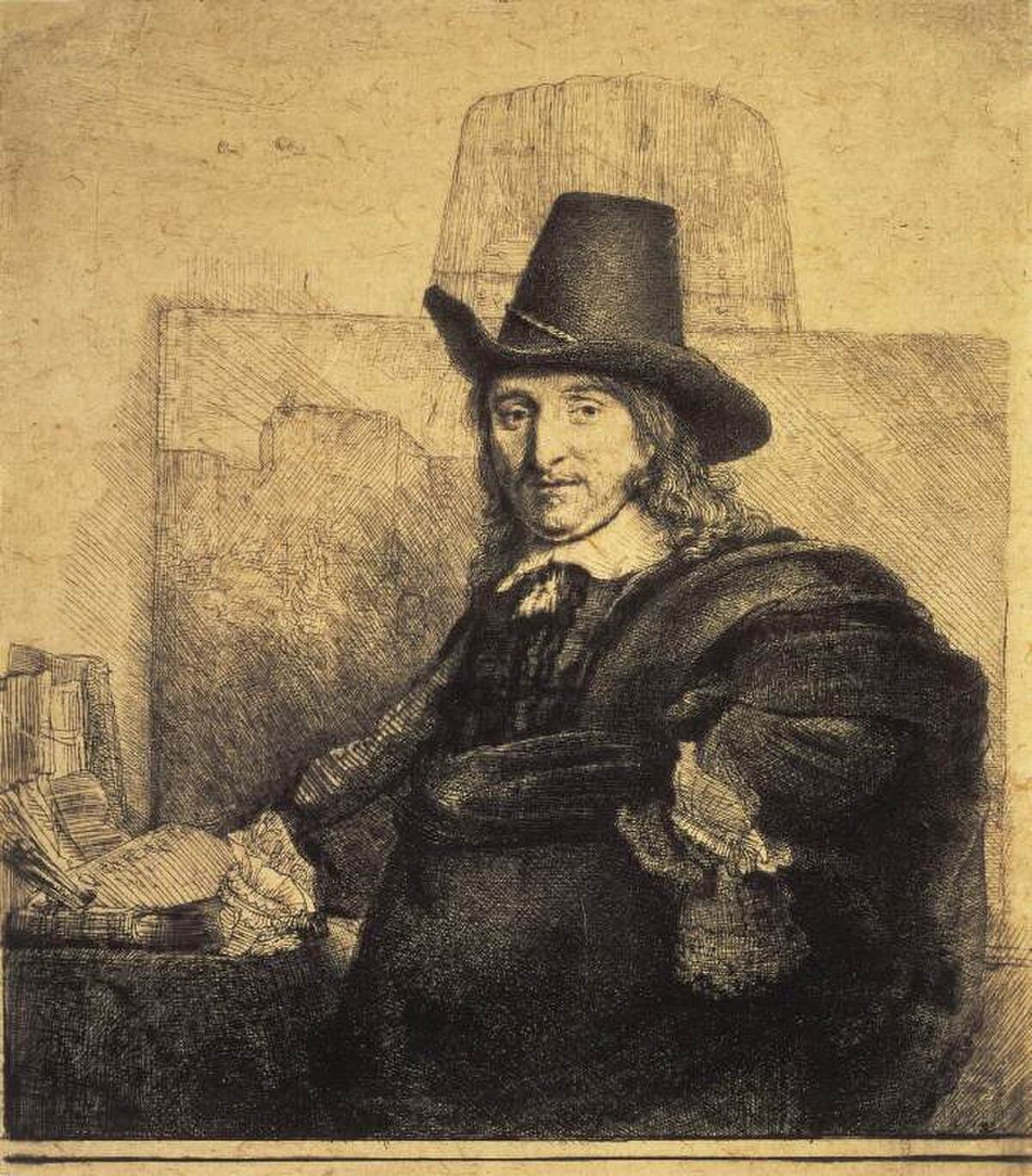
Portrait of Jan Asselyn
GenrePortrait
Artwork Details
Cite or Embed This Work
APA · MLA · Chicago1-click academic citation and embeddable “On View” museum badge for articles, syllabi, and research.
Rembrandt made this portrait of his fellow artist Jan Asselyn around 1647, using etching, drypoint, and burin techniques. Asselyn was a landscape painter known as "Krabbetje" (Little Crab) because of a deformed left hand. Rembrandt carefully positioned Asselyn's arm to conceal the disability, showing sensitivity to his friend's condition.
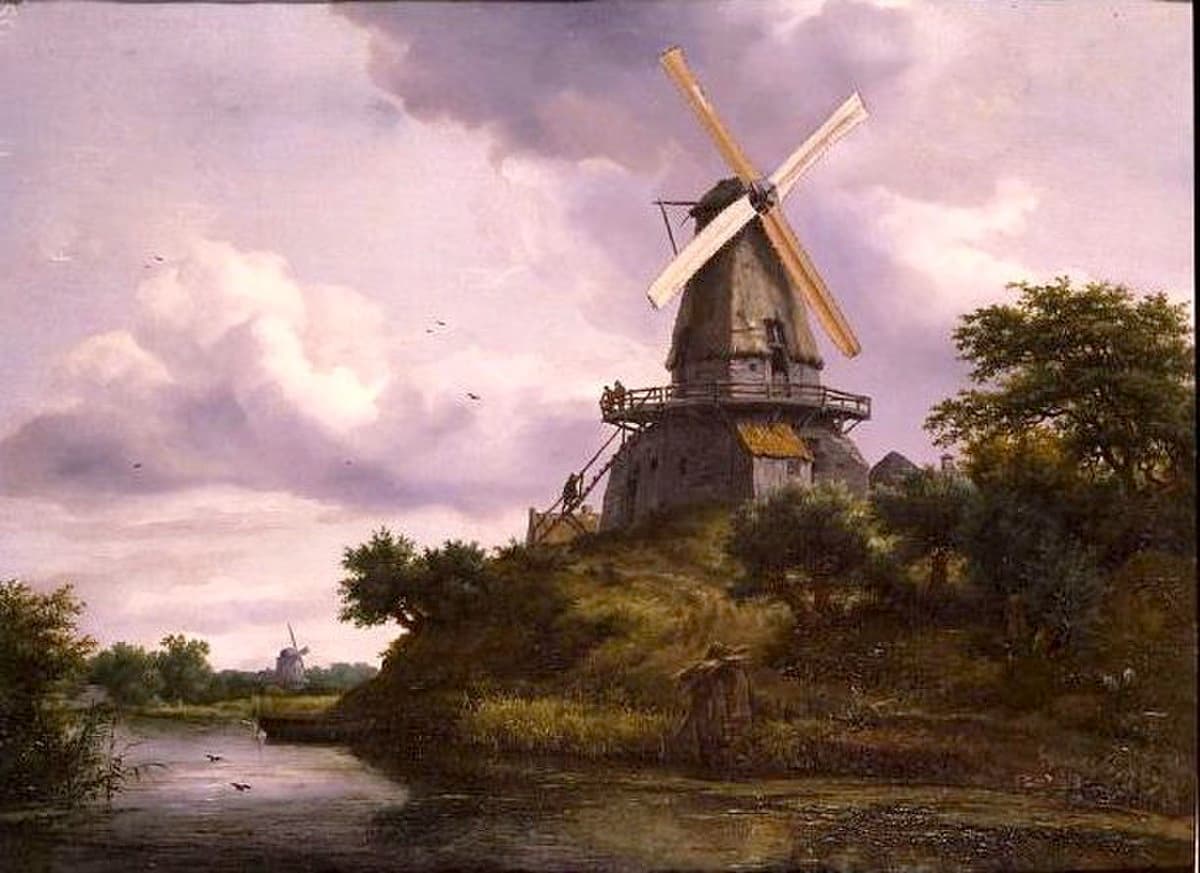
Asselyn had spent years in Italy as a member of the Bentvueghels, northern artists who painted the sun-drenched Roman countryside. Upon returning to Amsterdam in 1647, he became part of Rembrandt's circle. His most famous painting, "The Threatened Swan" at the Rijksmuseum, is often interpreted as an allegory of Dutch nationalism.
Versions of this portrait etching can be found at the State Hermitage Museum, the National Galleries of Scotland, and the Victoria and Albert Museum. The print demonstrates Rembrandt's mastery of etching as a medium for intimate, psychologically rich portraits.