Wikimedia Commons • Public Domain
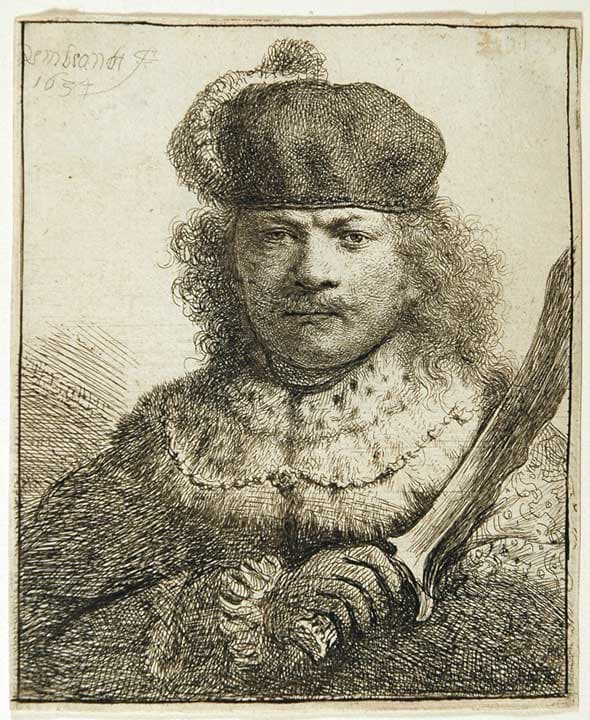
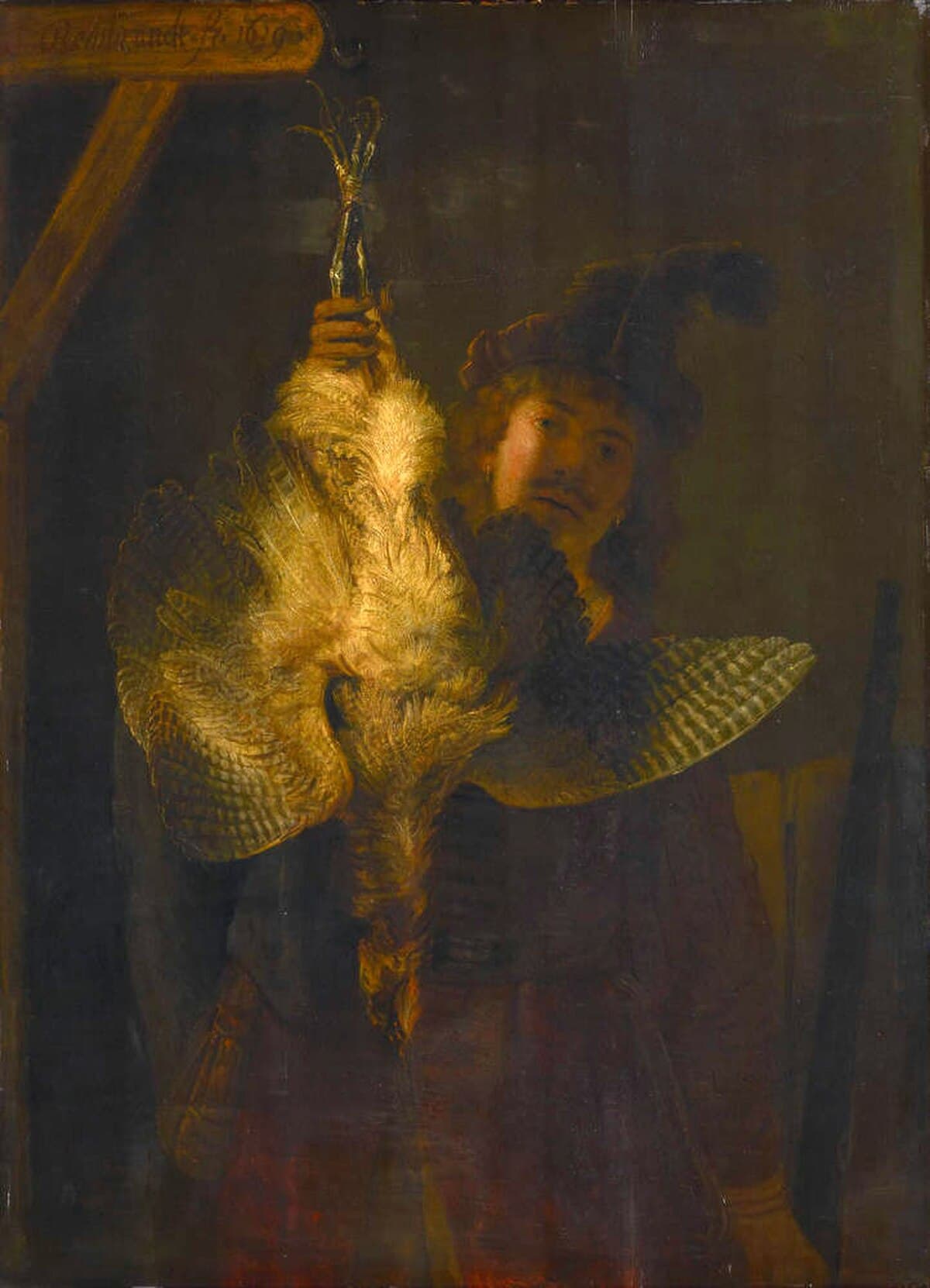
Self-portrait with Bittern
GenreSelf-Portrait
Artwork Details
Cite or Embed This Work
APA · MLA · Chicago1-click academic citation and embeddable “On View” museum badge for articles, syllabi, and research.
This painting by Rembrandt van Rijn self-portrait in 1639, showing himself as a prosperous gentleman-hunter holding a dead bittern (a type of heron). He wears an elaborate velvet costume with a heavy gold chain, projecting the success and social status he had achieved during the 1630s. This was Rembrandt at the height of his fortune, before financial troubles would later diminish his circumstances.
The inclusion of the hunting trophy was unusual for artist self-portraits, which typically showed the subject with brushes and palette. Hunting was an aristocratic pursuit, and by depicting himself this way, Rembrandt claimed gentlemanly status beyond mere craftsman. The rich costume reinforces this message: he was not just a painter but a man of position and wealth.
The portrait's confident swagger would prove somewhat ironic. Within a decade, Rembrandt's spending habits and changing tastes in art would leave him bankrupt. But in 1639, nothing suggested the coming reversal. This painting now hangs at the Gemäldegalerie Alte Meister in Dresden, Germany, where it documents a moment of triumph in the career of a painter who would produce major works in prosperity and poverty alike.