Wikimedia Commons • Public Domain
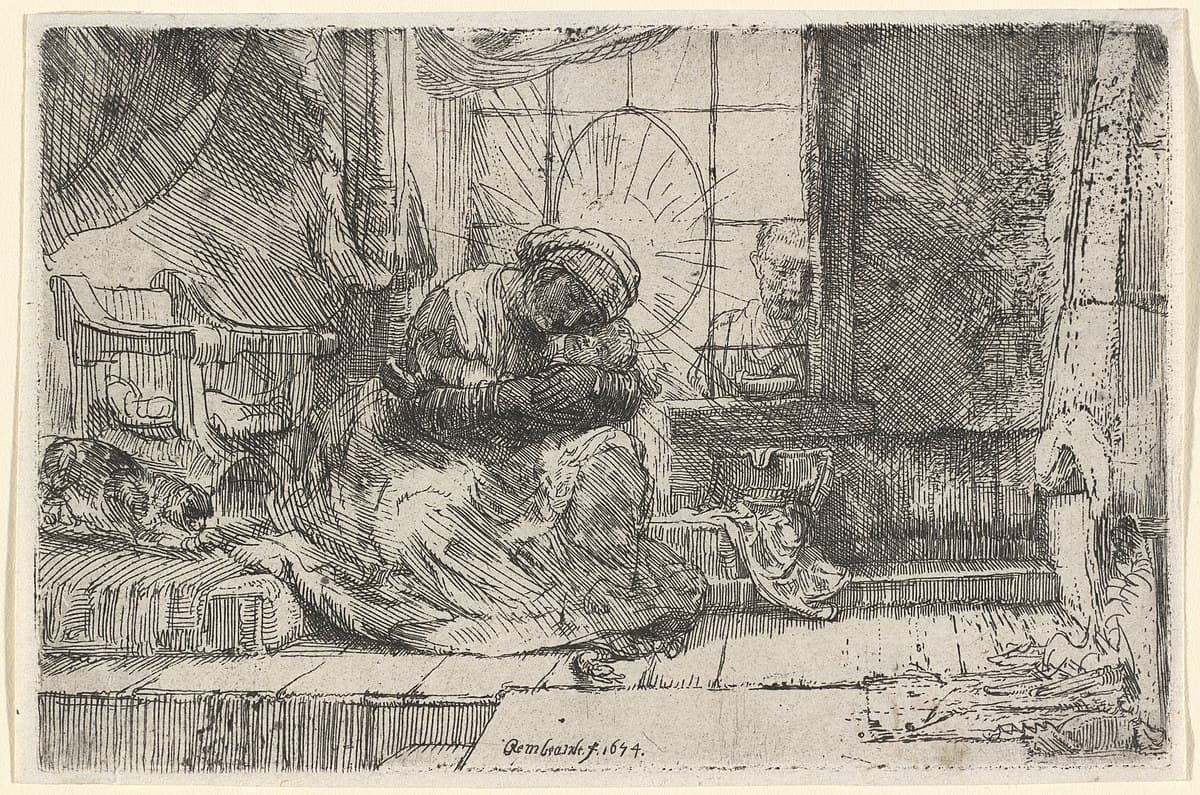
The Holy Family with a cat
by Rembrandt van Rijn, 1654
GenreReligious
Artwork Details
Details
- Year
- 1654
Cite or Embed This Work
APA · MLA · Chicago1-click academic citation and embeddable “On View” museum badge for articles, syllabi, and research.
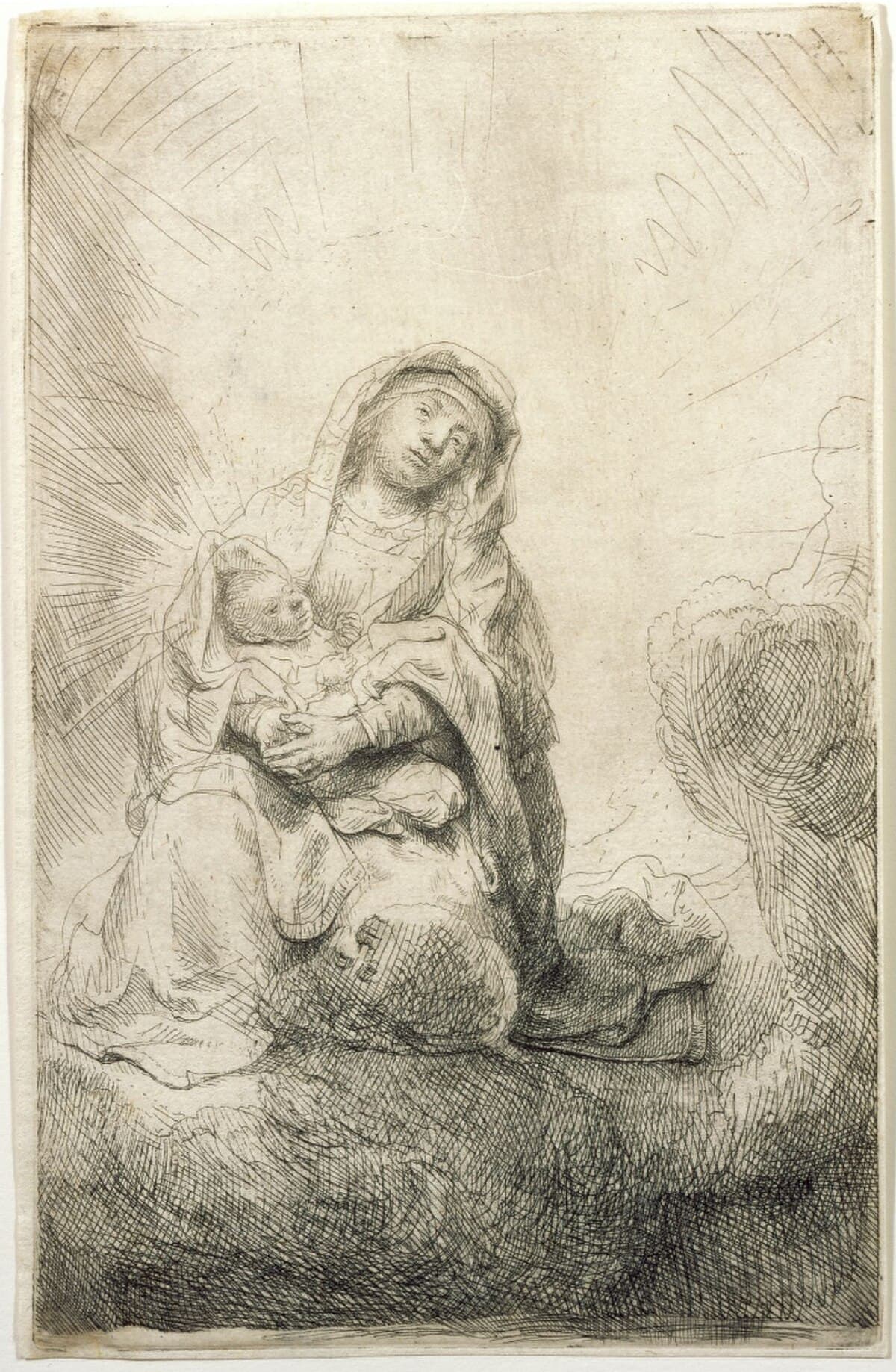
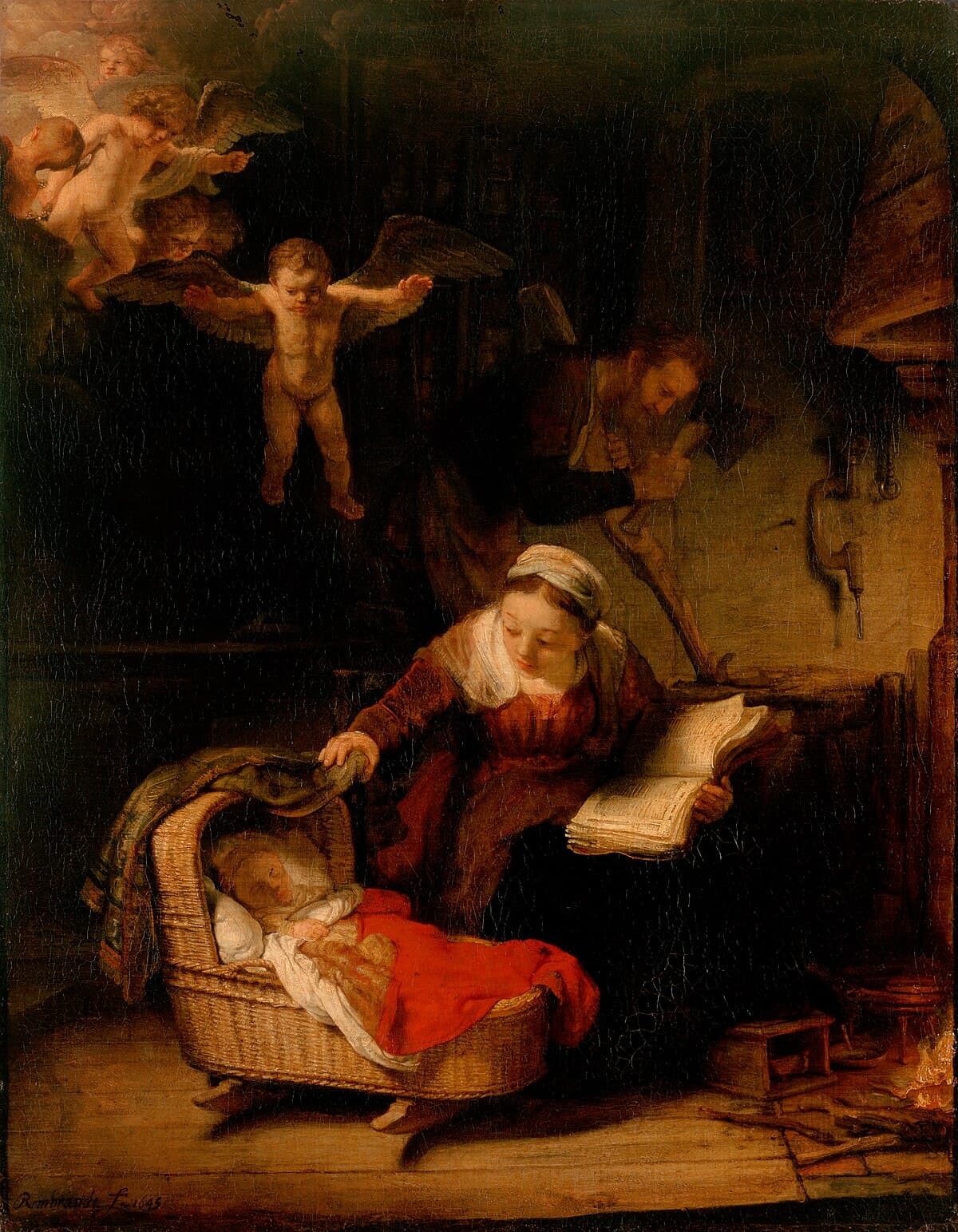
Dutch artist Rembrandt van Rijn created this etching in 1654, depicting the Holy Family in an intimate domestic setting with an unusual addition: a cat curled near the hearth. Mary tends to the infant Jesus while Joseph works in the background, their simple home warmed by a fire. The scene transforms the divine family into ordinary Dutch householders, sacred figures made approachable through domestic detail.
The inclusion of a cat was unconventional for religious imagery. Cats appeared in secular Dutch genre scenes but rarely in depictions of the Holy Family. Rembrandt's addition humanizes the sacred subject, suggesting a real home where a pet might wander. This approach reflected Protestant emphasis on finding God in everyday life rather than in distant grandeur.
The etching belongs to Rembrandt's late period, when his technique had reached full maturity. Fine lines build atmosphere through shadow and suggestion rather than hard outlines. As a print, the image exists in multiple impressions across collections worldwide, more accessible than his unique paintings. The work represents Rembrandt's ability to find spiritual depth in the simplest moments of domestic life.