Wikimedia Commons • Public Domain
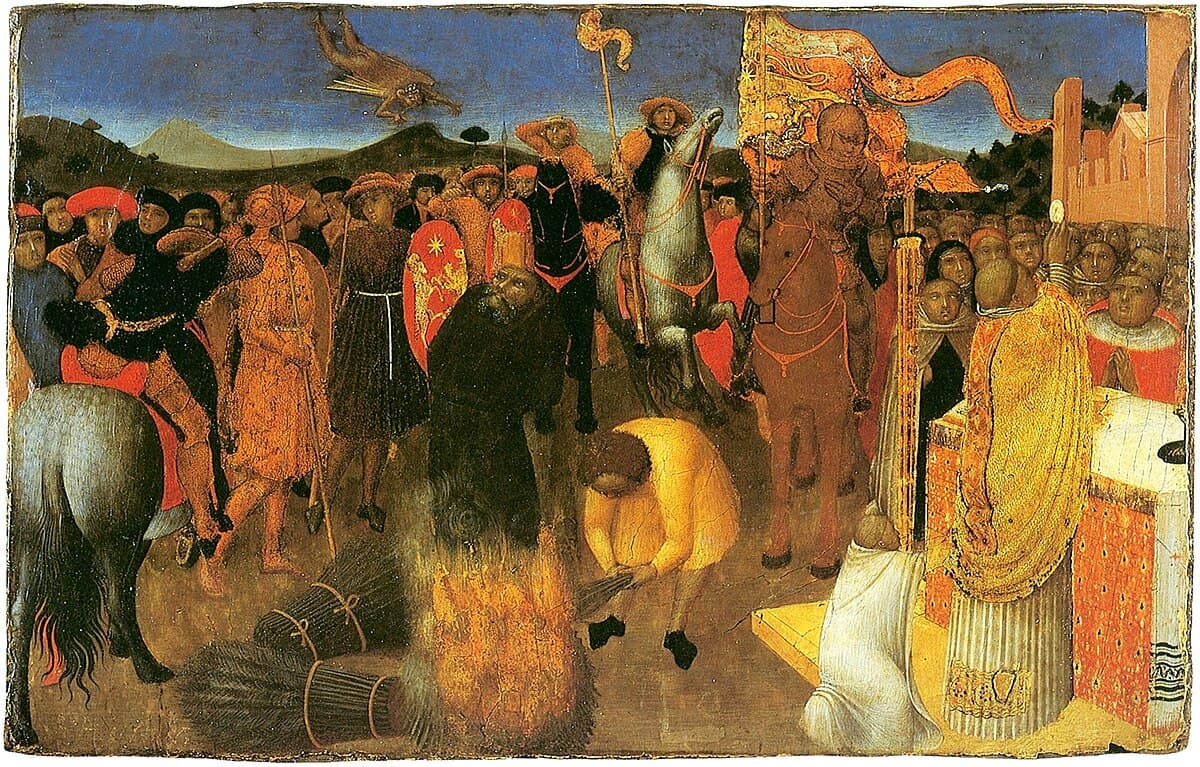
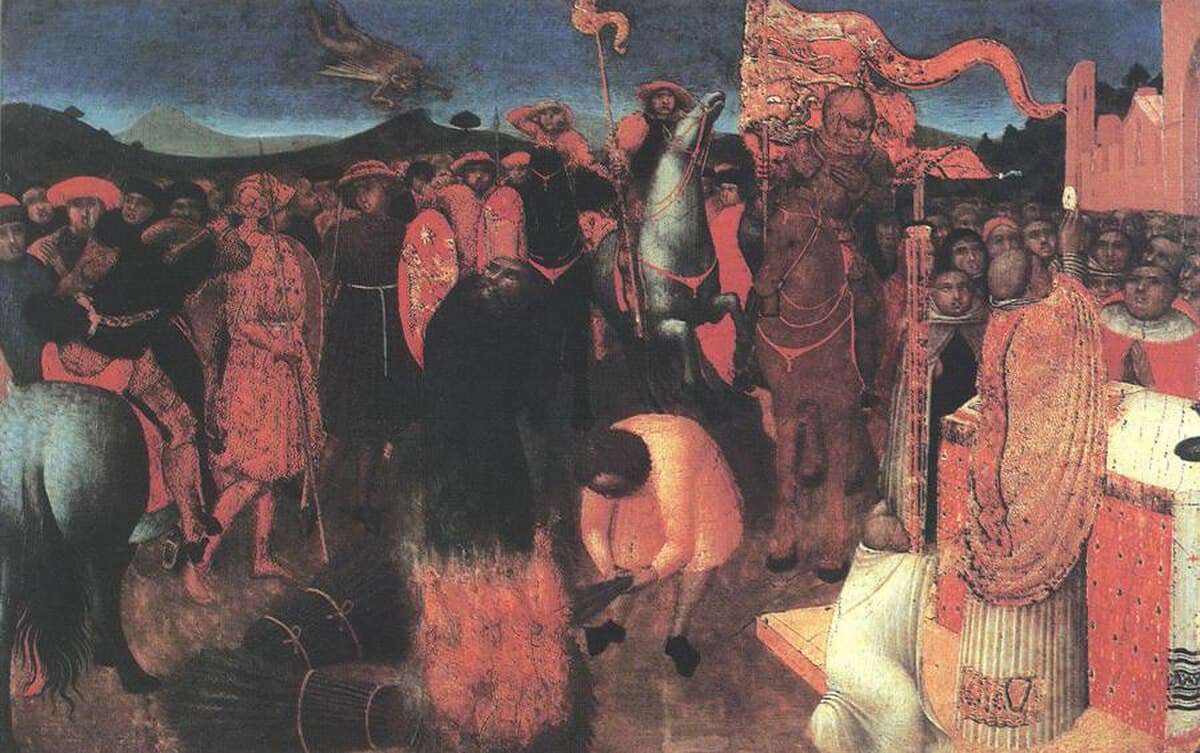
Miracle of the Eucharist
by Sassetta
Artwork Details
Italian artist Sassetta painted this small panel in 1423 for the Eucharist chapel in Siena Cathedral as part of a propaganda campaign promoting devotion to the sacrament. The scene depicts a miraculous occurrence: when offered to a sinful young Carmelite friar, the communion Host transformed into a bleeding wafer, and a devil snatched the monk's soul from his mouth as he collapsed dead.
The congregation watches in horror from the left as the drama unfolds on the right. The young friar's cloak has turned black, marking his sinfulness. The carefully staged composition commemorates the Miracle of Bolsena (1263), when a doubting priest saw the Host bleed during Mass. The painting conveys the "consequences of sinfulness, the perils of feigning faith, and the power of God."
Sassetta (Stefano di Giovanni, c.1392-1450) was among the most important representatives of Sienese Renaissance painting. His altarpiece of the Eucharist was later divided between multiple collections. This panel, measuring 24 by 38 centimeters, is now at the Bowes Museum in Barnard Castle, England.