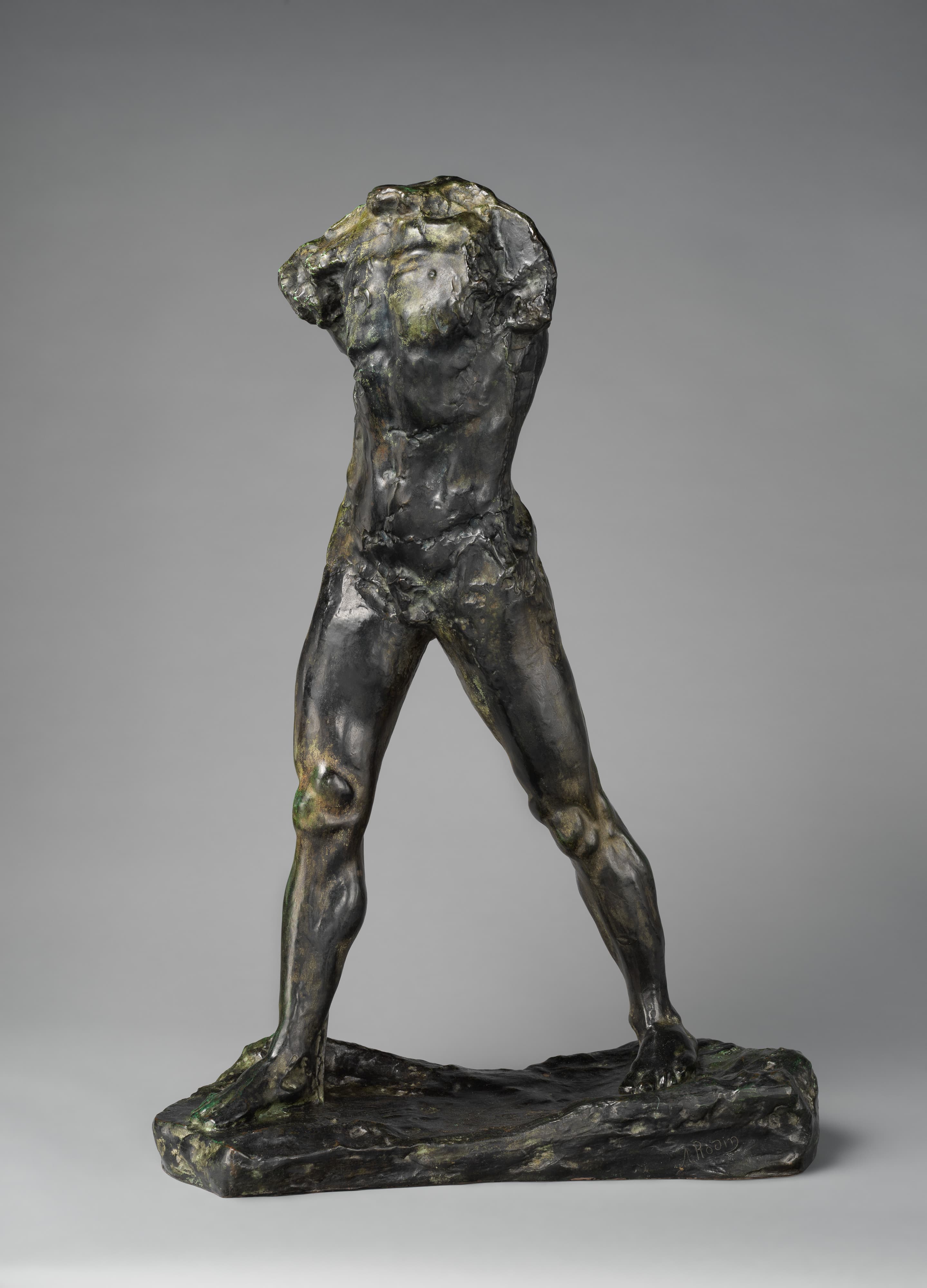
Auguste Rodin, CC BY-SA 4.0, via Wikimedia Commons.
The Burghers of Calais
by
Auguste Rodin, CC BY-SA 4.0, via Wikimedia Commons.
by
1-click academic citation and embeddable “On View” museum badge for articles, syllabi, and research.
Auguste Rodin received the commission for The Burghers of Calais in 1884 from the city of Calais. The sculpture commemorates a moment of sacrifice from 1347, when six prominent citizens volunteered to surrender themselves to England's King Edward III to save their besieged city. Led by Eustache de Saint Pierre, the men walked out wearing nooses, expecting execution. Queen Philippa intervened and spared their lives.
Rodin's design broke with tradition by depicting all six figures rather than just the leader, and by showing them in states of anguish rather than heroic triumph. He enlarged their hands, heads, and feet to heighten emotional impact. The bronze monument stands 217 centimeters tall and was intended to be placed at ground level so viewers could walk among the figures. The city initially installed it on a high pedestal, but later moved it to a lower base outside Calais Town Hall. Casts are displayed at the Musée Rodin and museums worldwide.

Auguste Rodin, 1886
Art Institute of Chicago, Chicago
Works that share an artist, movement, museum, genre, palette or theme with The Burghers of Calais.
Luxury wall art with the same mood and energy. Gallery-quality canvas, no museum crowds.
Browse Collection