T
© Copyrighted Artwork
This artwork is protected by copyright. We cannot display images of works by artists who passed away after 1954.
See the original at Musée Rodin in Paris
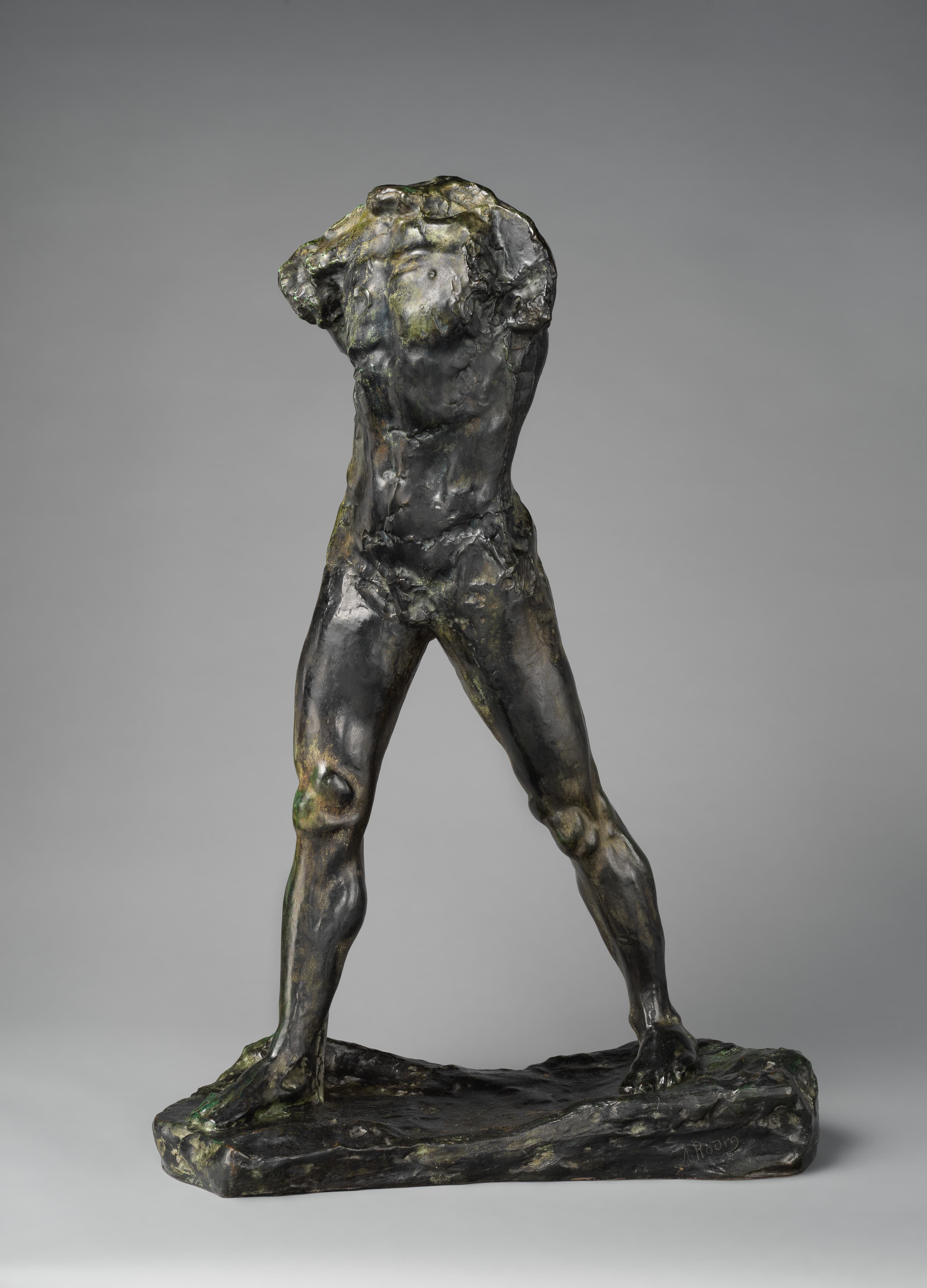
The Walking Man
by Auguste Rodin, 1907
Artwork Details
Details
- Year
- 1907
- Medium
- Bronze
- Size
- 213.5 cm × 71.7 cm × 156.5 cm
Auguste Rodin created The Walking Man by combining studies he had made for his 1878 sculpture Saint John the Baptist Preaching. Around 1899 to 1900, he grafted the legs from that earlier work onto an unfinished, rough-surfaced torso. The resulting figure has no head and no arms, a deliberate choice that focuses attention entirely on the act of movement.
By stripping away what he considered unnecessary elements, Rodin created a work of pure kinetic energy. The powerful stance and forward lean capture the essence of walking without any narrative distraction. This fragment sculpture represented a radical departure from academic tradition, which demanded complete, idealized figures. The bronze stands 213.5 centimeters tall and is displayed at the Musée Rodin in Paris. The Walking Man influenced generations of modern sculptors who embraced the fragment as a legitimate artistic form.