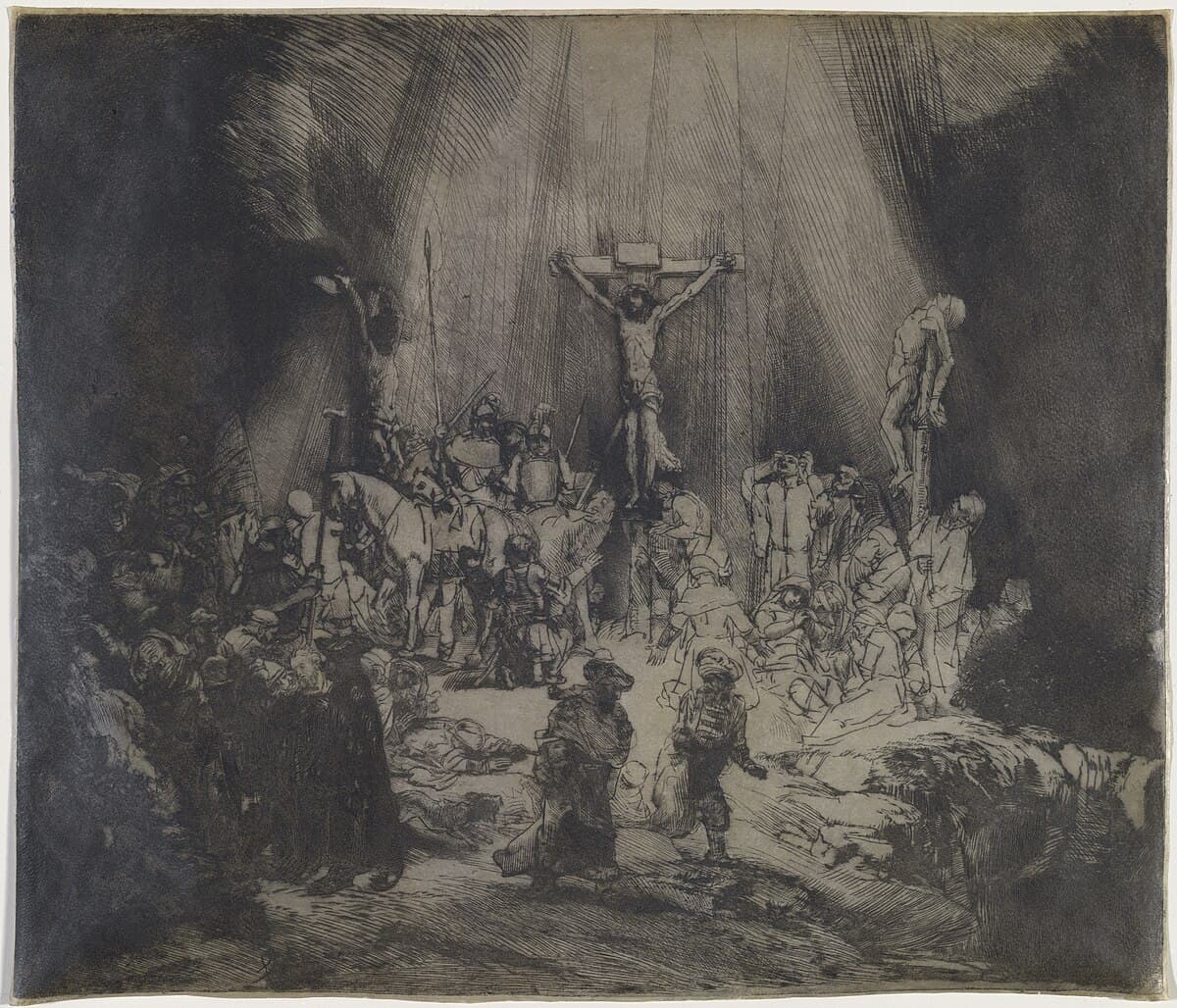
The Three Crosses
by Rembrandt van Rijn, 1653
Artwork Details
Details
- Year
- 1653
- Medium
- Drypoint and burin
- Size
- 38.5 cm × 45 cm (15.2 × 17.7 in)
Cite or Embed This Work
APA · MLA · Chicago1-click academic citation and embeddable “On View” museum badge for articles, syllabi, and research.
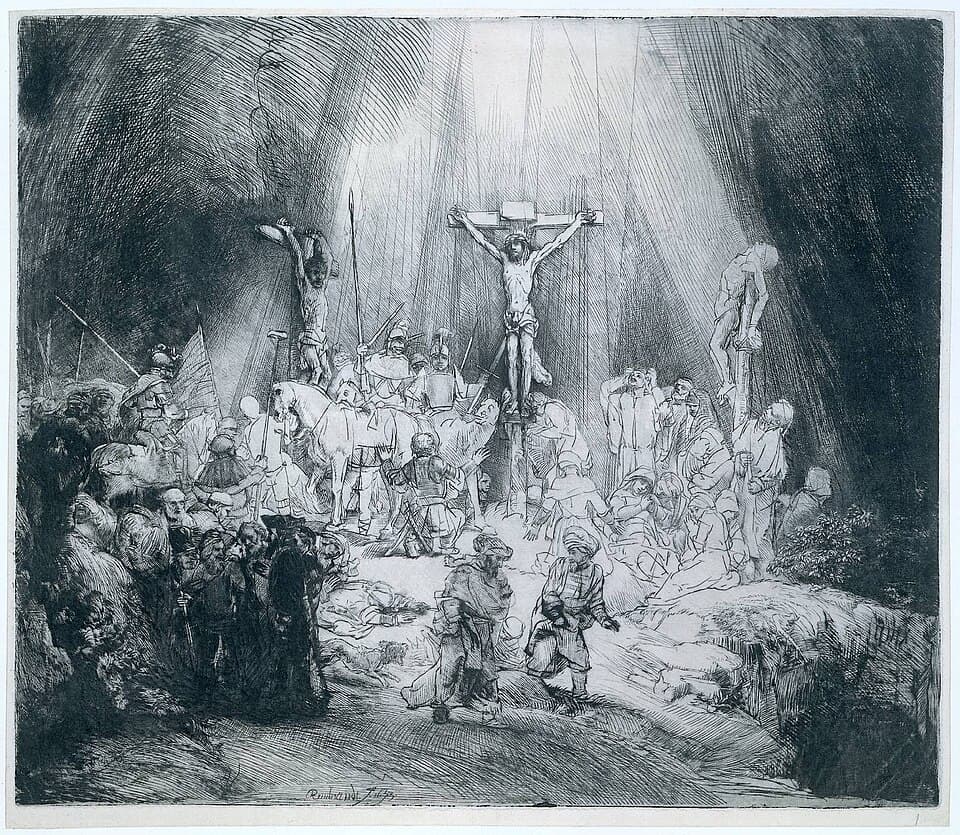
The Three Crosses is Rembrandt's most ambitious printmaking achievement, depicting the Crucifixion at the moment of Christ's death. Created in 1653, the drypoint and burin print shows divine light streaming down onto Christ while surrounding figures react with awe and despair. Rembrandt reworked the plate multiple times, creating dramatically different versions.
The first states show a balanced composition with clear figures. In the fourth state, Rembrandt transformed the plate by adding dense darkness, obscuring many figures and creating an apocalyptic atmosphere. This radical revision demonstrates his willingness to destroy successful work in pursuit of greater emotional impact. The print's multiple states document his evolving vision over several years.
Impressions exist in many museums, including the Metropolitan Museum of Art.