Franz von Stuck
German·1863–1928
No Portrait Available
Franz von Stuck was born Franz Stuck on February 23, 1863, in Tettenweis, a village near Passau in Bavaria, the son of a miller. He showed talent for drawing and caricature as a child and moved to Munich in 1878, at fifteen, to pursue formal training, entering the Munich Academy in 1881 and studying there until 1885. Munich in that decade was the leading art city in the German-speaking world, and it remained his home for the rest of his life.
His early career ran through illustration rather than painting. He drew cartoons for the satirical magazine Fliegende Blätter and designed decorative vignettes for books and theater programs, work that sharpened his sense of composition and line. His breakthrough came in 1889, when The Guardian of Paradise won a gold medal at the Munich Glass Palace exhibition and established him as a serious painter almost overnight.
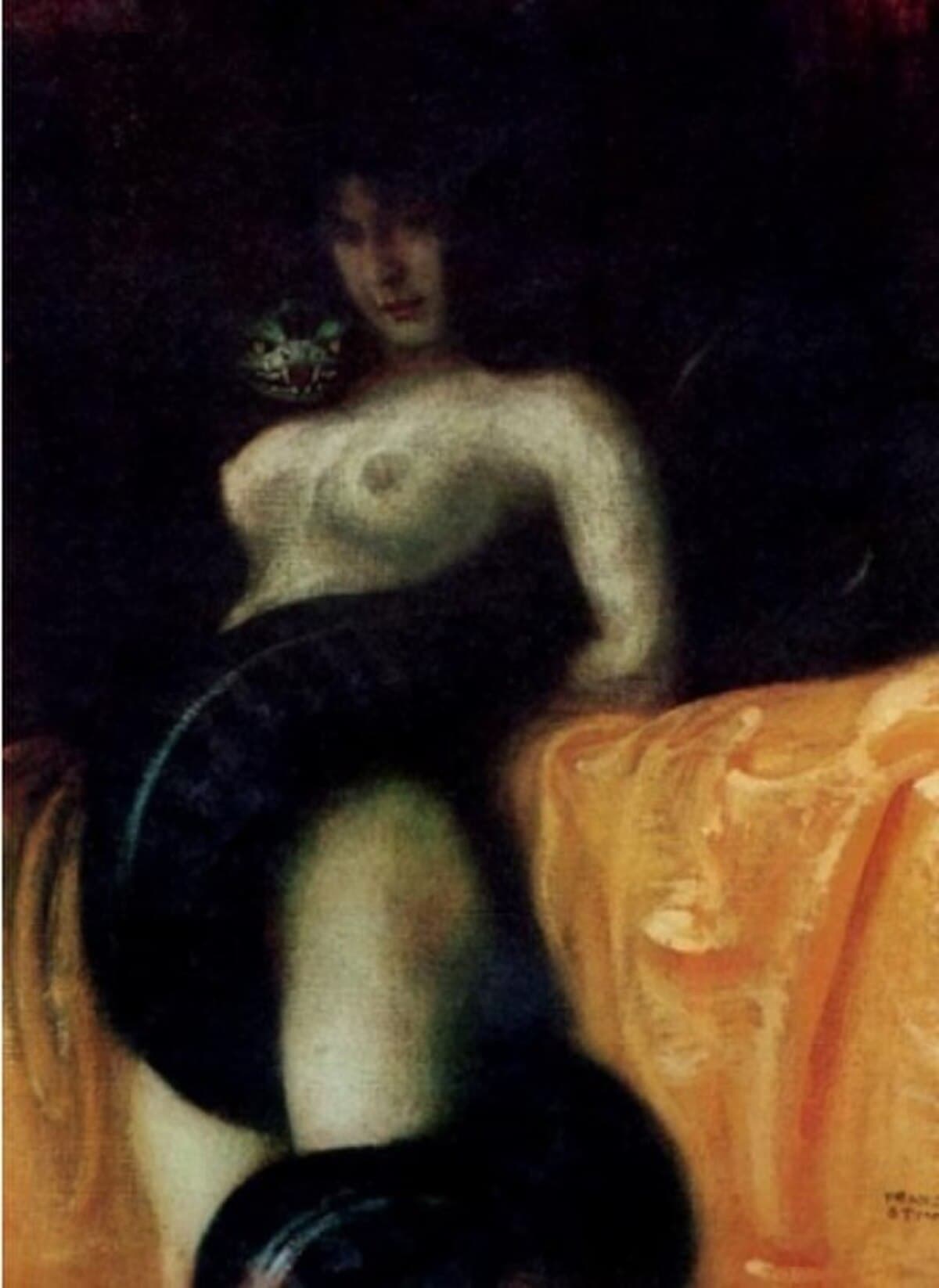
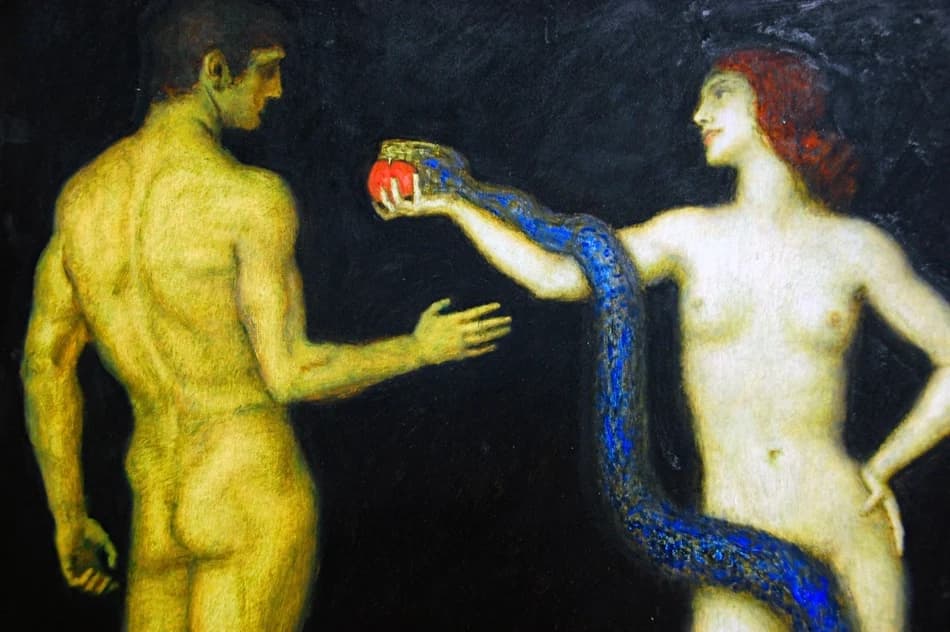
In 1892, Stuck co-founded the Munich Secession, a break from the conservative art establishment that predated the better-known Vienna and Berlin Secessions by several years. His 1893 painting The Sin, showing a pale woman coiled with a massive serpent, became an immediate sensation and the defining image of German Symbolism. He returned to serpents and mythological temptresses often, including in The Amazon (1897), and that same year won a gold medal at the Chicago World's Columbian Exposition.
From 1895, Stuck taught painting at the Munich Academy, and his classroom became an unlikely incubator for modern art's next generation. His students included Wassily Kandinsky, Paul Klee, and Josef Albers, artists who would each push painting in directions Stuck's own mythological Symbolism never approached. He remained a demanding, technically rigorous teacher even as his own style drifted out of fashion, insisting on strong drawing fundamentals regardless of where a student's work eventually went.
Stuck married the American widow Mary Lindpainter in 1897 and began building the Villa Stuck in Munich's Bogenhausen district, designing everything in it himself, from the layout to the furniture. The house, a total work of art in the tradition of a Gesamtkunstwerk, won him another gold medal at the 1900 Paris World's Fair for its furnishings. Public honors followed: ennoblement in 1905, which added "von" to his name, and Bavaria's Order of Merit of the Crown in 1906.
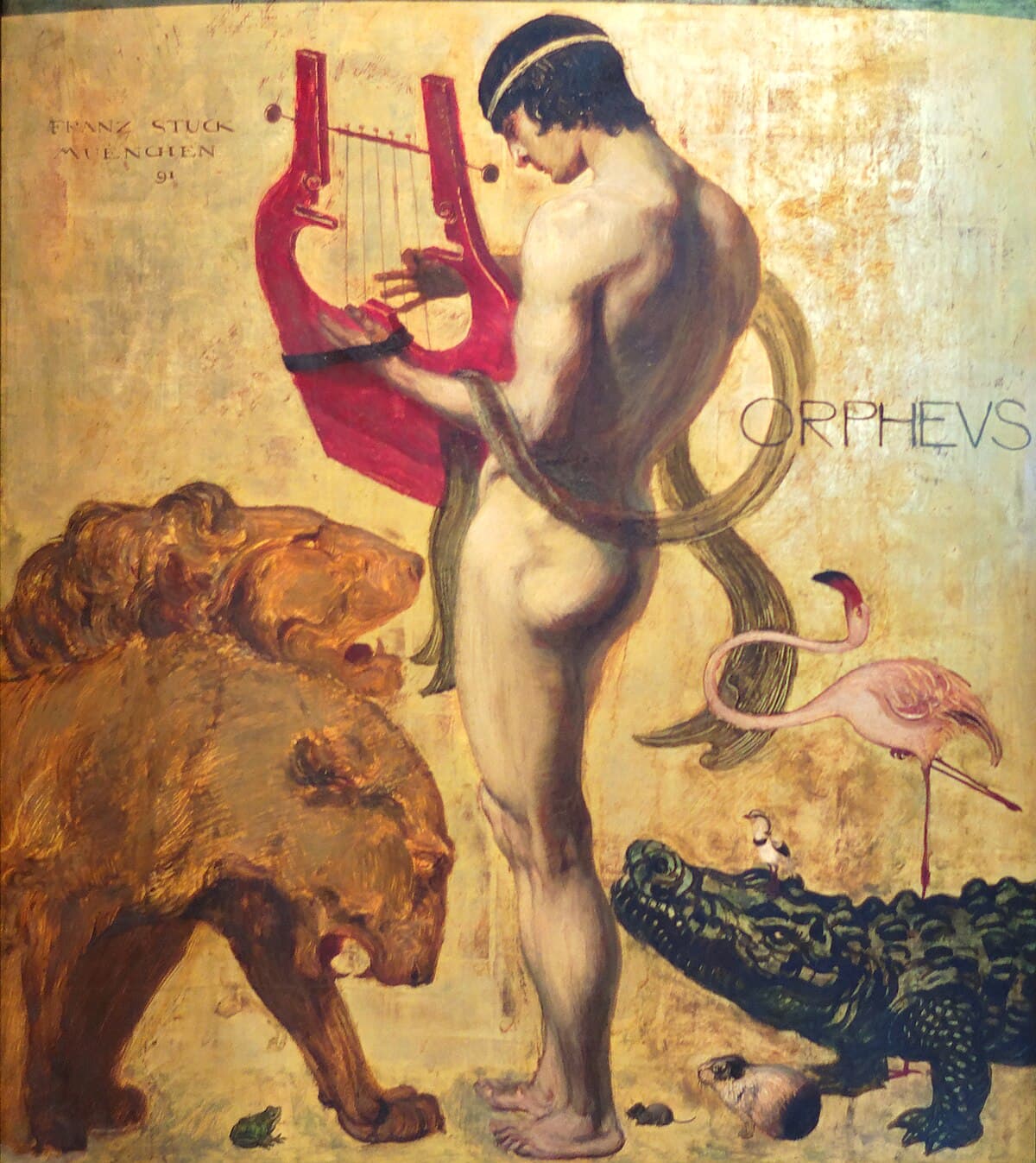
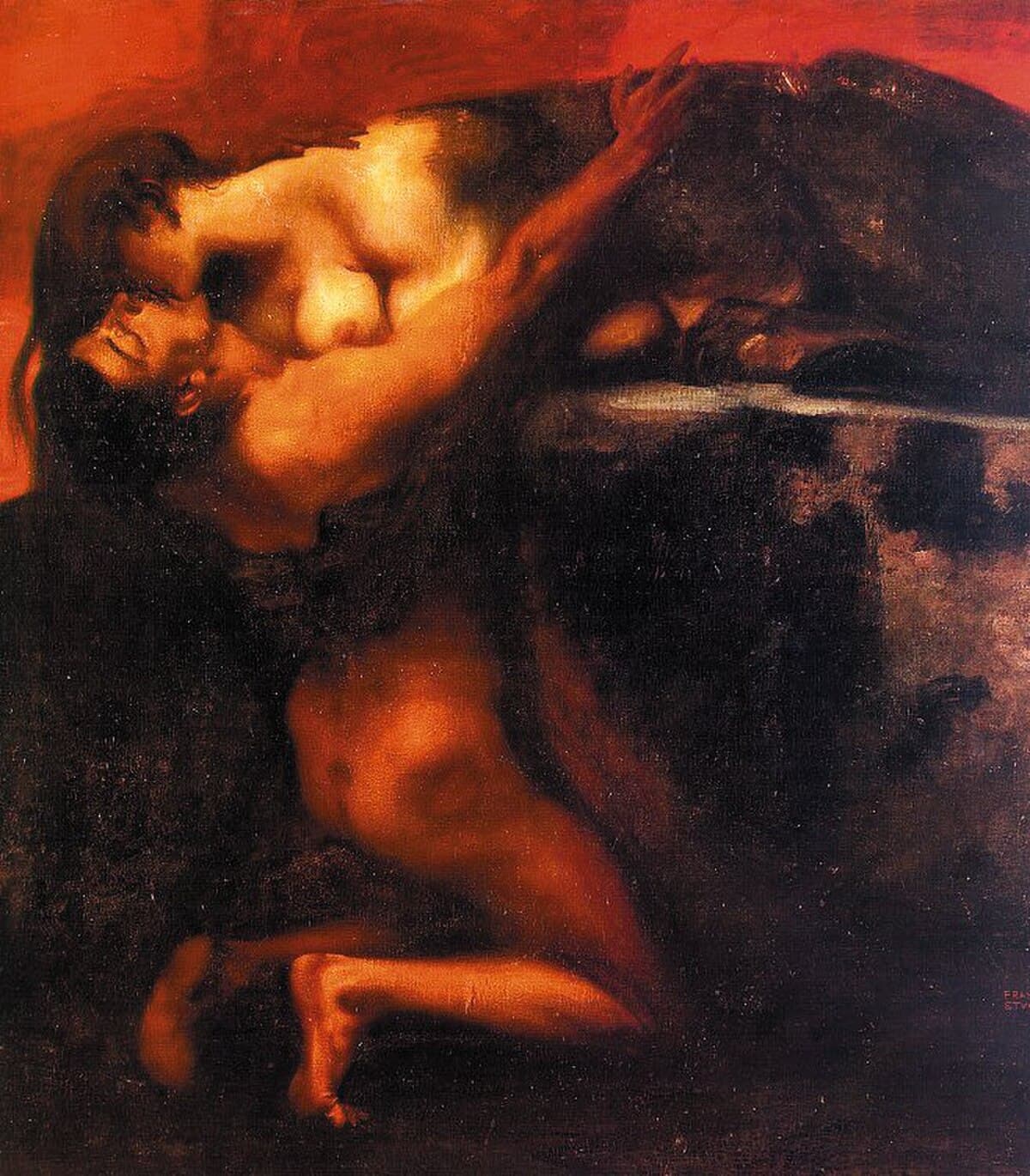
Stuck kept returning to mythological and biblical subjects through his later career, including Lucifer, The Kiss of the Sphinx, and, as late as 1923, The Judgment of Paris, still built around the same charged mythological encounters that had made his name thirty years earlier. He died in Munich on August 30, 1928, at sixty-five, eulogized as "the last prince of art of Munich's great days." His reputation faded for decades afterward, until an Art Nouveau revival in the late 1960s brought new attention, and the Villa Stuck reopened as a public museum in 1968. His paintings are now held by the Neue Pinakothek in Munich, the Art Institute of Chicago, the Frye Art Museum, and the Budapest Museum of Fine Arts.
Paintings by Franz von Stuck
10 paintings catalogued with museum locations
Museums with Franz von Stuck's Work
6 museums display Stuck's works. Click any museum to see visiting info and the specific works they hold.

About Franz von Stuck
Stuck was a leading German Symbolist and co-founder of the Munich Secession in 1892, which helped bring avant-garde art into Central Europe. His mythological subjects explored the femme fatale and other darker aspects of human desire common to fin-de-siècle art.
Works hang at the Neue Pinakothek in Munich, the Art Institute of Chicago, and the Budapest Museum of Fine Arts. The Museum Villa Stuck in Munich shows his work inside the house he designed himself.
The Villa Stuck in Munich's Bogenhausen district was Stuck's self-designed residence, built starting in 1897 as a Gesamtkunstwerk, or total work of art. His custom furniture won a gold medal at the 1900 Paris World's Fair, and the house is now a public museum.
At the Munich Academy, Stuck taught Wassily Kandinsky, Paul Klee, and Josef Albers, future pioneers of abstract and modern art. His rigorous technical training helped shape artists who would later revolutionize 20th-century painting in very different directions.
Yes. In 1905, Stuck was ennobled and added "von" to his name, becoming Franz Ritter von Stuck. The following year he received Bavaria's Order of Merit of the Crown, recognition of both his painting and his influential teaching at the Munich Academy.
Love Franz von Stuck's Style?
Explore art inspired by their style.
Browse Collection