George Inness
American·1825–1894
No Portrait Available
Tonalist painter George Inness (1825-1894), often called "the father of American landscape painting," developed an approach that emphasized mood and atmosphere over topographical accuracy. Born near Newburgh, New York, he evolved from the detailed style of the Hudson River School toward softer, more expressive landscapes. His mature work features rich colors, emotional intensity, and a spiritual quality influenced by the philosophy of Emanuel Swedenborg. Over 1,150 paintings document his artistic journey from tight realism to atmospheric suggestion.
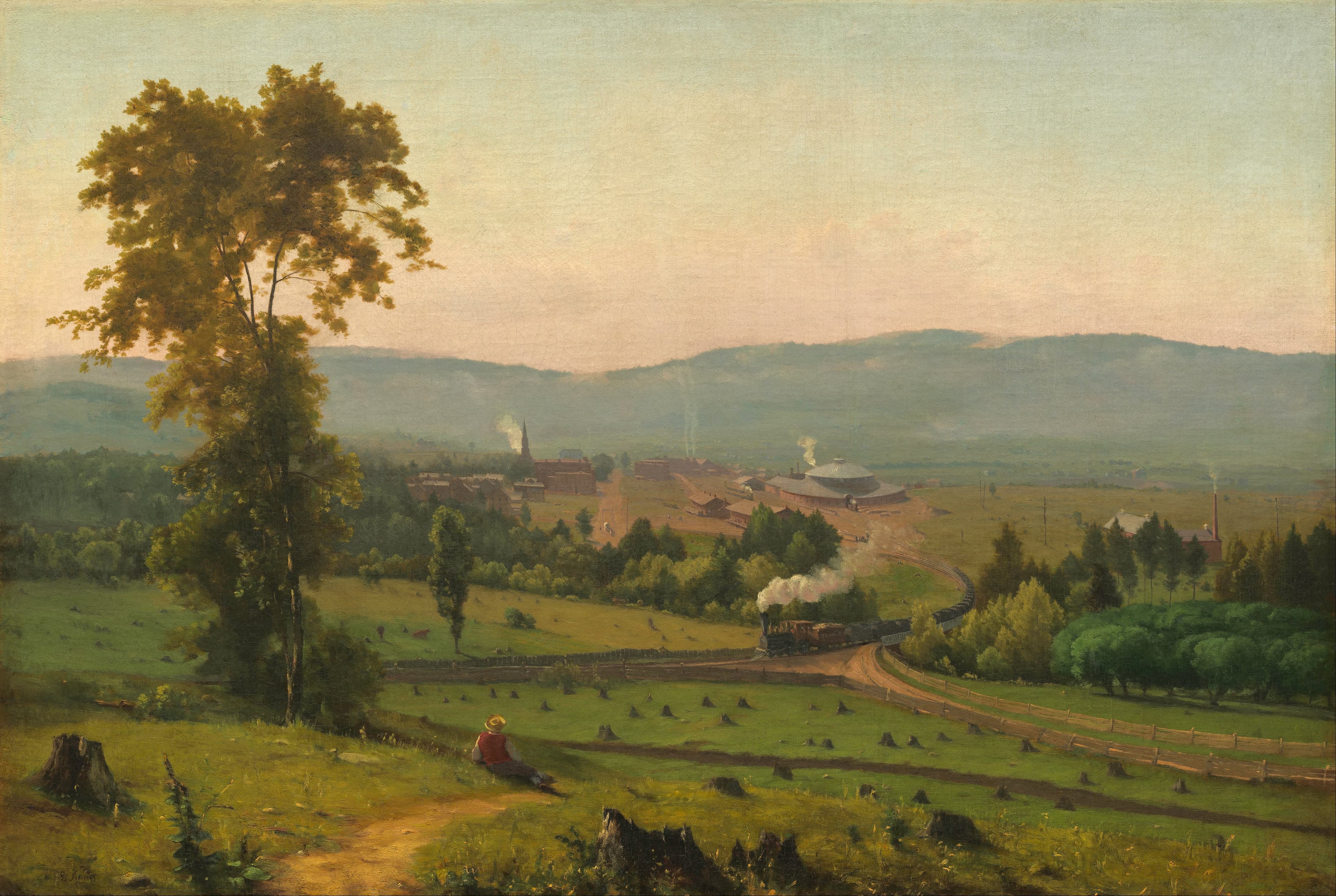
Inness trained briefly with several teachers before studying Old Masters in Rome and later encountering the Barbizon school during visits to France. His early work for the Delaware, Lackawanna and Western Railroad, including "The Lackawanna Valley" (c.1855), showed his ability to integrate industrial subjects into pastoral settings. By the 1870s, his style had loosened considerably, with darker palettes and dissolved forms conveying mood rather than description. His Swedenborgian beliefs infused his landscapes with spiritual meaning. He died in Scotland while viewing a sunset, reportedly exclaiming "My God! Oh, how beautiful!" Today, the Metropolitan Museum of Art, the Smithsonian American Art Museum, and the National Gallery of Art hold major collections of his work.
Notable Works by George Inness
4 paintings catalogued with museum locations
Museums with George Inness's Work
4 museums display Inness's works. Click any museum to see visiting info and the specific works they hold.
About George Inness
Inness evolved from the detailed Hudson River School style toward the atmospheric, spiritually-infused Tonalism that dominated American landscape painting by the 1880s. His late works dissolve solid forms into veils of color and light, anticipating abstract expressionism's concern with mood over representation.
The Metropolitan Museum of Art holds major works including The Lackawanna Valley. The Smithsonian American Art Museum and National Gallery of Art in Washington display significant collections. The Montclair Art Museum in New Jersey, near where he worked, specializes in his paintings.
The French Barbizon school, which Inness encountered on European trips, liberated his technique from Hudson River School detail. More profoundly, his conversion to Swedenborgianism in the 1860s shaped his belief that landscape painting should express spiritual states rather than merely record natural appearances.
The Lackawanna Valley (c. 1855), commissioned by the Delaware, Lackawanna & Western Railroad, shows a train cutting through pastoral landscape in unexpected harmony. This early masterpiece balances industrial progress with natural beauty. His late work The Home of the Heron (1893) exemplifies his mature atmospheric style.
Inness produced over 1,150 paintings, watercolors, and sketches across his fifty-year career. This substantial body of work documents his remarkable artistic journey from detailed Hudson River School realism to the misty, spiritually-charged Tonalist landscapes that influenced American painting into the twentieth century.
Love George Inness's Style?
Explore art inspired by their style.
Browse Collection