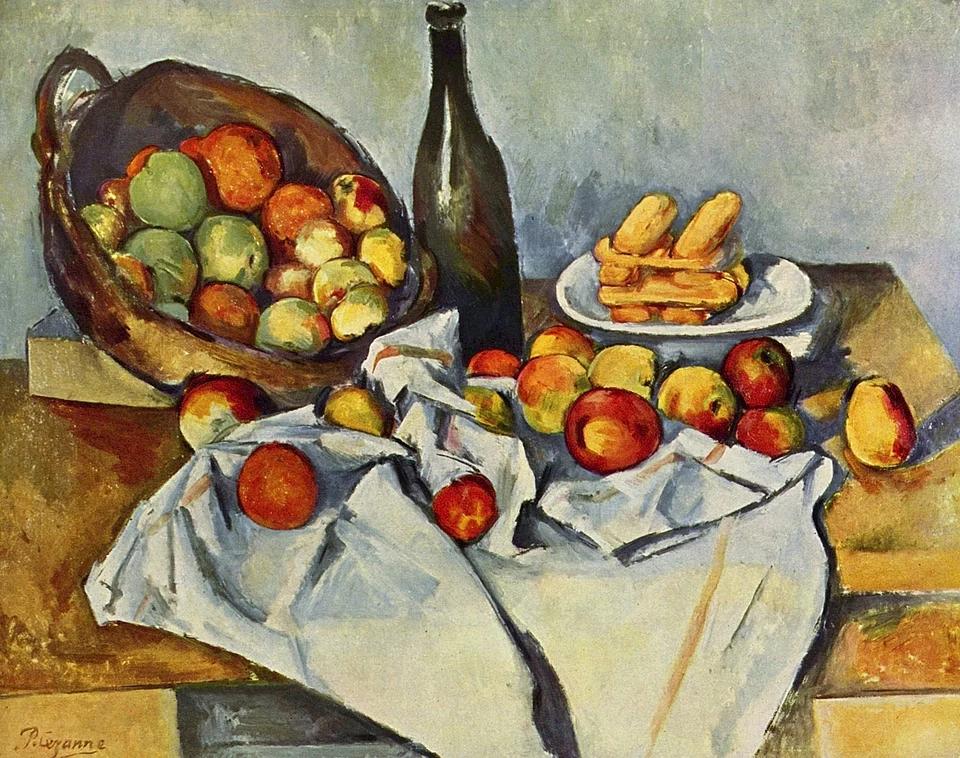
The Basket of Apples
by Paul Cézanne, 1895
StylePost-Impressionism
Artwork Details
Details
- Year
- 1895
- Medium
- Oil on canvas
- Size
- 65 cm × 80 cm
Cite or Embed This Work
APA · MLA · Chicago1-click academic citation and embeddable “On View” museum badge for articles, syllabi, and research.
Paul Cézanne painted The Basket of Apples around 1893, one of his most deliberately disjointed compositions. The tablecloth bunches in sculptural folds. The basket tips forward at an impossible angle. The table's two sides don't align. The wine bottle leans. Nothing sits quite right, and that's the point.
Cézanne rejected the single-viewpoint perspective that had dominated Western painting for centuries. He painted objects from multiple angles simultaneously, showing what he saw as he moved around them. This approach would later inspire Picasso and Braque to develop Cubism. The "Father of Modern Art" nickname stems largely from works like this.
The painting measures about 65 by 80 centimeters and belongs to the Art Institute of Chicago. It's one of Cézanne's rare signed works, part of an important 1895 exhibition organized by dealer Ambroise Vollard. The warm earth tones and solid brushstrokes give the composition density that realistic still lifes lack.
More by Paul Cézanne
View all →
Also at Art Institute of Chicago
View all →Sculpture
T

The Solitude of the Soul
Lorado Taft, 1901
Art Institute of Chicago, Chicago
Sculpture
W

Walking Buddha
, 201
Art Institute of Chicago, Chicago
Sculpture
A

Architectural Fragment with Relief Carving
Ancient Egyptian (Unknown), 401
Art Institute of Chicago, Chicago
Sculpture
A

Allegory of Science
Jean-Baptiste Carpeaux, 1865
Art Institute of Chicago, Chicago
Related Works
Works that share an artist, movement, museum, genre, palette or theme with The Basket of Apples.
- Same artist
- Same movement
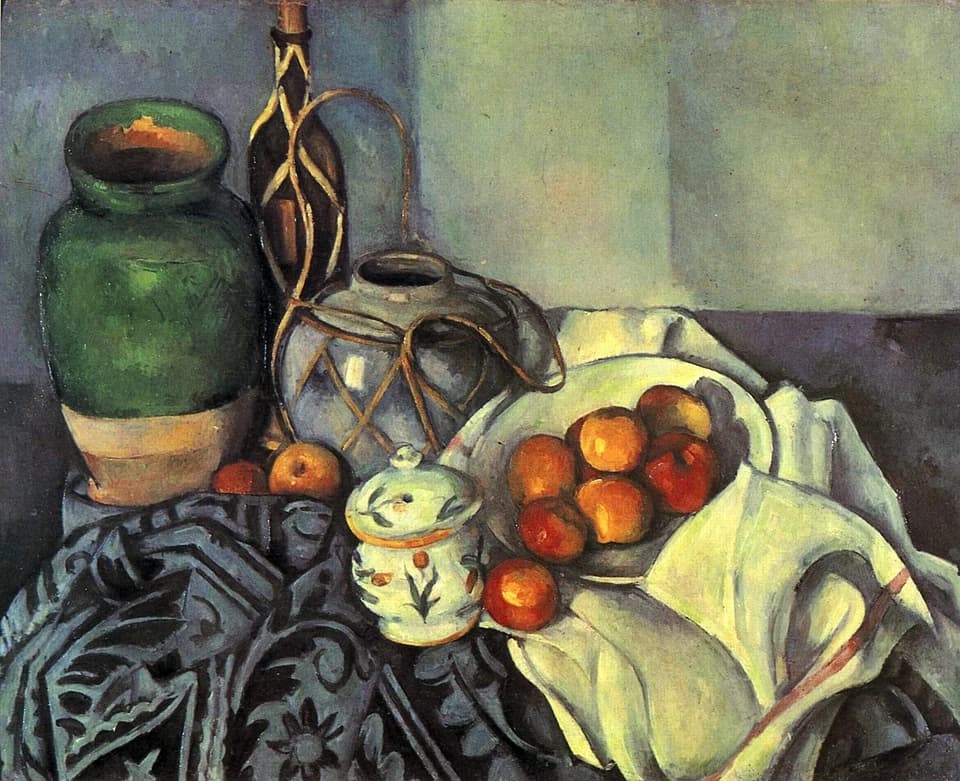
Still Life with Apples
Paul Cézanne, 1898

- Same artist
- Same movement
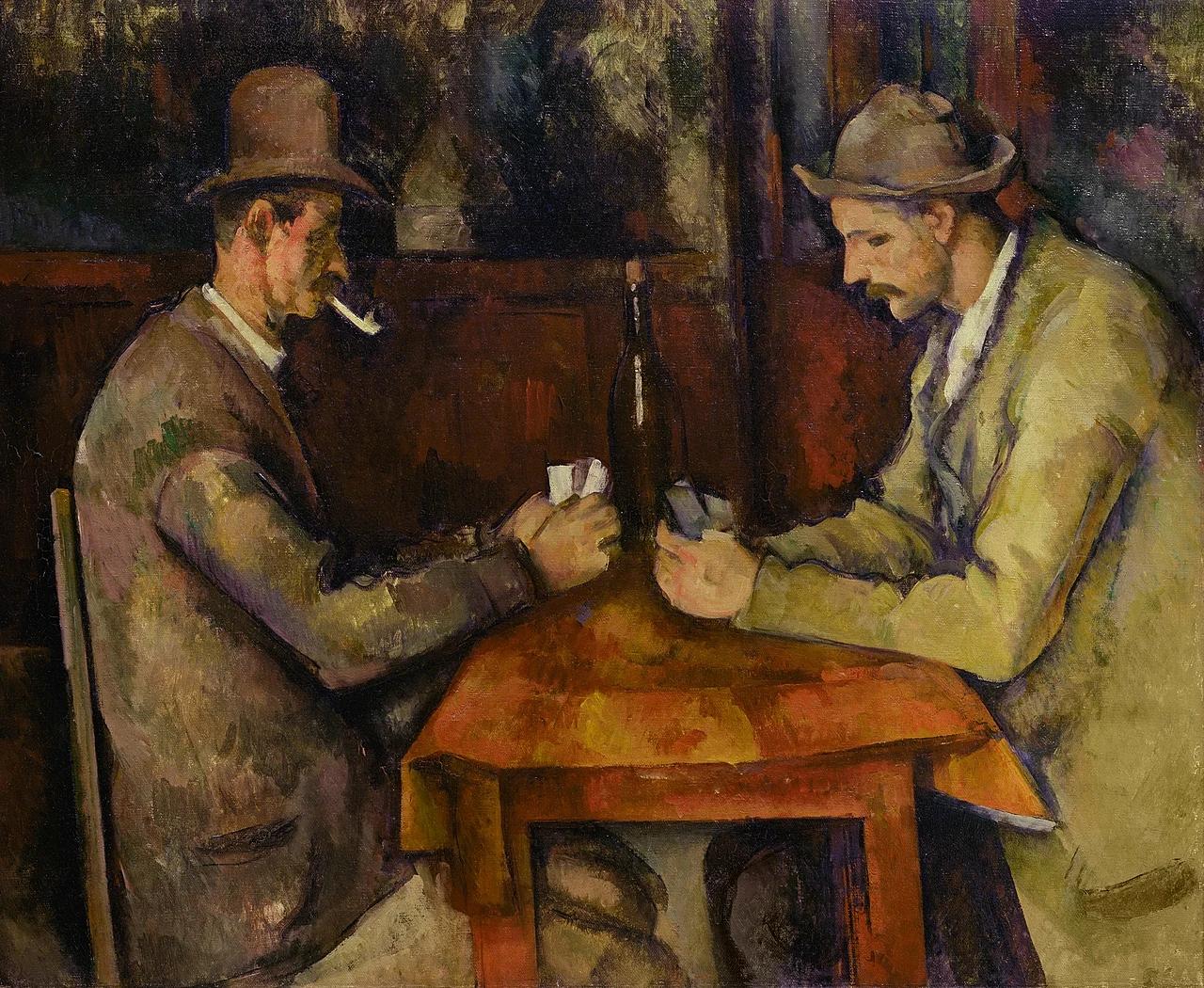
The Card Players
Paul Cézanne, 1892
- Same artist
- Same movement
The Card Players
Paul Cézanne, 1895
- Same movement
- Same museum
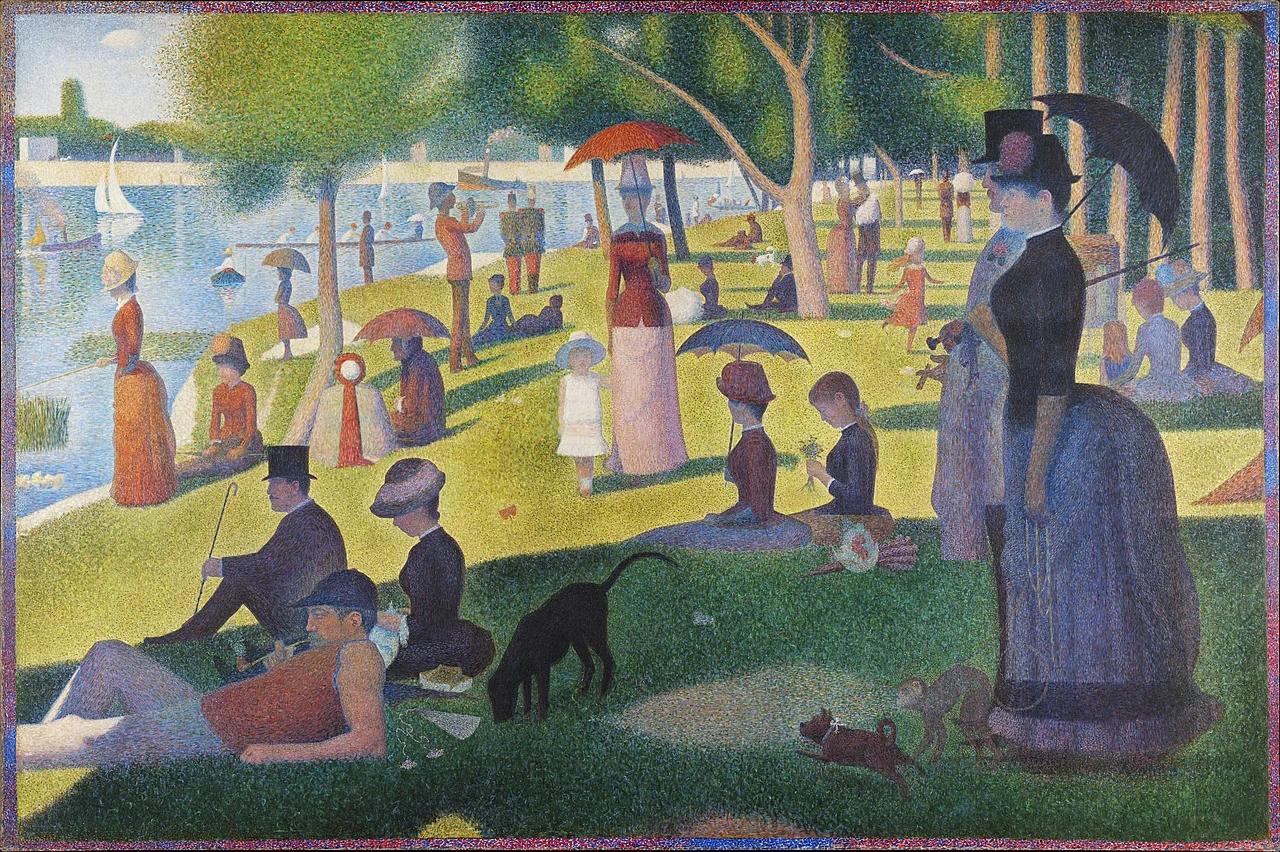
A Sunday Afternoon on the Island of La Grande Jatte
Georges Seurat, 1886
- Same movement
- Same museum
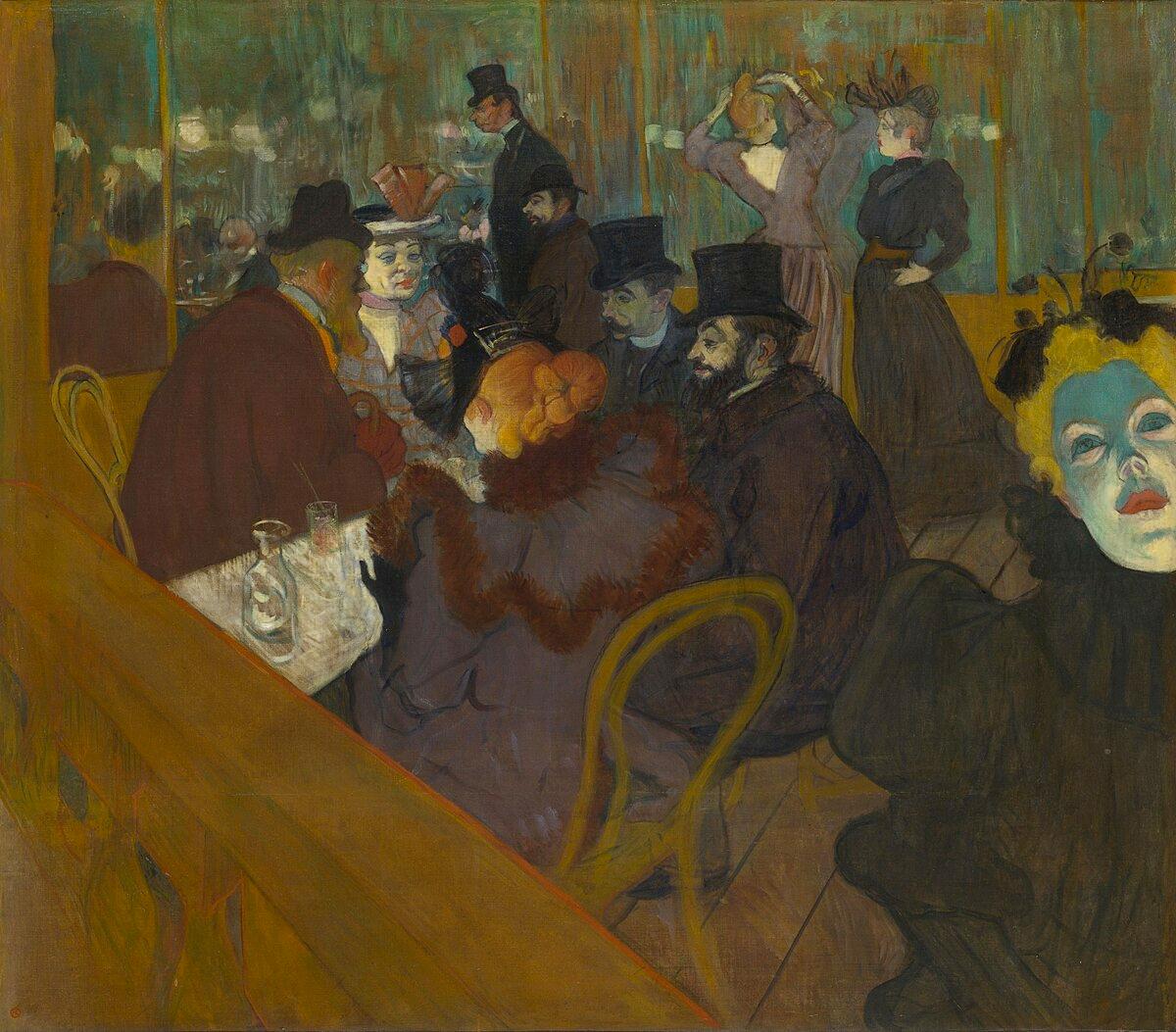
At the Moulin Rouge
Henri de Toulouse-Lautrec, 1892
- Same movement
- Similar palette
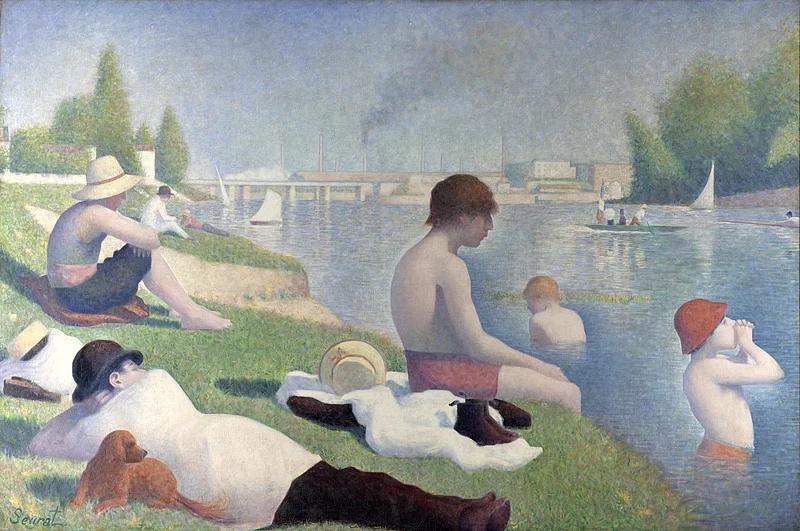
Bathers at Asnières
Georges Seurat, 1884
- Same movement
- Similar palette
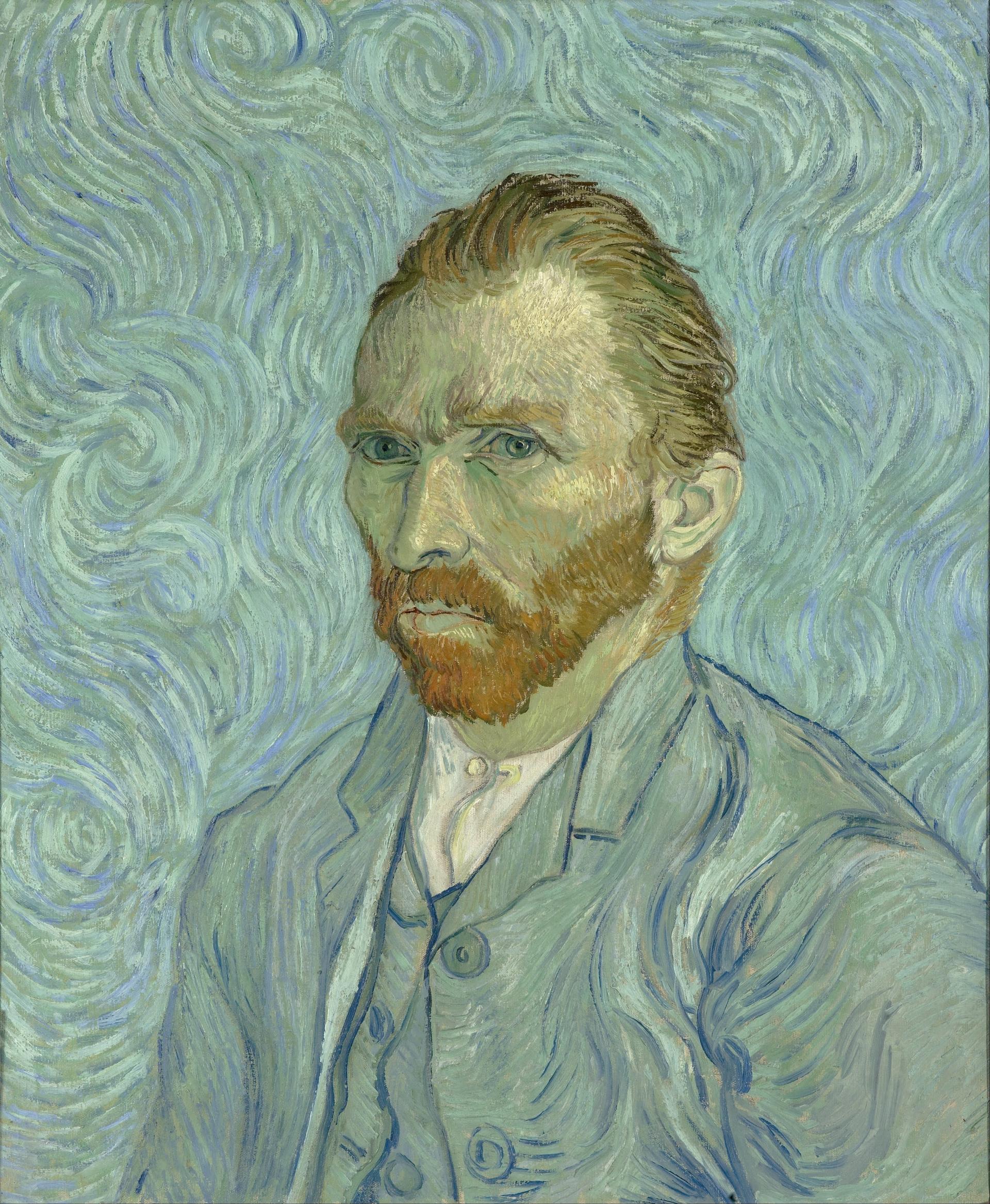
Self-Portrait
Vincent van Gogh, 1889
- Same movement
- Similar palette
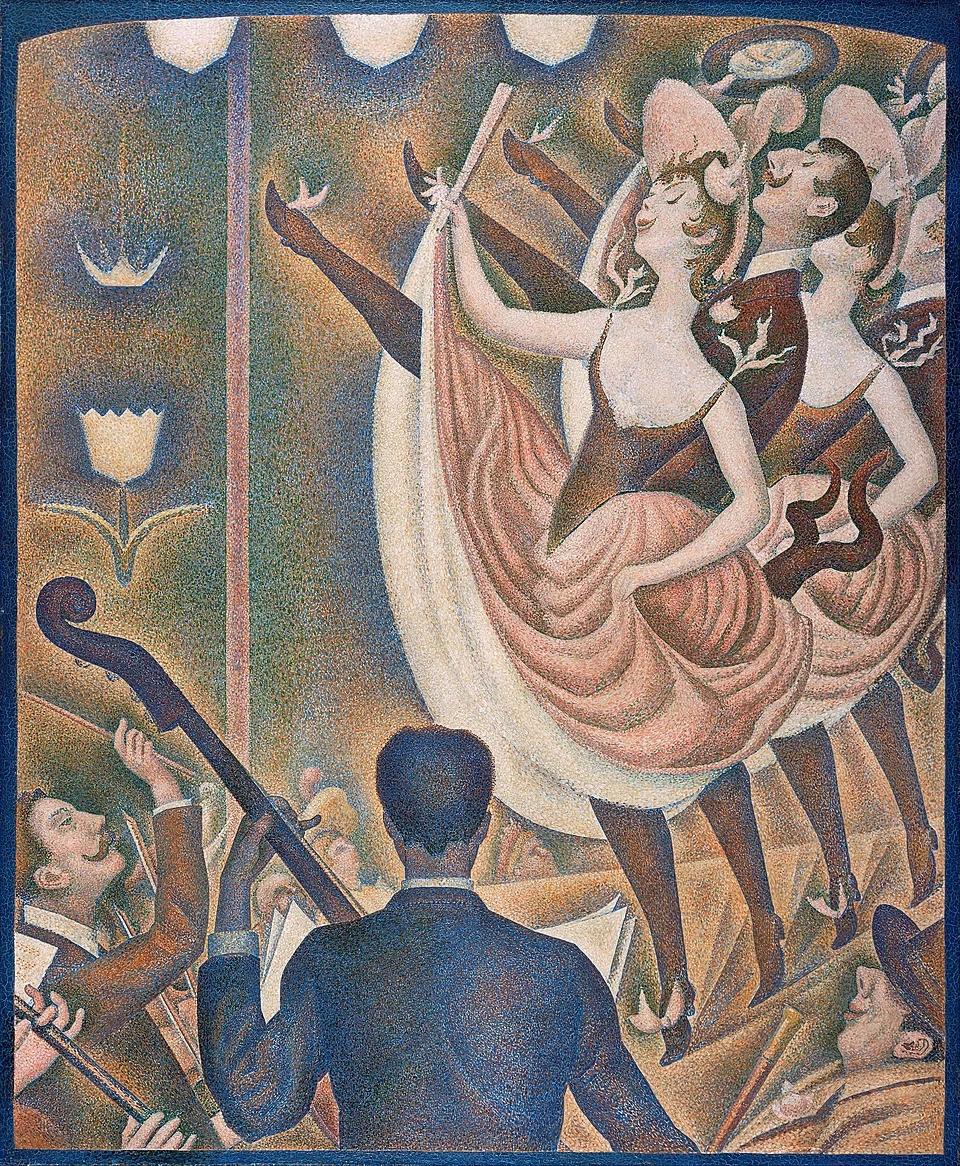
The Circus
Georges Seurat, 1891

- Same movement
- Similar palette
Blue Nude (Souvenir of Biskra)
Henri Matisse, 1907
- Same movement
- Similar palette
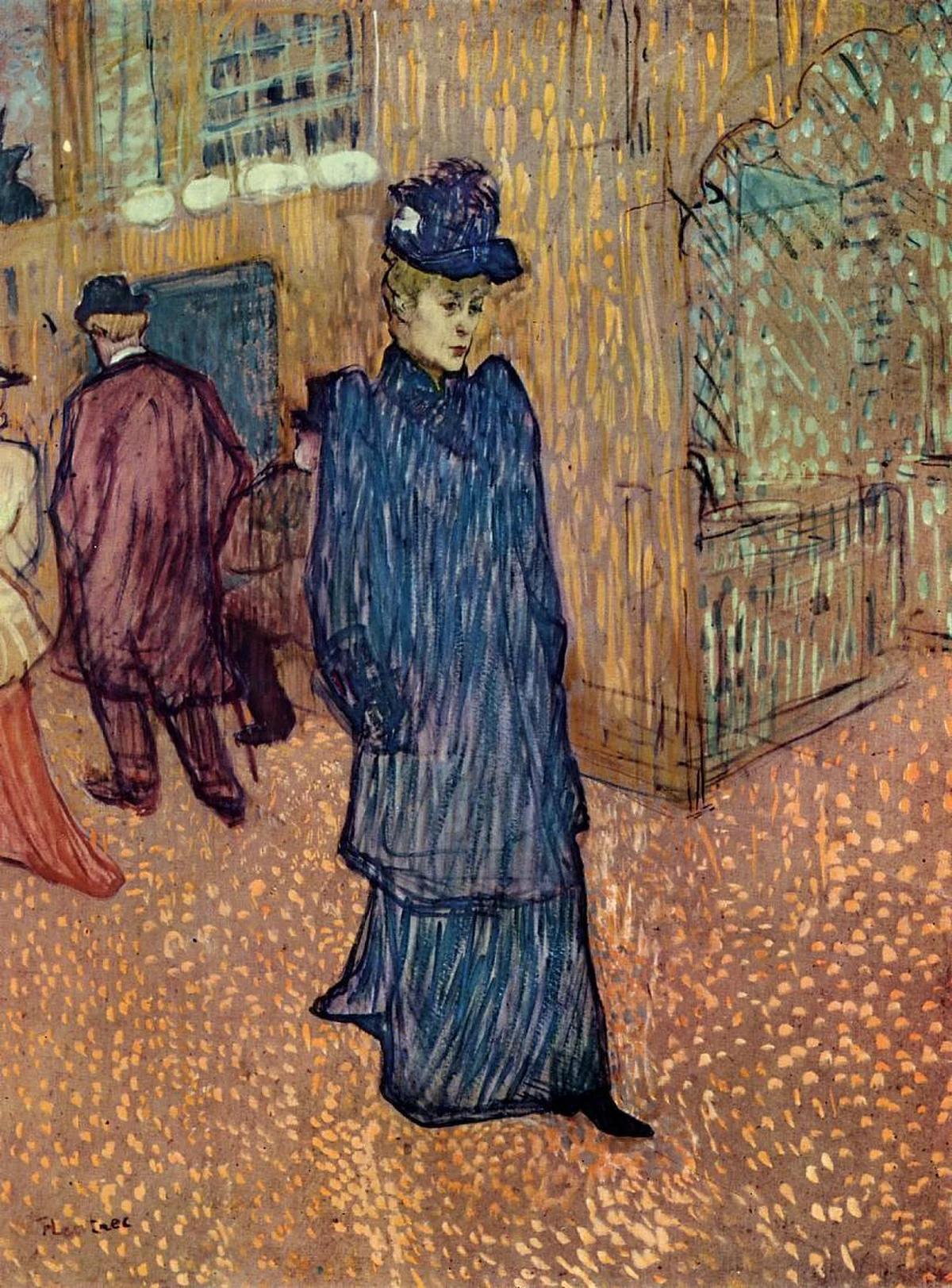
Jane Avril
Henri de Toulouse-Lautrec, 1893
- Same movement
- Similar palette
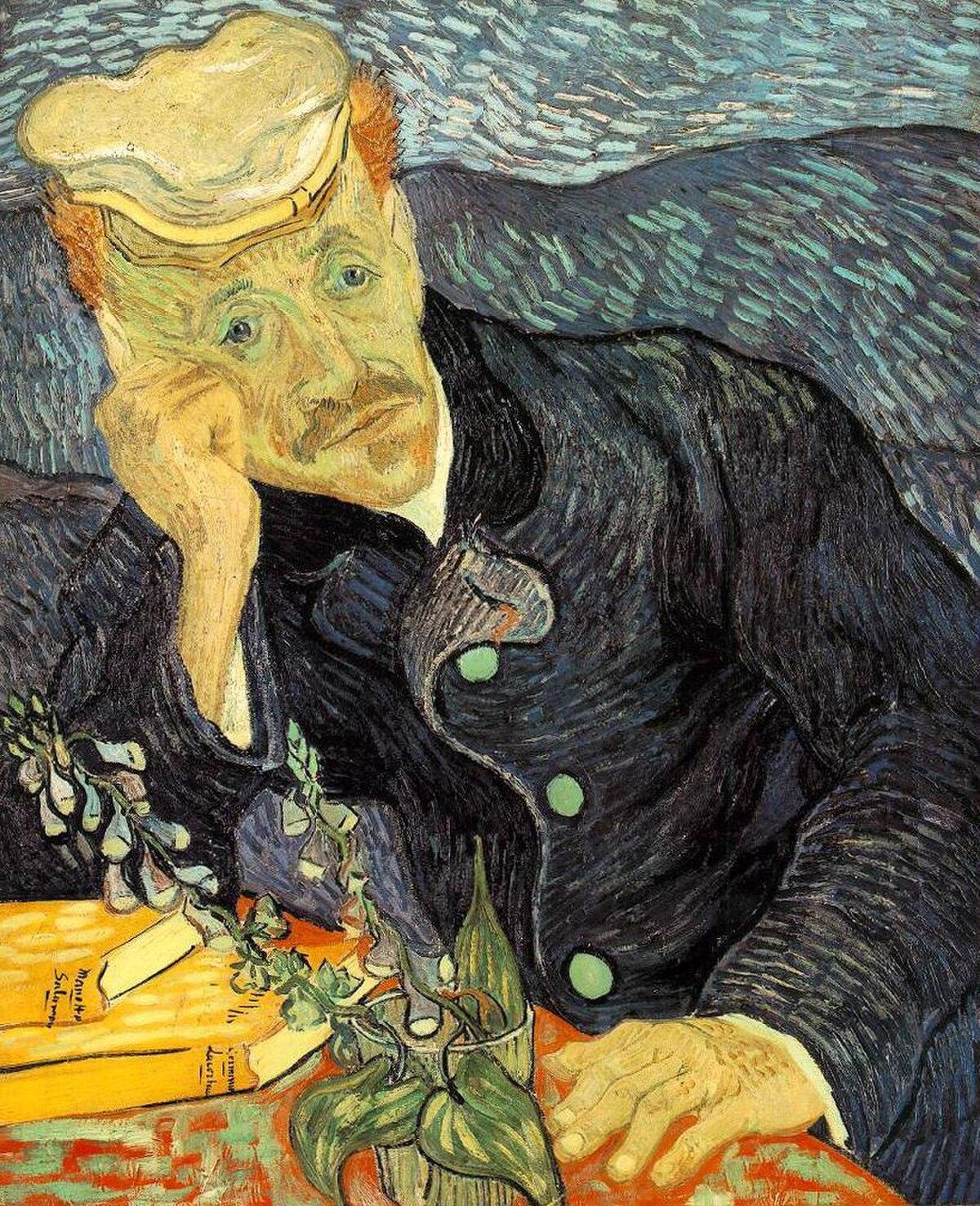
Portrait of Dr. Gachet
Vincent van Gogh, 1890
- Same movement
The Olive Trees
Vincent van Gogh, 1889
About The Basket of Apples
It's at the Art Institute of Chicago. Paul Cézanne painted it around 1893. It's one of his most famous still life paintings.
Cézanne deliberately painted the table from multiple viewpoints simultaneously. The table edge doesn't align on either side of the cloth, and the bottle tilts at an angle that defies gravity. He was more interested in capturing how we actually perceive objects (from shifting angles) than in creating photographic accuracy.
His approach to breaking down forms into geometric shapes and using multiple perspectives directly led to Cubism. Picasso called Cézanne 'the father of us all.' These still lifes weren't simple exercises. They were experiments that changed the direction of Western art.
It's Post-Impressionist. Cézanne moved beyond Impressionism's focus on light to explore the underlying structure of objects. His brushwork is visible and constructive, building form through patches of color rather than blending.
It measures 65 cm × 80 cm (25.6 × 31.5 inches). Cézanne arranged real objects in his studio for these compositions, but he worked so slowly that he used wax fruit because real fruit rotted before he finished. The painting shows a wine bottle, biscuits, a basket of apples, and a rumpled cloth.
Own Art Like This
Luxury wall art with the same mood and energy. Gallery-quality canvas, no museum crowds.
Browse Collection