Wikimedia Commons • Public Domain
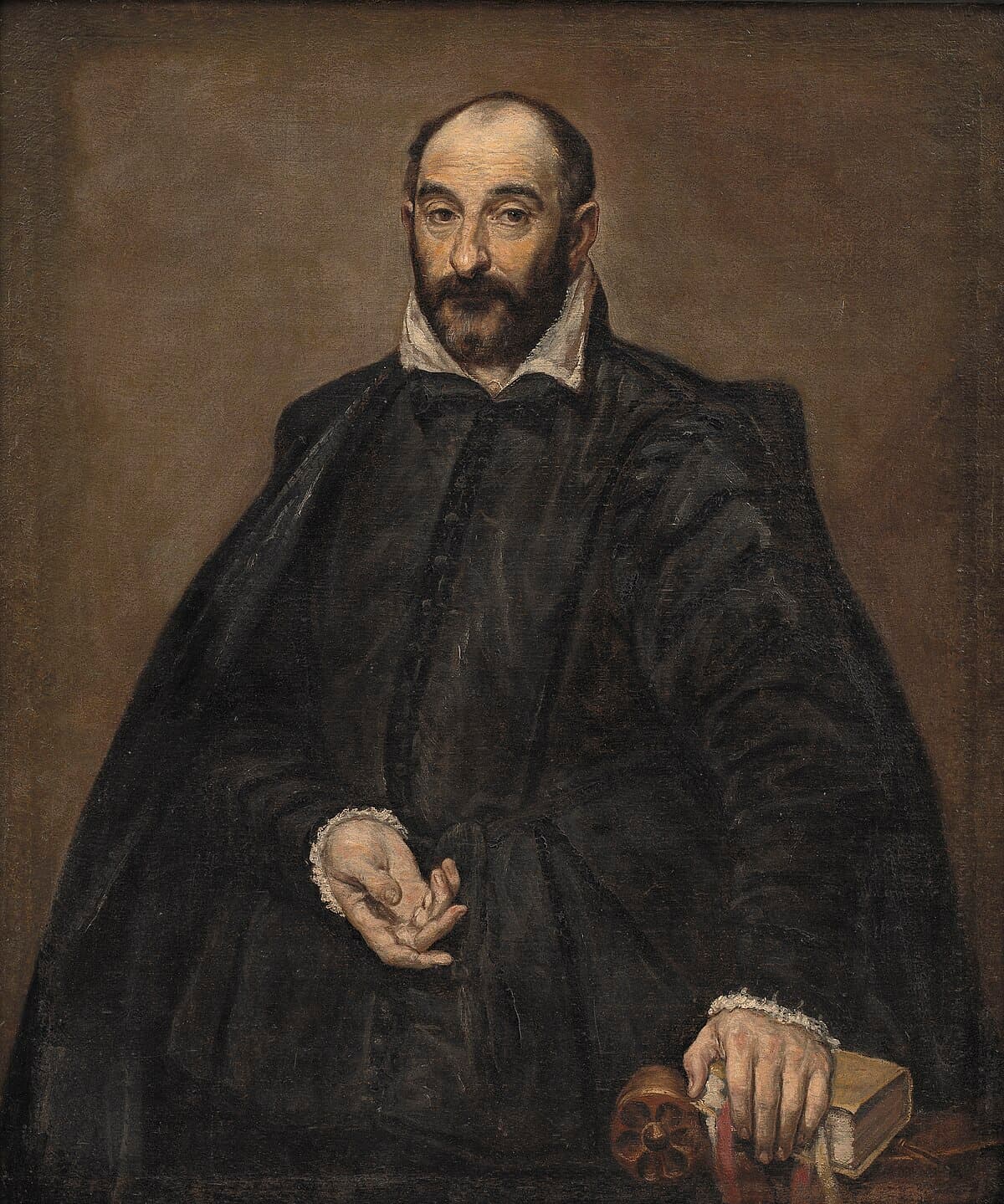
Portrait of a man (Andrea Palladio)
by El Greco
GenrePortrait
Artwork Details
Where to See It
National Gallery of Denmark (Statens Museum for Kunst), CopenhagenCopenhagen, Denmark
Permanently housed
Cite or Embed This Work
APA · MLA · Chicago1-click academic citation and embeddable “On View” museum badge for articles, syllabi, and research.
El Greco completed this portrait around 1575, during his Italian period before moving to Spain. The sitter has traditionally been identified as Andrea Palladio, the famous architect, though this identification remains uncertain. The man gazes directly at us with notable intensity.
El Greco created this work while in Rome, where he moved in intellectual circles connected to the Farnese family. Before that, he had studied under Titian in Venice, and the Venetian influence shows in the warm tones and careful modeling of the face. A chalk holder on the armrest and a book with colored bookmarks suggest the sitter was an artist or scholar.
The oil on canvas measures 116 x 98 cm and hangs at the National Gallery of Denmark in Copenhagen. The painting's subdued palette and stark simplicity focus all attention on the man's expressive face and hands. This Mannerist approach to portraiture shows El Greco developing the psychological intensity that would characterize his later Spanish major works.