Wikimedia Commons • Public Domain
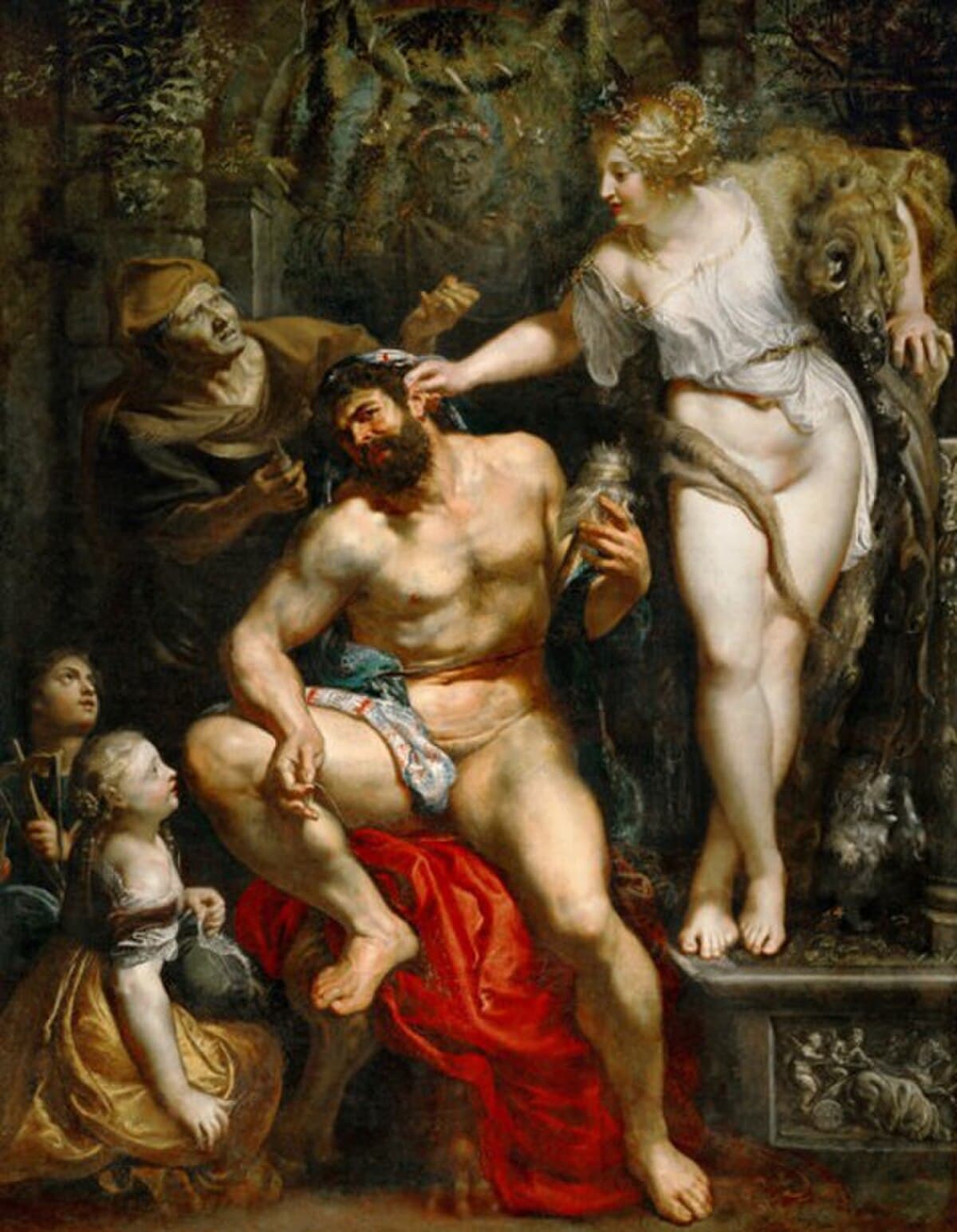
Hercules and Omfala
Artwork Details
François Boucher completed this sensual mythological scene between 1731 and 1734, shortly after studying under François Lemoyne. The painting depicts the Greek hero Hercules in a passionate embrace with Omphale, the queen of Lydia to whom he was enslaved as punishment for murder.
Boucher subverts the traditional depiction of Hercules as a muscular, dominant figure. Here, the hero appears youthful with barely any beard, caught in an uninhibited kiss with Omphale while cupids flutter around them. The distaff and spindle, which Hercules was forced to work during his servitude, are placed in a cupid's hands rather than his own. This leaves the hero free to express his desire without symbols of his humiliation.
The work passed through several notable French collections before entering the Yusupov family collection in St. Petersburg. After the Russian Revolution, it was transferred to the Pushkin Museum in Moscow, where it remains today. The painting reflects Rococo sensibilities with its soft colors, playful eroticism, and debt to Rubens' full-blooded style.