Ghent Altarpiece
by Jan van Eyck, 1432
Artwork Details
Details
- Year
- 1432
- Medium
- Oil on oak panel
- Size
- 350 cm × 461 cm (open)
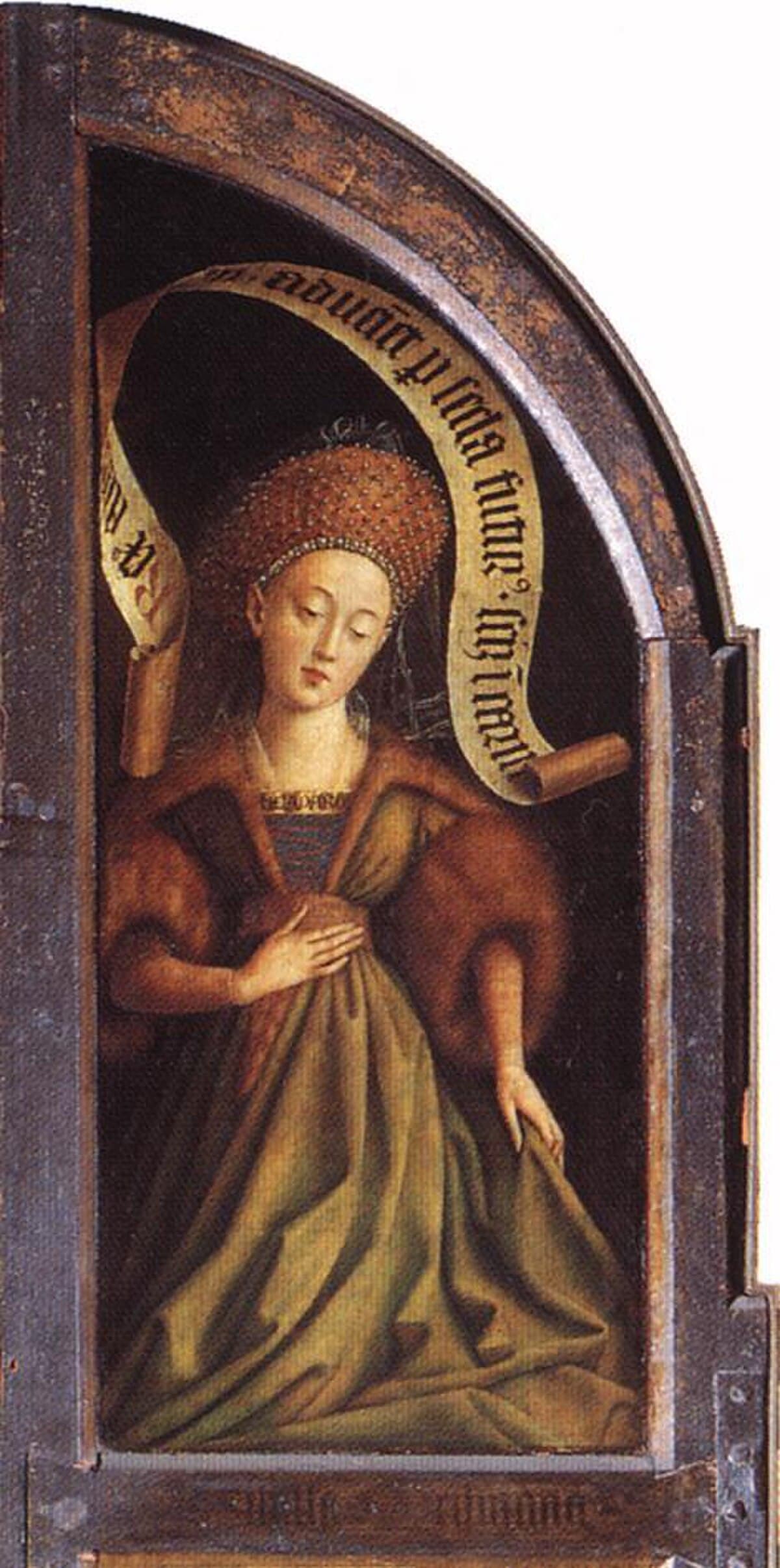
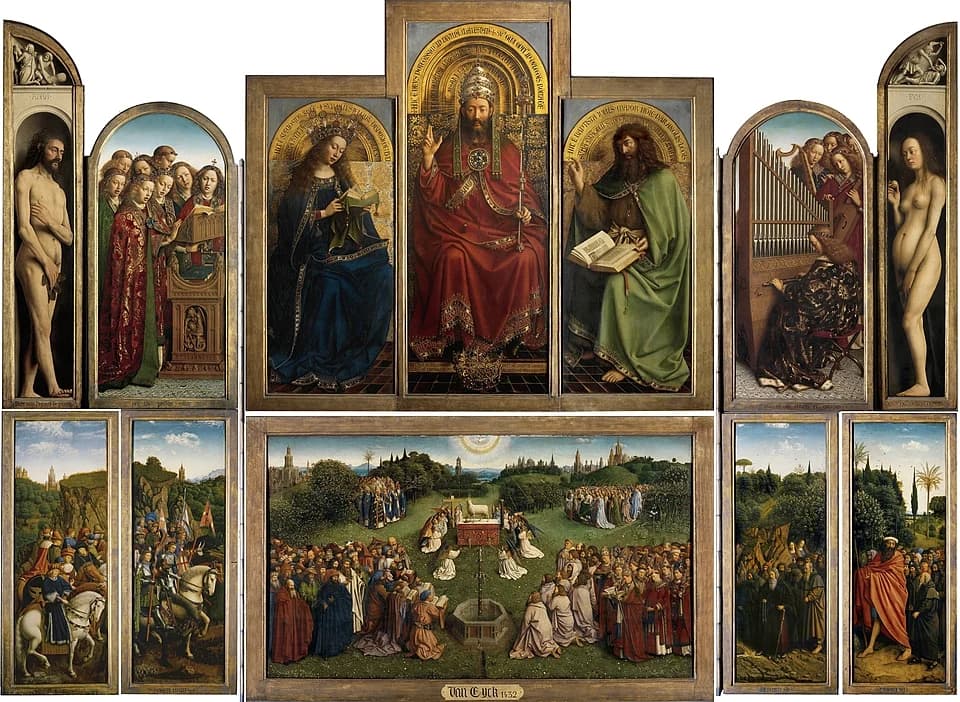
The Ghent Altarpiece, also called the Adoration of the Mystic Lamb, is a monumental polyptych begun around the mid-1420s and completed in 1432 by brothers Jan van Eyck and Hubert van Eyck. A lost inscription on the frame credited Hubert as "greater than anyone" and Jan as "second best in the art." Jan completed the work after his brother's death. Scholars still debate which sections each brother painted.
Merchant and Ghent mayor Jodocus Vijd commissioned the altarpiece for his family chapel. When fully opened, it spans over 5 meters wide, displaying the Adoration of the Lamb below rows of saints, angels, and a monumental God the Father. The closed exterior shows the Annunciation in grisaille with portraits of the donors. It's considered the first major oil painting, showcasing the Van Eycks' radical technique of layered glazes.
The altarpiece has been stolen seven times, more than any other artwork. French soldiers took the central panels in 1794. The Just Judges panel, stolen in 1934, has never been recovered. Nazis seized it during World War II, and the Monuments Men found it hidden in an Austrian salt mine in 1945. After restoration completed in 2020, it's now displayed in a climate-controlled, bulletproof case at Saint Bavo's Cathedral in Ghent.