Wikimedia Commons • Public Domain
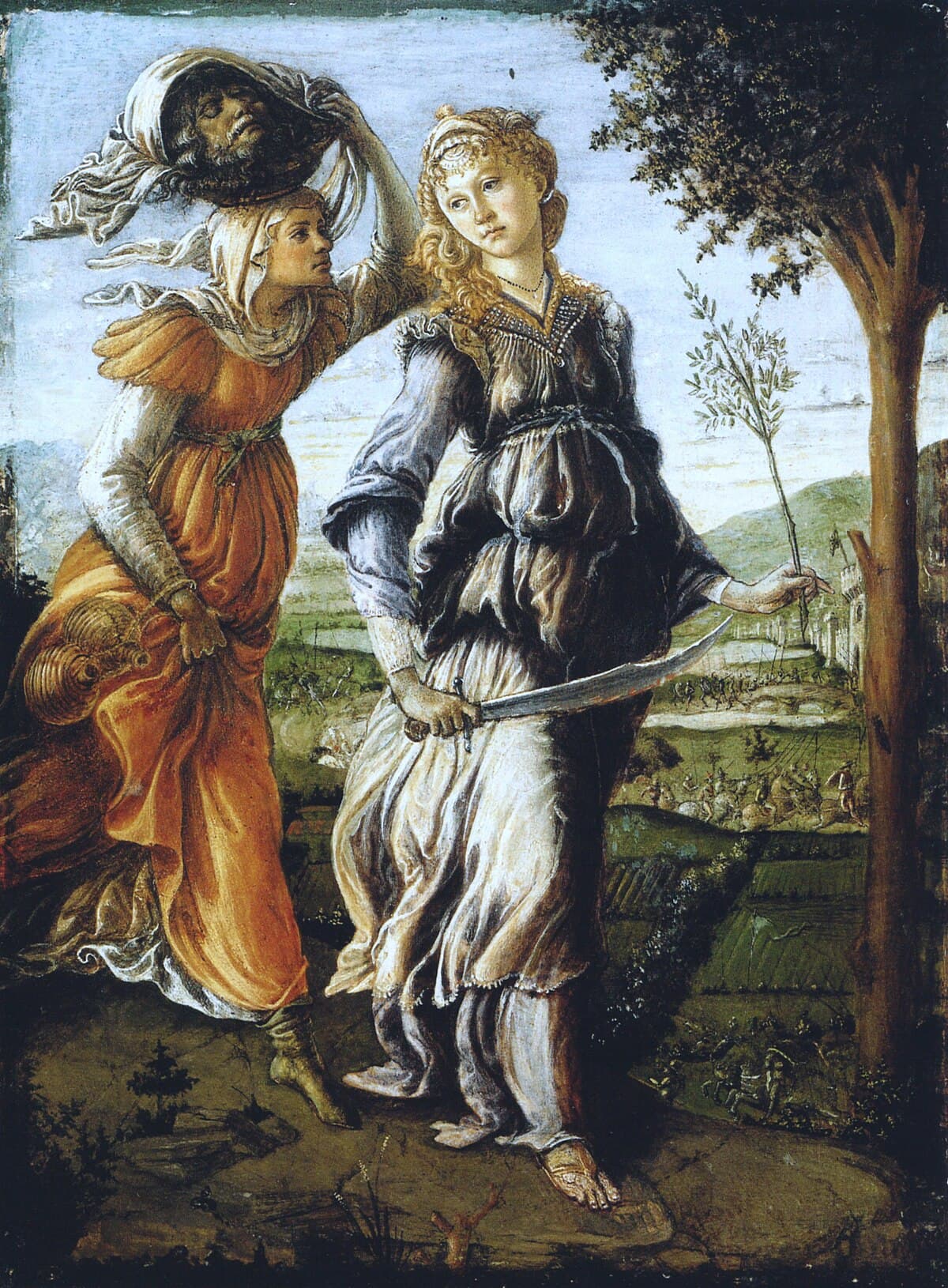
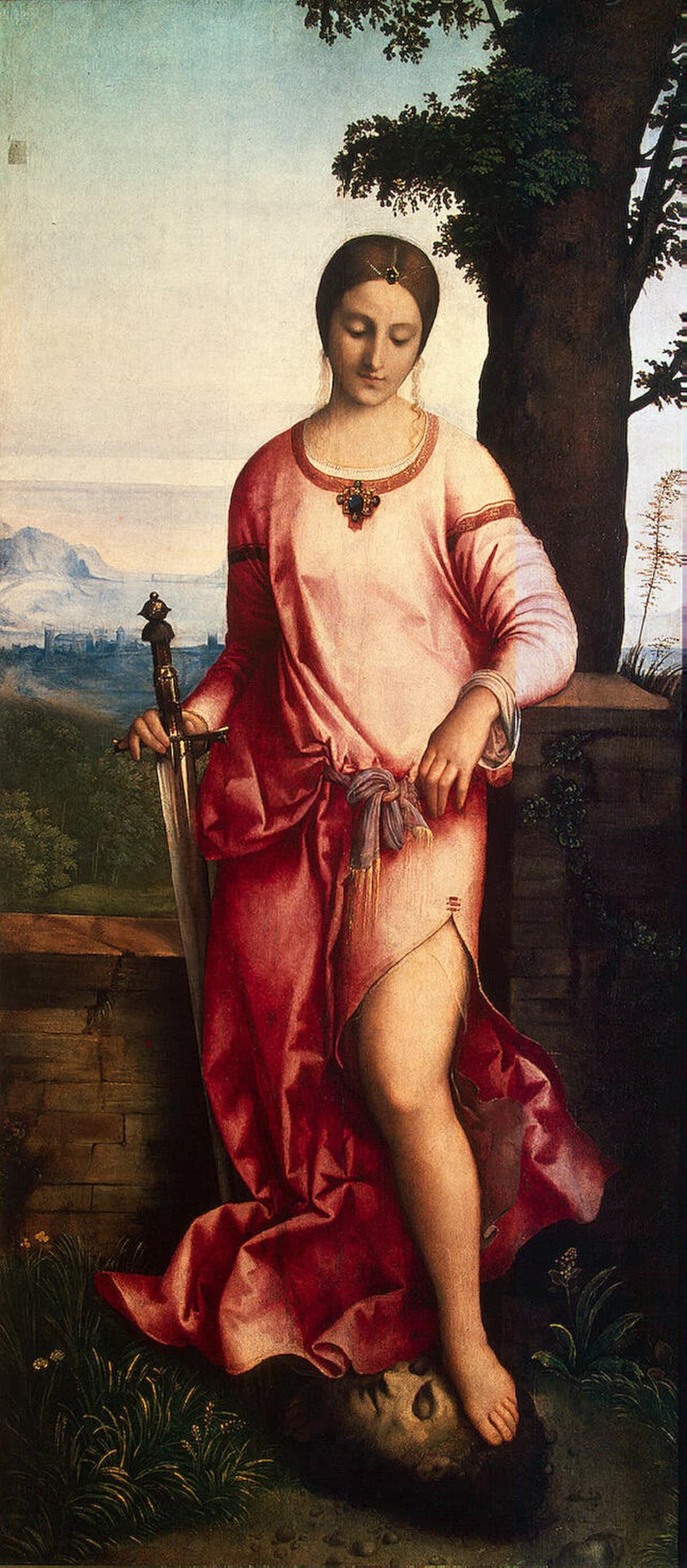
Judith
by Giorgione, 1504
StyleRenaissance
GenreReligious
Artwork Details
Details
- Year
- 1504
Cite or Embed This Work
APA · MLA · Chicago1-click academic citation and embeddable “On View” museum badge for articles, syllabi, and research.
Dating to 1504, work around 1504, creating one of the most lyrical interpretations of the biblical heroine. The painting shows Judith with her foot resting on the severed head of Holofernes, the Assyrian general whose army she saved her city from by seducing and then beheading him. Yet the mood is contemplative rather than violent. The cool morning landscape and Judith's serene posture transform a grisly subject into what Giorgione called a "poesie," a poetical work.
Giorgione was a founder of the Venetian school who largely determined the development of 16th-century Venetian painting. Very few works are definitively attributed to him, making this Judith especially valuable. Her pose derives from a Phidias statue of Aphrodite Urania, while the atmospheric sfumato shading shows the influence of Leonardo da Vinci. The tall, narrow format measures 144 by 66 cm.
Originally attributed to Raphael, the painting came to the State Hermitage Museum in 1772, purchased for Catherine II of Russia at a Paris auction. A major restoration in 1967-71 removed centuries of darkened varnish, revealing the original bright colors and a landscape in the background.