Wikimedia Commons • Public Domain
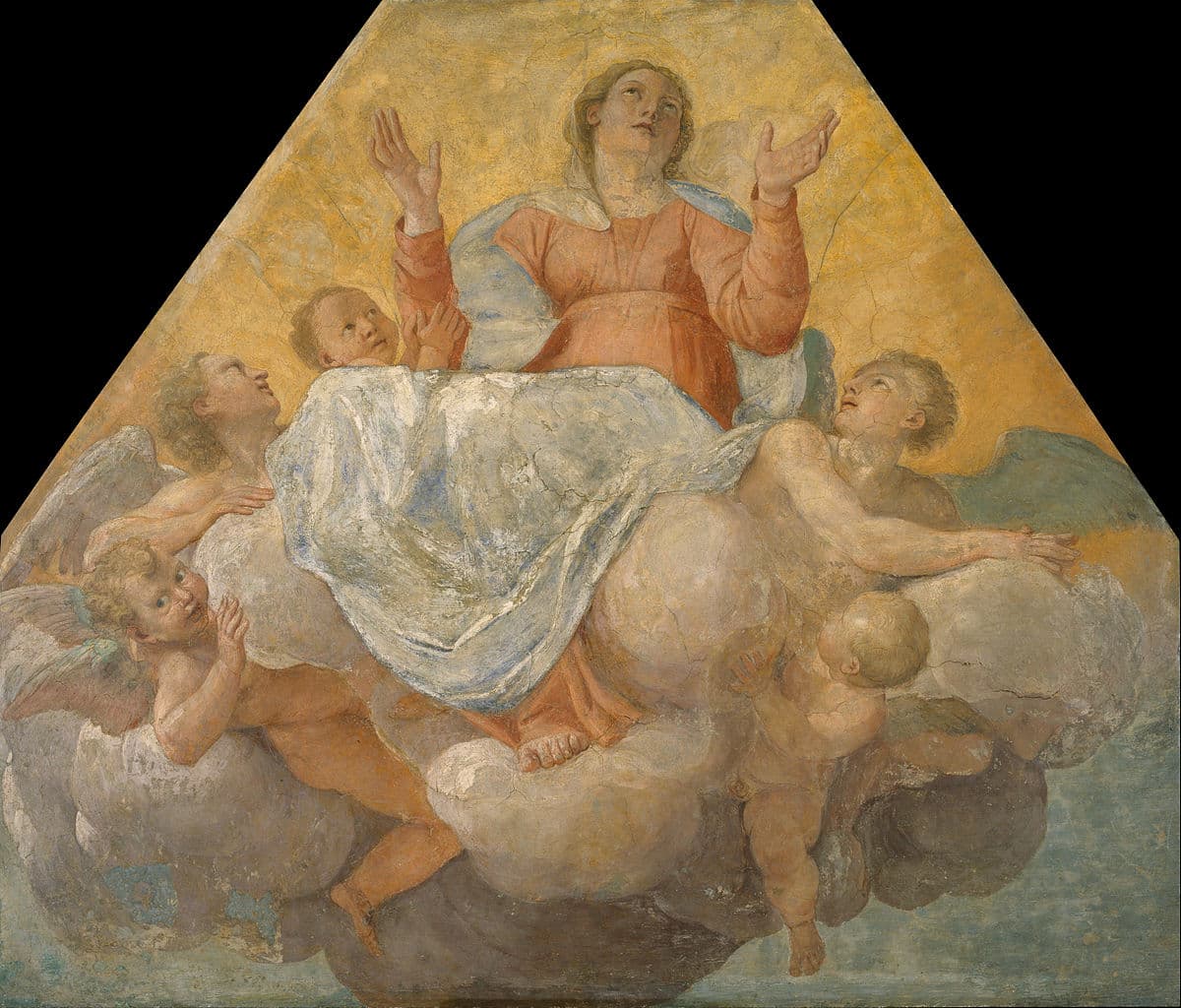
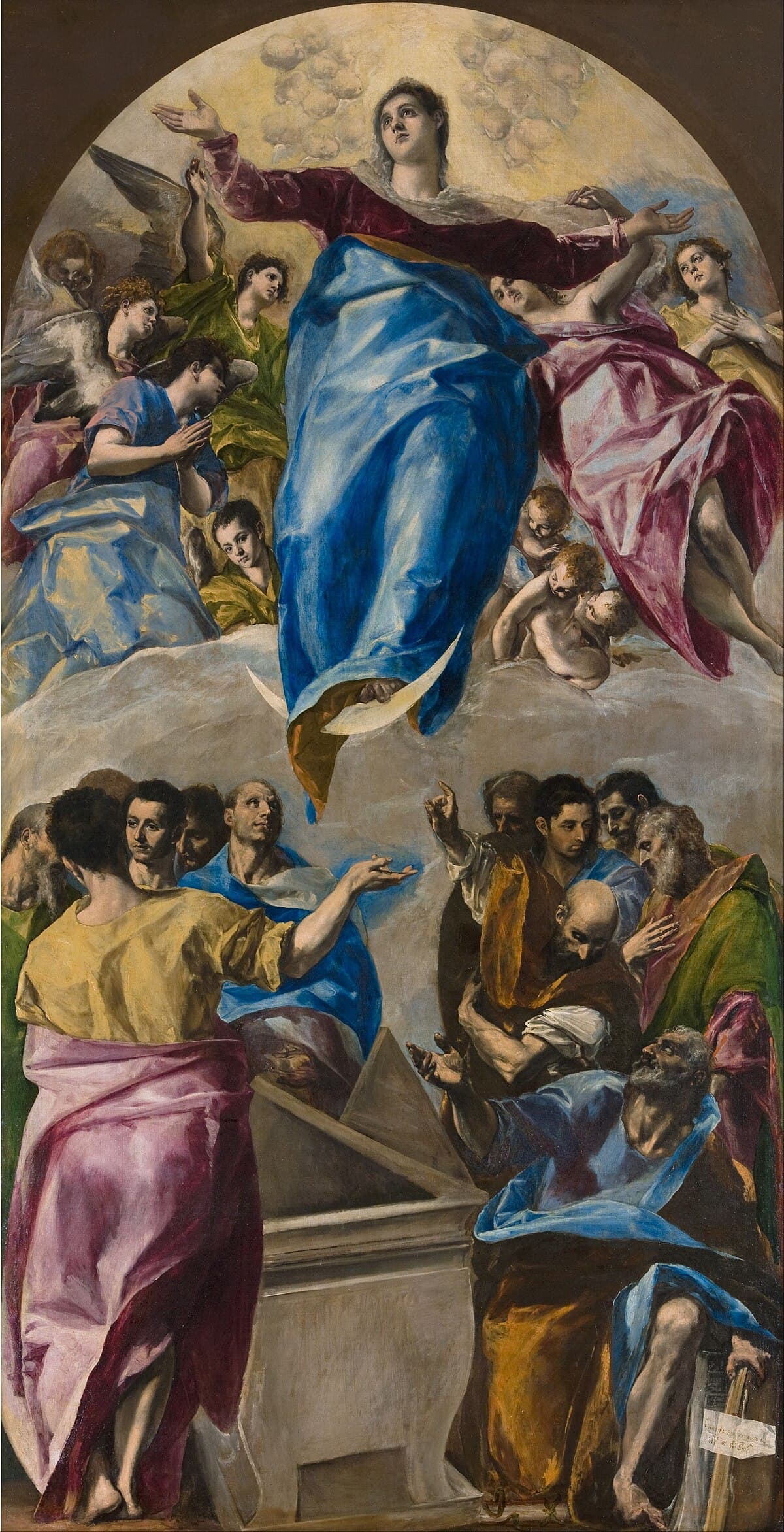
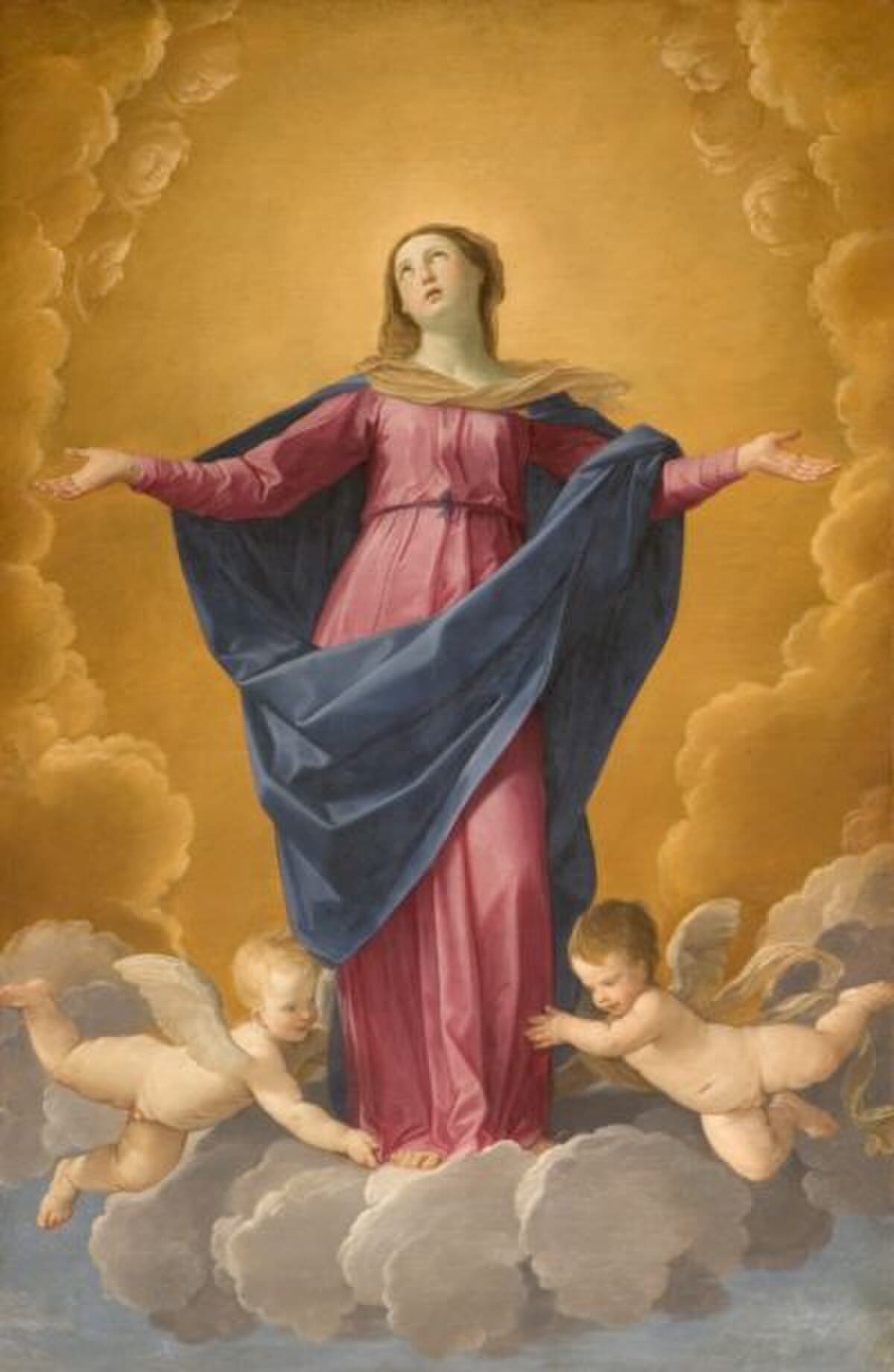
Assumption of the Virgin
by Guido Reni, 1637
Artwork Details
Details
- Year
- 1637
- Medium
- oil on canvas
Cite or Embed This Work
APA · MLA · Chicago1-click academic citation and embeddable “On View” museum badge for articles, syllabi, and research.
Guido Reni executed this Assumption of the Virgin in 1637 for Luigi Capponi, archbishop of Ravenna, to decorate a chapel altar in the Philippine church in Perugia. The composition shows Mary ascending to heaven surrounded by cherubs, her arms raised in ecstasy. Originally a semicircular panel above showed God the Father; this is now separated and held in Bologna.
The Assumption was a recurring theme in Reni's work. He painted at least three major versions: one in 1627 for Castelfranco Emilia, this 1637 version for Perugia, and another now in Munich. Each shows his refined classicism and mastery of blue drapery against luminous skies.
The painting now hangs at the Musee des Beaux-Arts de Lyon, which acquired it in 1805. Reni's elegant, idealized figures made him one of the most admired painters of the Baroque period, though later critics found his style too refined.