Wikimedia Commons • Public Domain
Man at the Window
Artwork Details
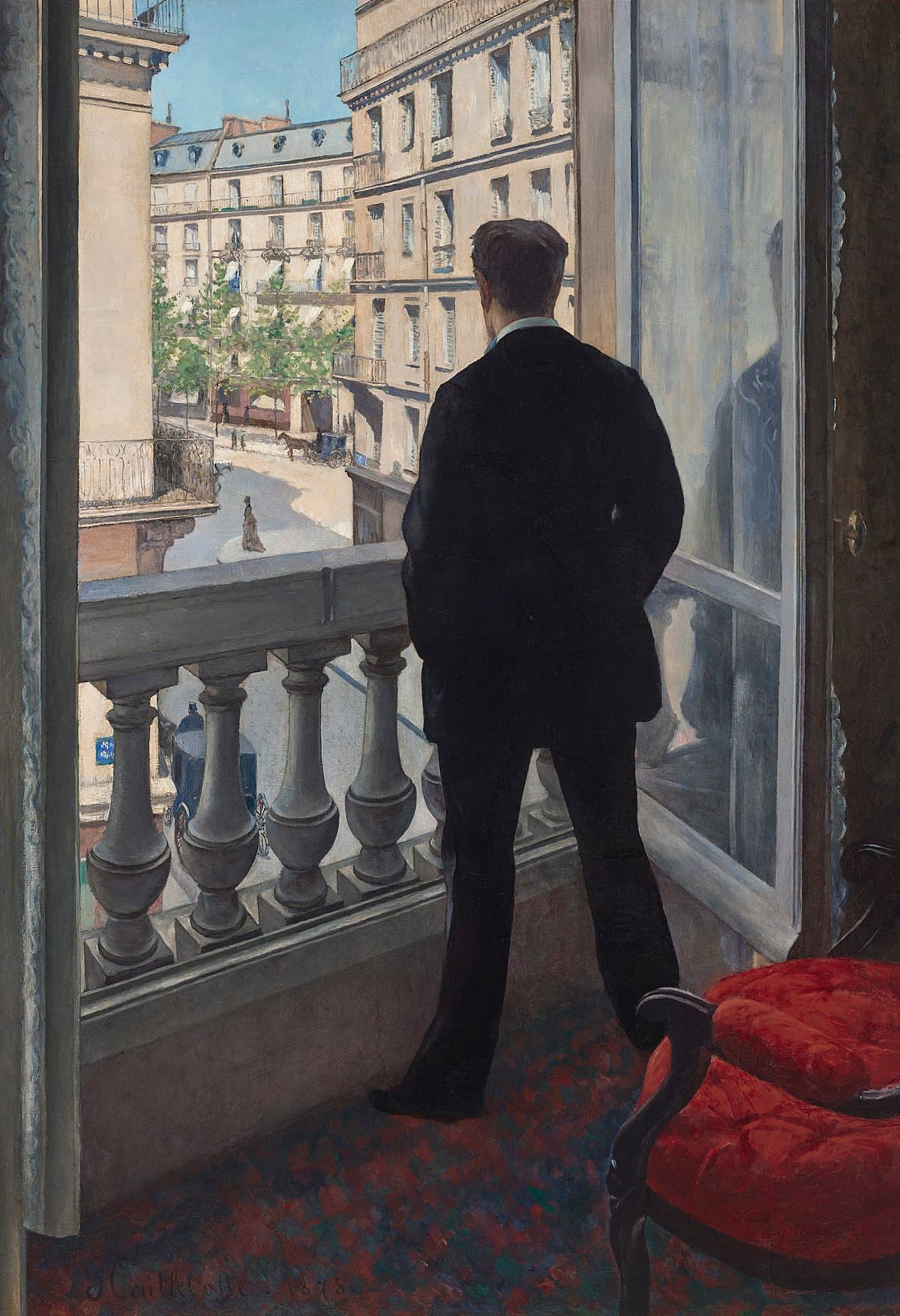
Gustave Caillebotte painted his brother René standing at a window of their family home on Rue de Miromesnil in Paris in 1875. René wears informal clothes and gazes out at Boulevard de Malesherbes, his back turned to us. The Haussmann-era streetscape spreads below.
The composition echoes German Romantic paintings of figures at windows, particularly Caspar David Friedrich's Woman at the Window from 1822. But where Friedrich's figure contemplates nature, Caillebotte's man surveys the modern city. This shift from countryside to urban boulevard marks the painting as distinctly Impressionist in spirit, concerned with contemporary life rather than timeless landscape.
Caillebotte showed this work at the second Impressionist exhibition in 1876 alongside his famous Floor Scrapers. The writer Émile Zola praised the technical skill but criticized what he called the "anti-artistic exactitude of the copying." The painting sold at Christie's New York in 2021 for $53 million to the J. Paul Getty Museum, making it one of the most expensive Impressionist works sold at auction. Those drawn to people paintings will appreciate how Caillebotte captures a private moment of urban observation.