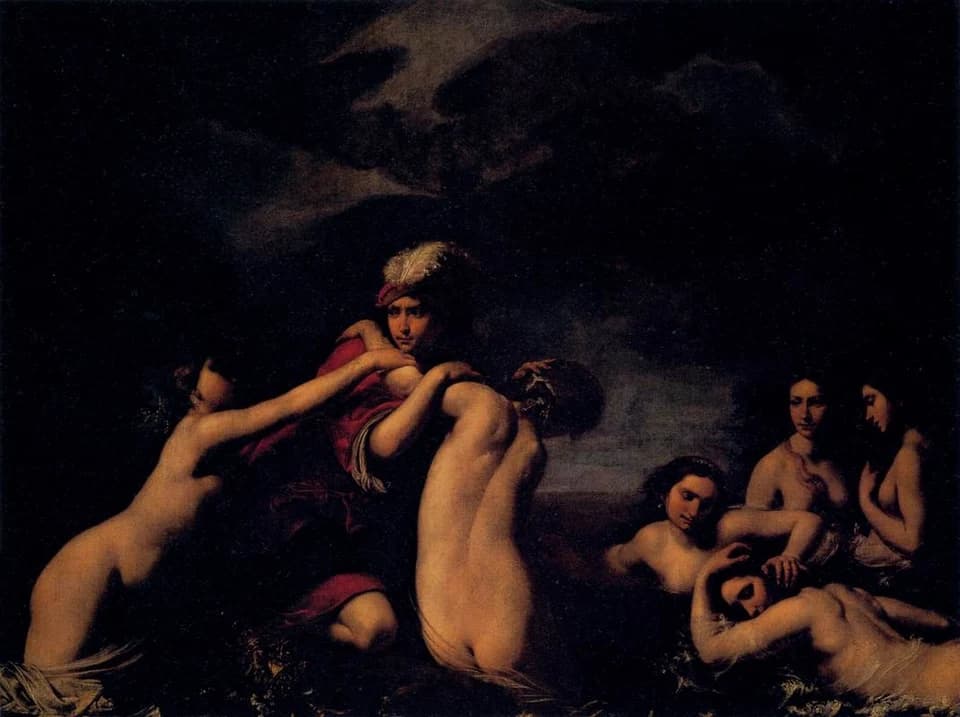
Hylas and the Nymphs
by Francesco Furini, 1630
Artwork Details
Details
- Year
- 1630
- Medium
- Oil on canvas
- Size
- 230 cm × 261 cm
Cite or Embed This Work
APA · MLA · Chicago1-click academic citation and embeddable “On View” museum badge for articles, syllabi, and research.
Francesco Furini painted this mythological scene around 1630, depicting the moment when nymphs abduct the beautiful youth Hylas. Six female nudes surround the young man as he kneels at their sacred spring. The story comes from the voyage of the Argonauts: Hercules sent his squire to fetch water, but the nymphs, seized by desire at the sight of his beauty, pulled him into the depths.
Furini was renowned for his sensual sfumato technique, particularly in female nudes. Art historian Sydney Freedberg described his style as filled with "morbid sensuality." This early work demonstrates Furini's skill at painting flesh tones and the soft modeling that characterized his mature paintings. In the 1630s, his style resembled that of Guido Reni, the leading Bolognese master.
The painting measures an impressive 230 by 261 centimeters and hangs at Palazzo Pitti in Florence. Furini later received commissions from Ferdinando II de' Medici to paint frescoes at the same palace. His combination of mythological subjects with sensual figure painting found ready acceptance in Florentine society of the period.