Wikimedia Commons • Public Domain
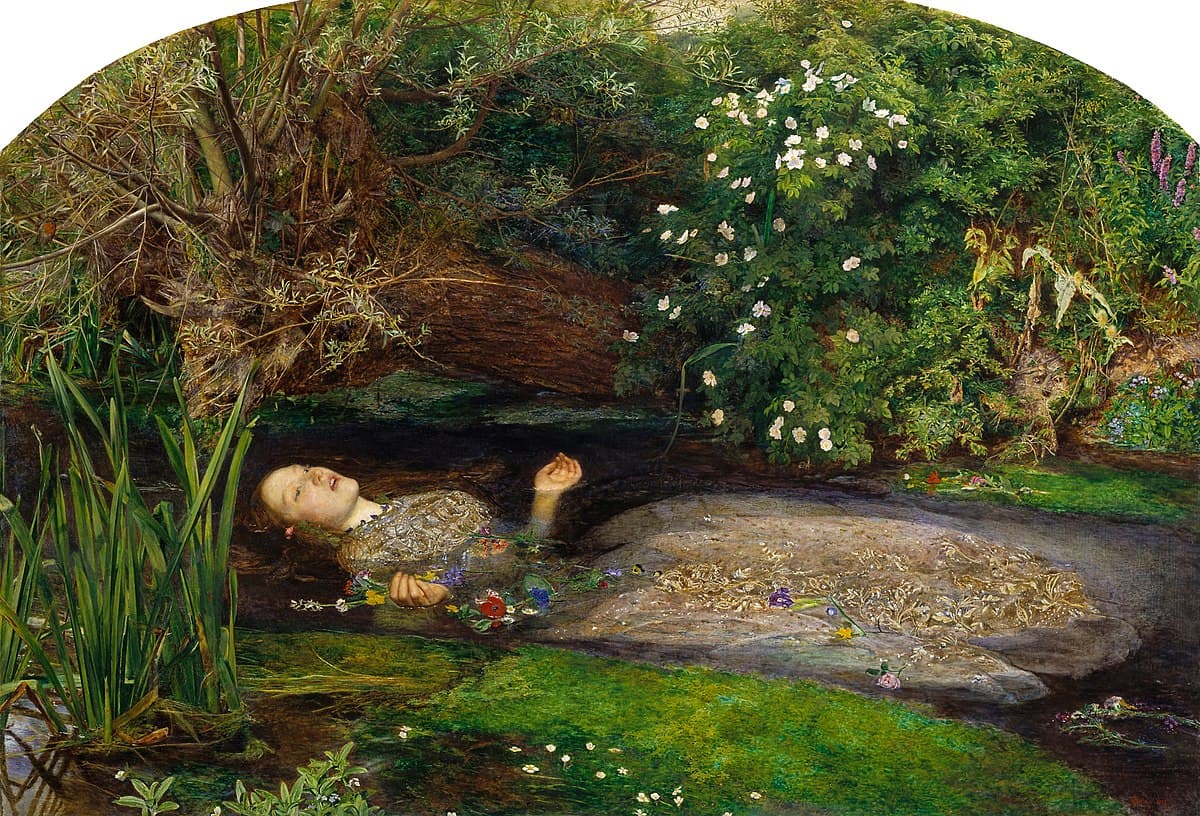
Ophelia
Artwork Details
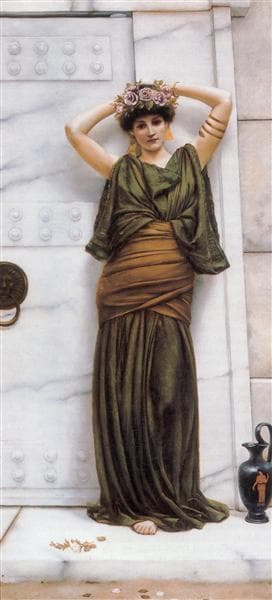
British artist John William Godward painted this Ophelia, depicting a classical female figure in his characteristic Neoclassical style. While Shakespeare's tragic heroine from Hamlet was a popular subject for Victorian painters, Godward's interpretation likely emphasizes the classical and timeless qualities he favored rather than the dramatic narrative of the play.
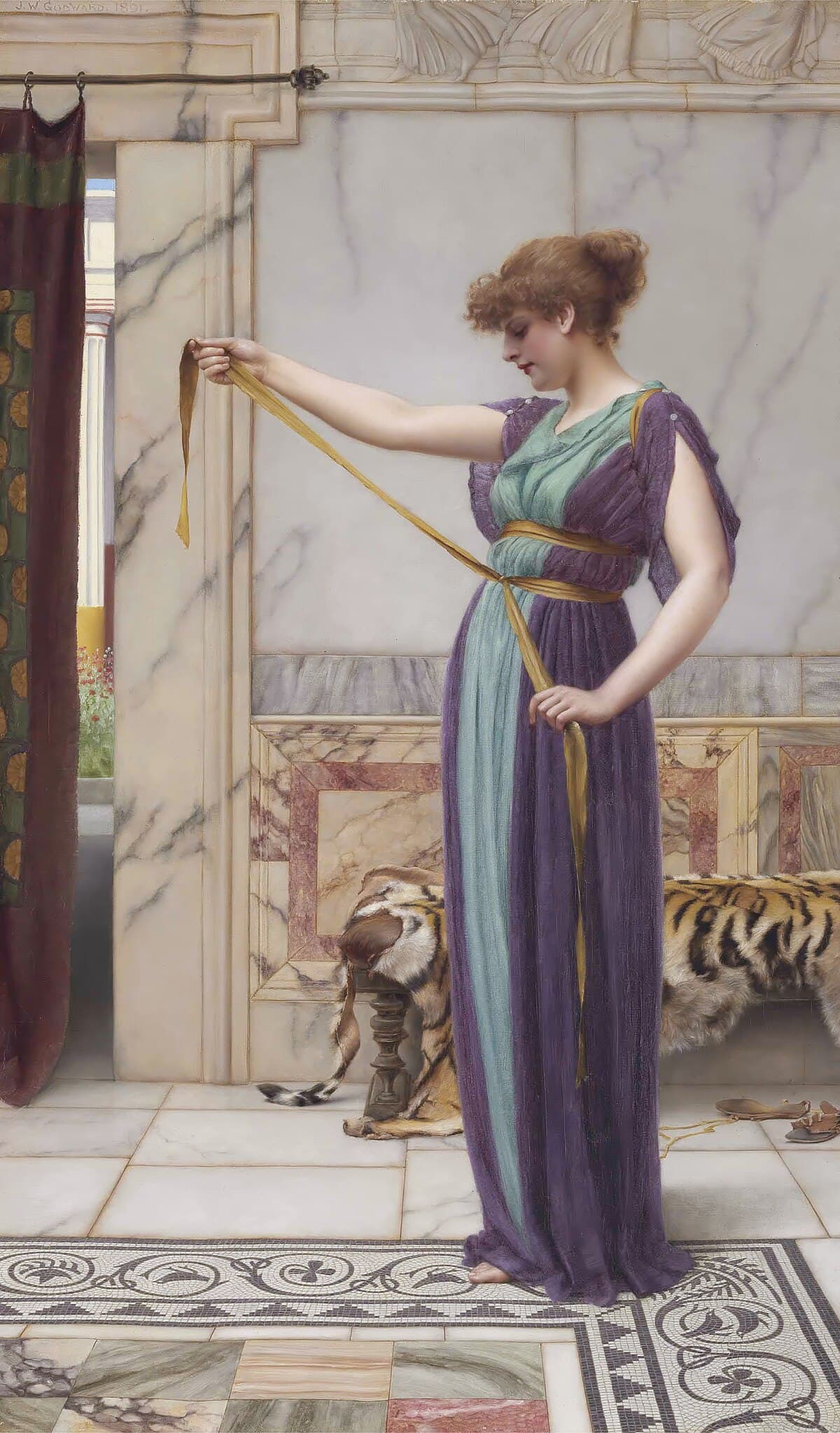
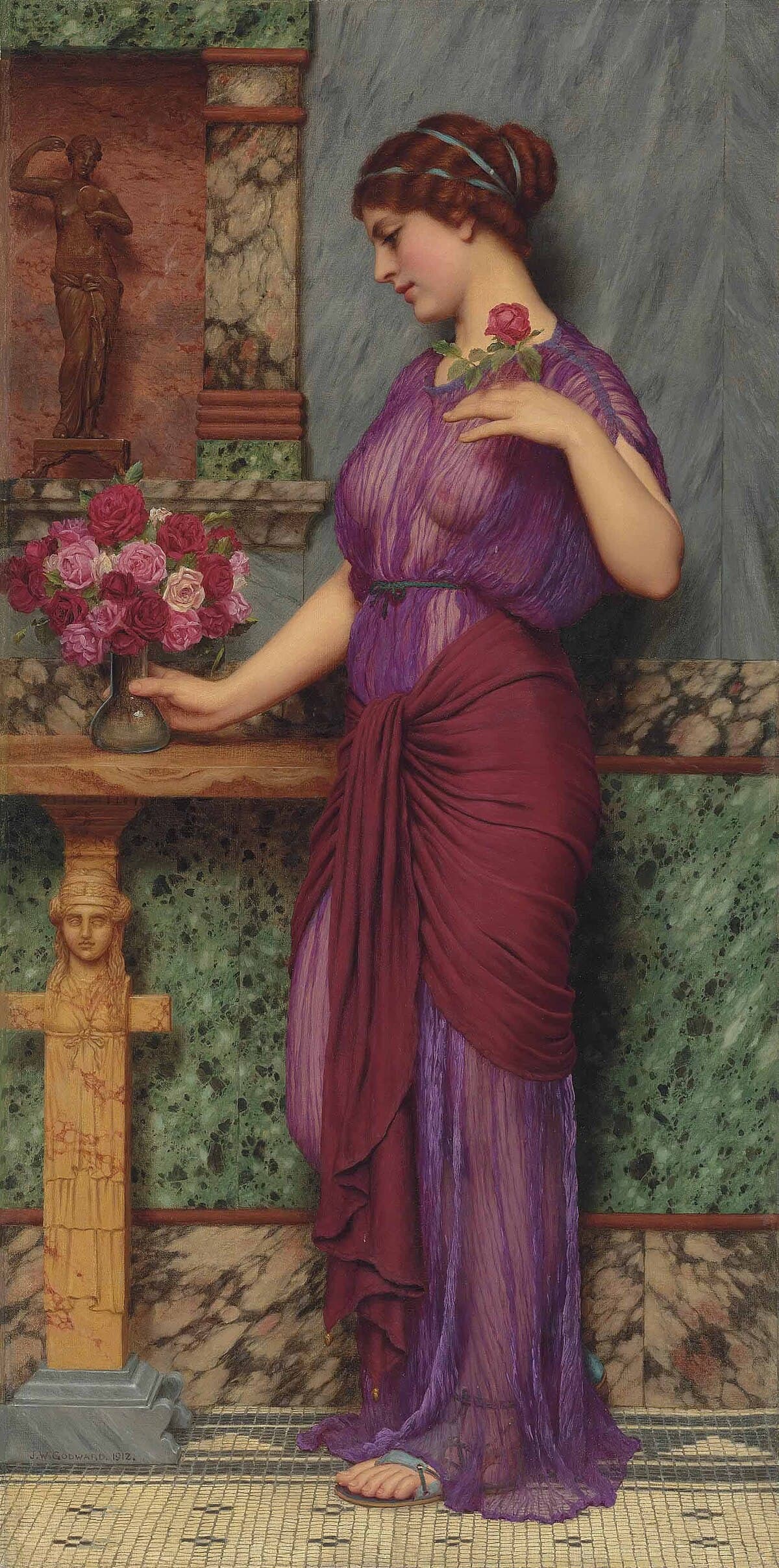
Godward (1861-1922) built his reputation painting young women in classical dress posed against Mediterranean landscapes and ancient architecture. He was a protégé of Sir Lawrence Alma-Tadema and became known for his technical mastery in rendering contrasting textures: flesh, marble, fur, and fabrics. His smooth surfaces and careful attention to detail represent the final flowering of English Neoclassicism.
The work held in a private collection. While many Victorian artists depicted Ophelia's drowning scene from Hamlet, Godward's version reflects his preference for serene classical beauty over dramatic narrative. His work fell out of fashion with the rise of modernism, but has found renewed appreciation among collectors drawn to his idealized feminine subjects and technical accomplishment.