Public Domain
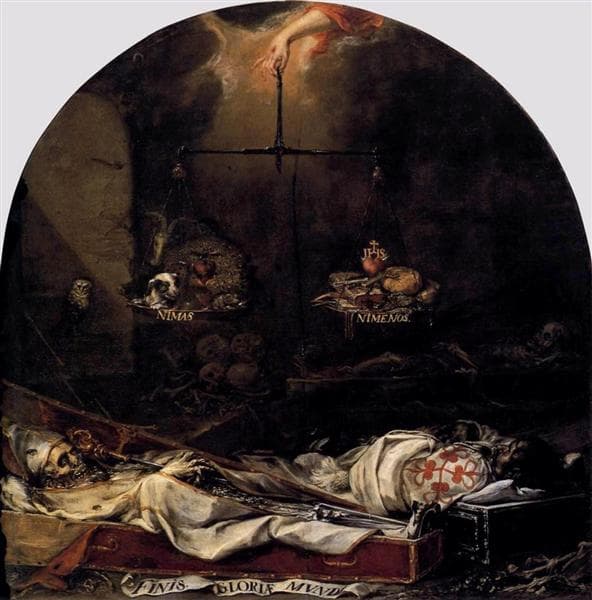
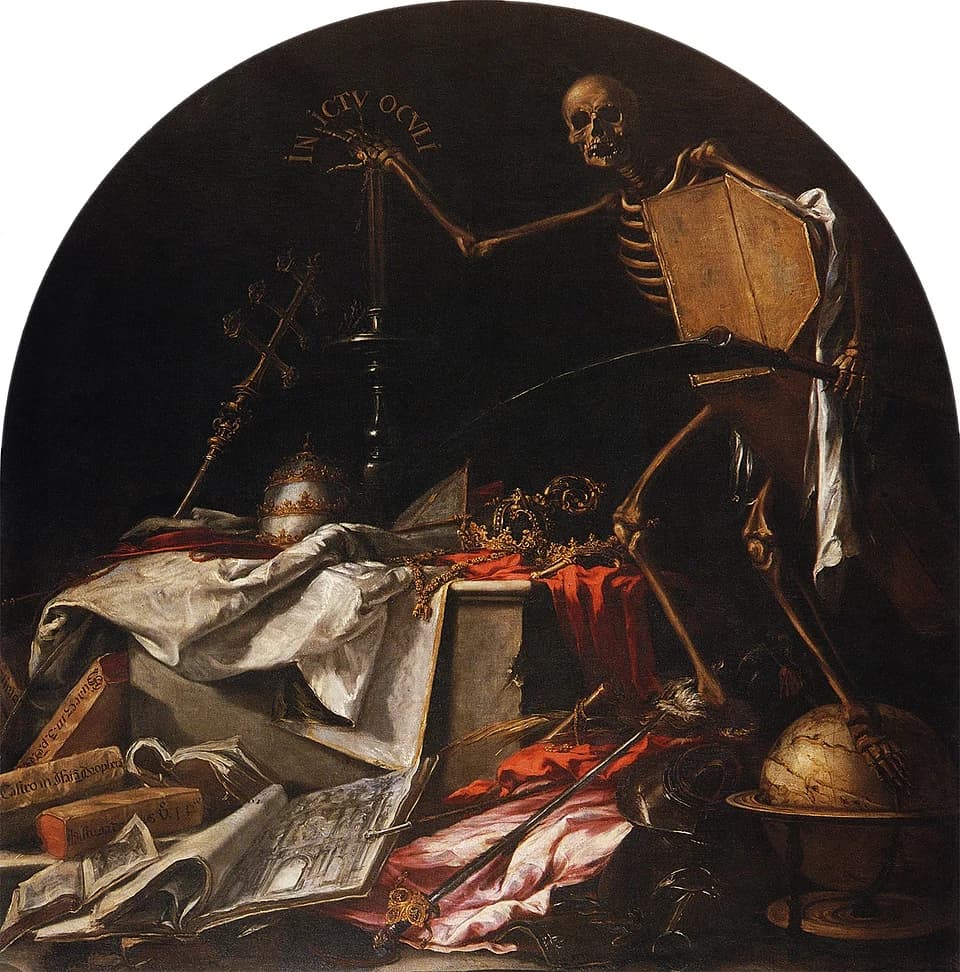
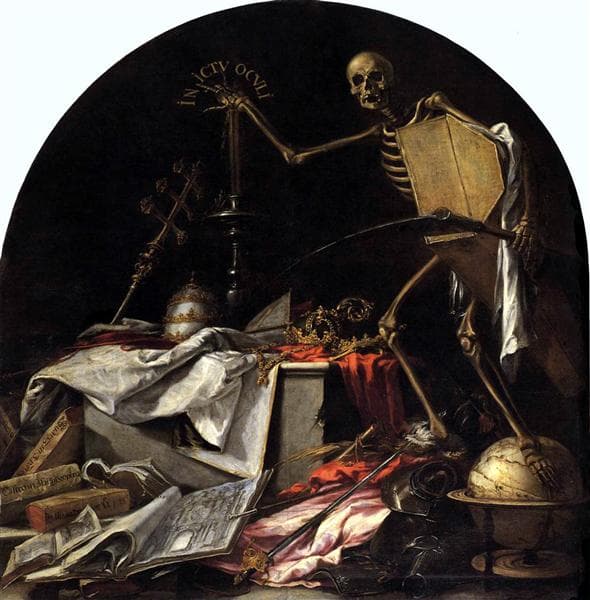
Allegory of Death: In Ictu Oculi
StyleBaroque
Artwork Details
Cite or Embed This Work
APA · MLA · Chicago1-click academic citation and embeddable “On View” museum badge for articles, syllabi, and research.
Juan de Valdés Leal made this unflinching meditation on mortality in 1672 for the Hospital de la Caridad in Seville. The Latin title translates to "In the Blink of an Eye," referring to how quickly death arrives. A skeletal figure of Death enters carrying a coffin and scythe, extinguishing a candle with one bony hand. Scattered across the foreground lie symbols of earthly achievement: a bishop's mitre, royal crown, armor, books, and scientific instruments. None of these protect their owners from the grave.
The painting measures an imposing 220 by 216 centimeters. It hangs as part of a pair with its companion piece "Finis Gloriae Mundi," which shows decomposing bodies of a bishop and knight. Together they formed a program designed by Miguel de Mañara to remind wealthy patrons that charity was their only hope for salvation. The Baroque emphasis on drama and emotional impact reaches its peak here.
Valdés Leal worked with visible brushwork and earthy colors that enhance the grim subject matter. The painting remains in its original location at the Hospital de la Caridad in Seville, where it continues to confront visitors with the same message it delivered over 350 years ago. Browse our religious wall art collection for similar contemplative works.