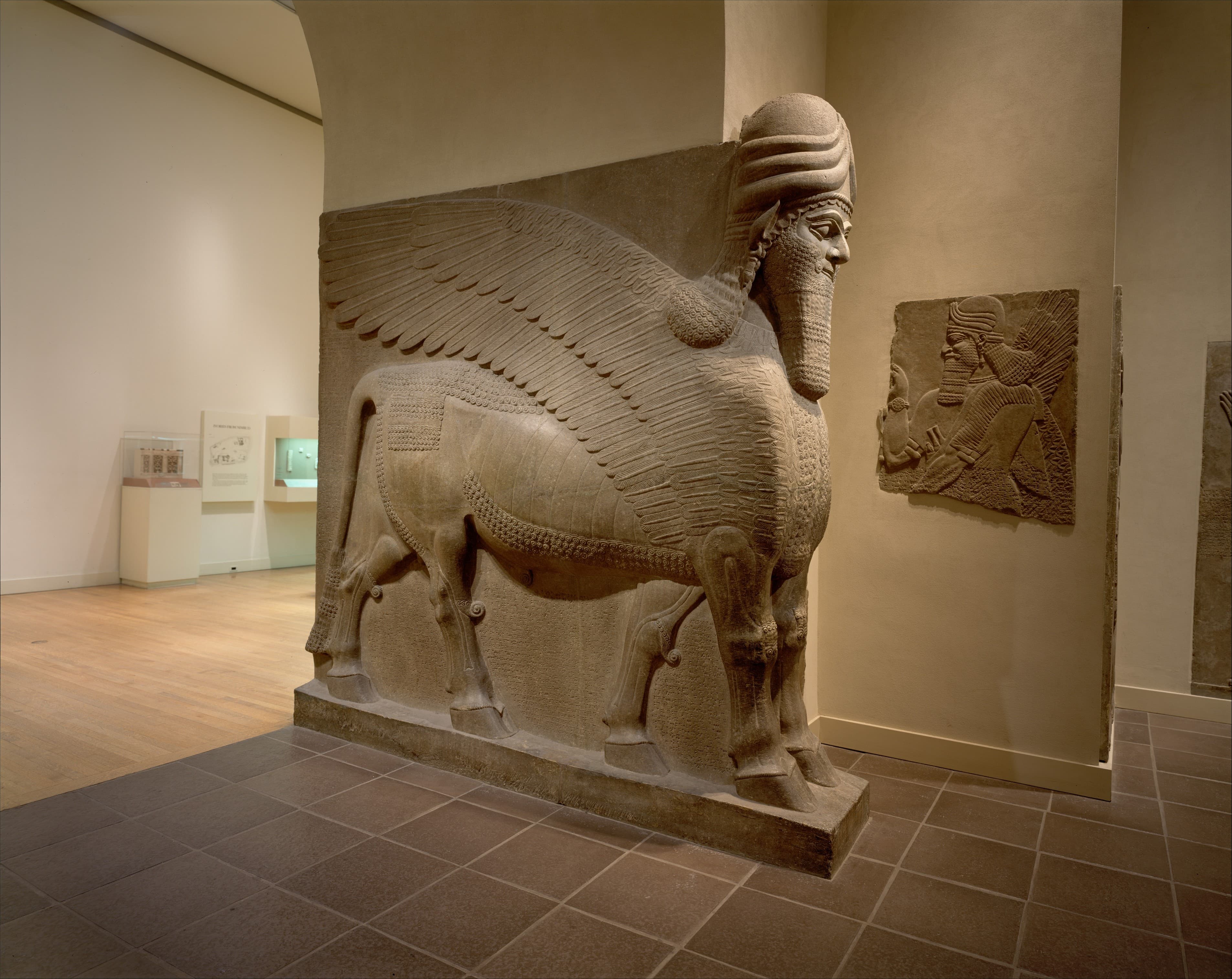
Lamassu (Human-Headed Winged Bull)
by Ancient Assyrian (Unknown), -710
Artwork Details
Details
- Year
- -710
- Medium
- Gypsum alabaster
- Size
- 420 cm × 436 cm (13.8 × 14.3 ft)
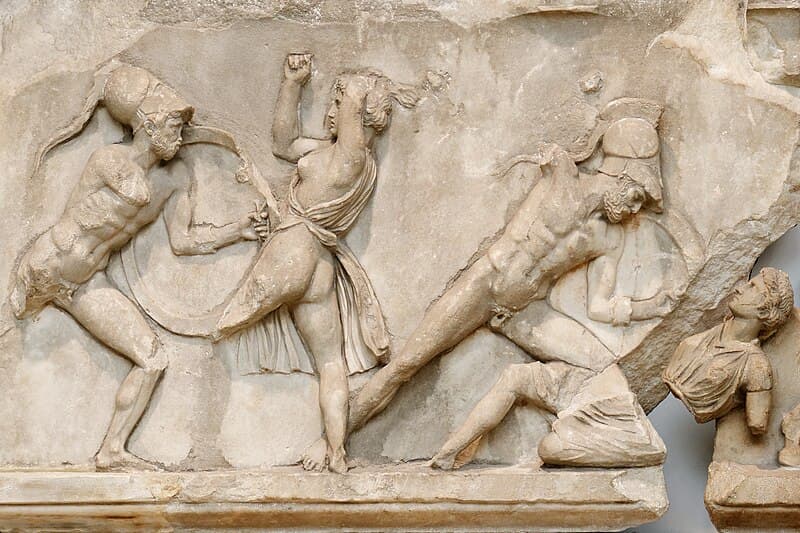
These massive human-headed winged bulls once guarded the palace of the Assyrian king Sargon II at Khorsabad. Standing over 4 meters tall and weighing around 16 tons each, they were carved from single blocks of gypsum alabaster around 710 BCE. The Lamassu combines a human head (representing intelligence), bull's body (symbolizing strength), and eagle's wings (denoting swiftness).
These guardian spirits were designed to protect the king from evil forces. A clever optical illusion makes them appear stationary from the front with four legs visible, but walking from the side with five legs showing. The British Museum acquired these colossal sculptures from excavations at Nimrud and Khorsabad in the 1850s. They remain among the most impressive examples of ancient Near Eastern art anywhere in the world.