Wikimedia Commons • Public Domain
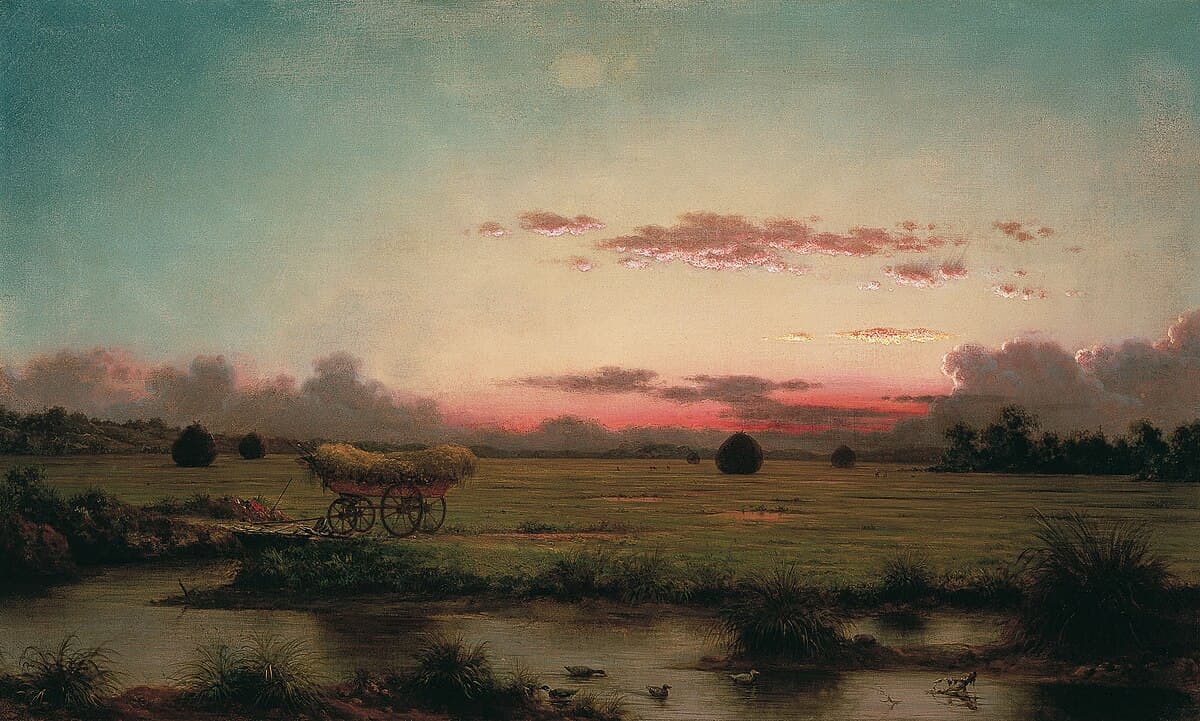
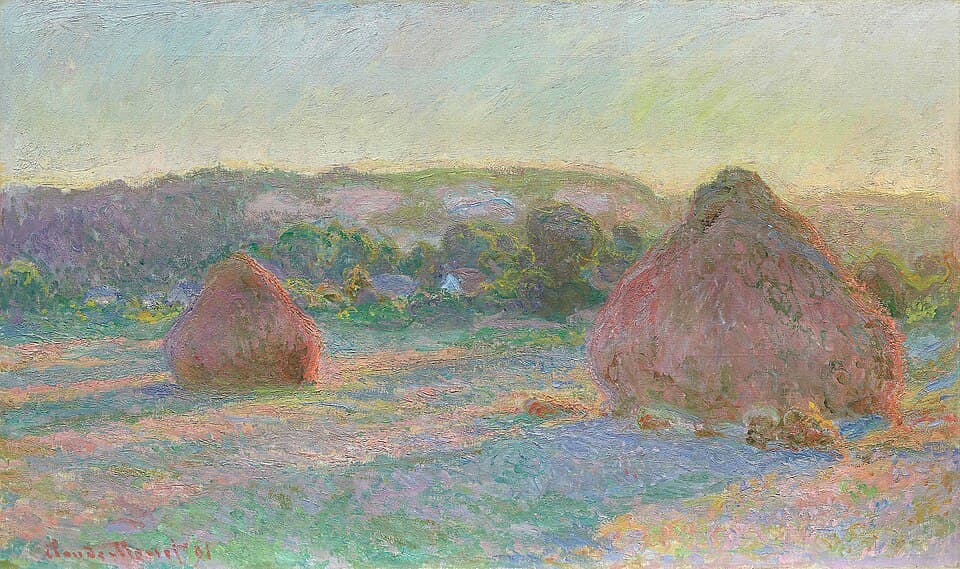
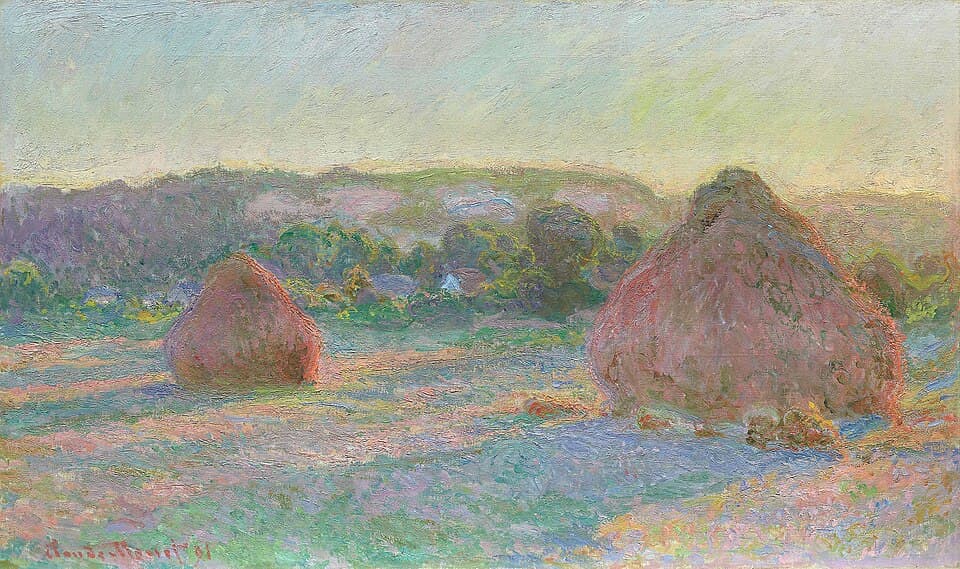
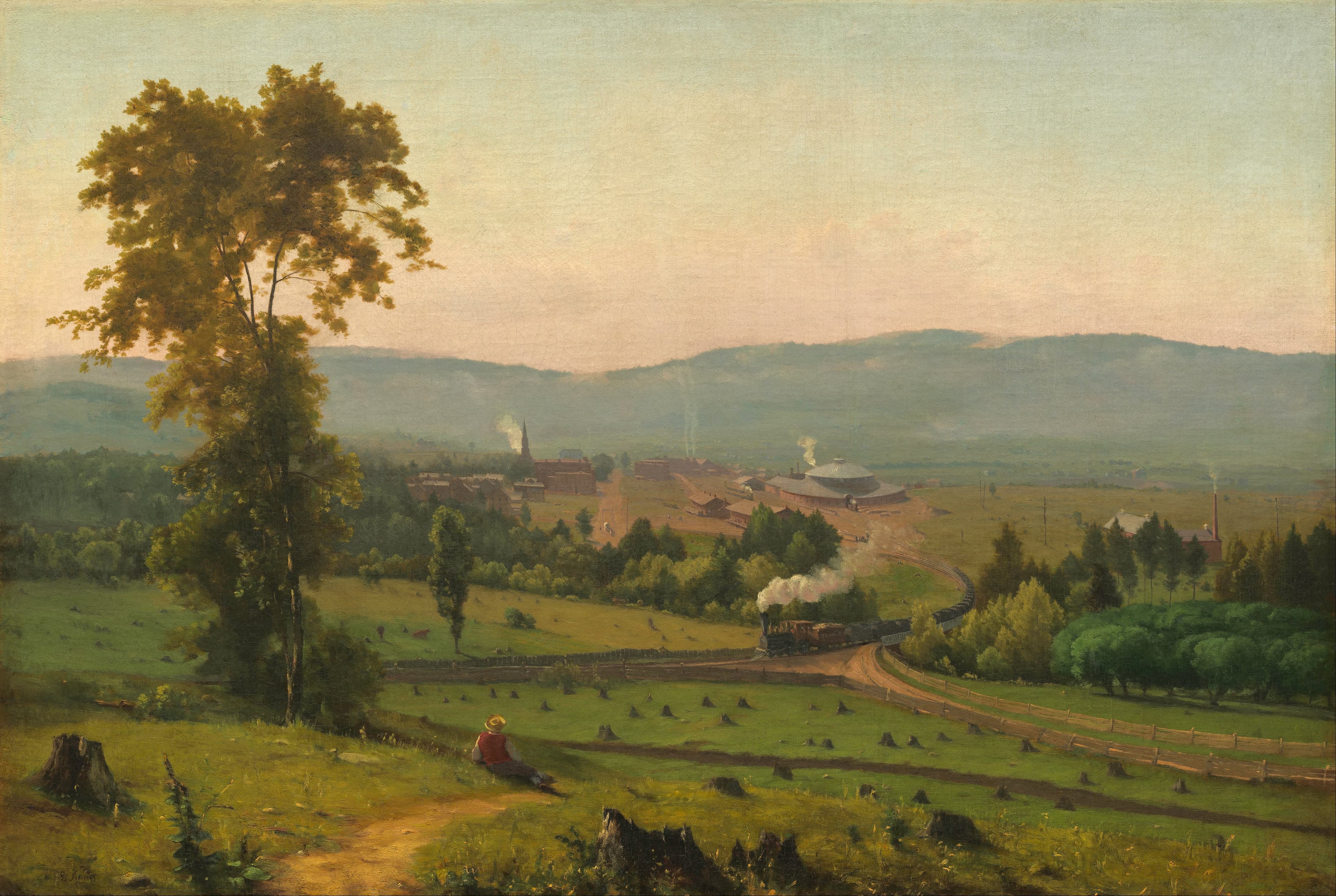
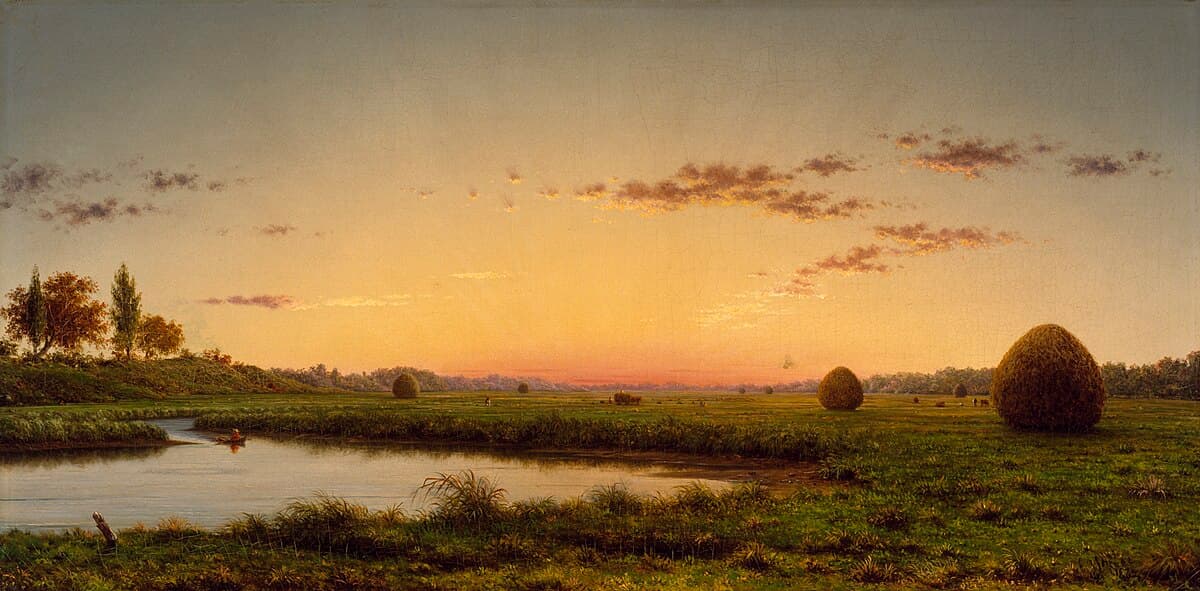
Haystacks on the Newburyport Marshes
GenreLandscape
Artwork Details
Cite or Embed This Work
APA · MLA · Chicago1-click academic citation and embeddable “On View” museum badge for articles, syllabi, and research.
Martin Johnson Heade painted the salt marshes at Newburyport, Massachusetts in 1862, establishing a subject he would return to throughout his career. Haystacks dot the flat, grassy expanse under a wide sky, with the atmosphere thick with coastal humidity.
Unlike the Hudson River School painters who sought the eternal and the sublime, Heade chased the momentary. He painted directly from nature, trying to capture shifting light and changing weather. In this sense, he anticipated what the Impressionists would explore decades later. Art historians credit him with discovering the salt marsh as a worthy subject for serious landscape painting.
The work measures 25 3/16 x 50 3/16 inches and bears Heade's signature and the date 1862 in the lower right. Dr. Alan C. Woods, Sr. donated it to the Walters Art Museum in 1976, after it passed through the collection of Baltimore's Robert C. Hall. The Luminist movement that Heade helped define emphasized glowing, atmospheric effects. Those who appreciate landscape painting will find this a quietly powerful example.